
Stop chasing faxes with a modern B2B online ordering system
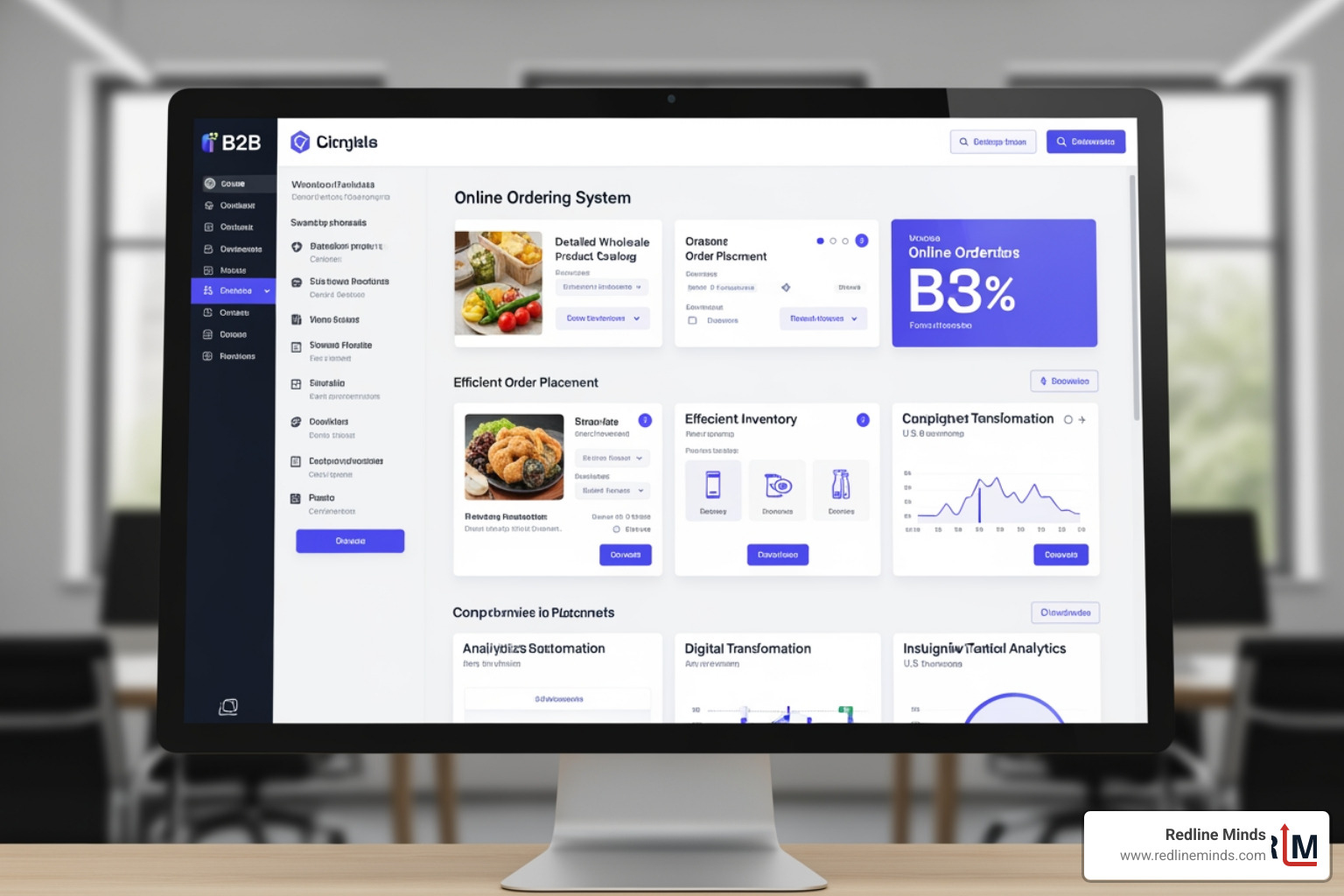
Why Businesses Are Ditching Faxes for a B2B Online Ordering System
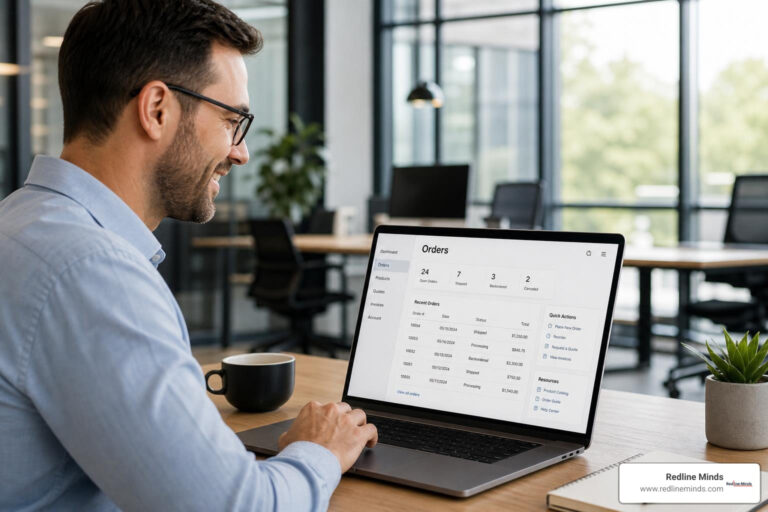
A B2B online ordering system is a digital platform that lets business buyers browse products, place orders, and manage their accounts online — without phone calls, emails, or fax machines.
Quick answer: Top B2B online ordering systems to consider:
| Platform | Best For |
|---|---|
| OrderEase | Wholesalers needing ERP integration and order orchestration |
| B2B Wave | Small-to-mid wholesalers wanting fast, simple setup |
| NuORDER | Brands selling to retailers globally |
| Blue Link ERP | Wholesale distributors needing fully integrated ERP + portal |
| Way2Order | Sellers wanting to automate basic order intake |
If you’re still processing wholesale orders through spreadsheets, email threads, or — yes — fax machines, you’re not alone. A huge number of mid-sized distributors and manufacturers still run on manual processes that eat time and create costly errors.
The problem? Your buyers have moved on.
The global B2B eCommerce market is now valued at over $30 trillion, growing faster than B2C at a CAGR of over 16%. And 73% of Millennial B2B buyers are already involved in purchasing decisions — buyers who expect the same smooth digital experience they get on Amazon or Shopify, not a phone tag marathon with your sales rep.
When orders come in through five different channels — email, phone, EDI, trade shows, and the occasional fax — fulfillment slows down, mistakes pile up, and your operations team spends their days doing data entry instead of growing the business.
A modern B2B ordering platform fixes that.
Defining the Modern B2B Online Ordering System
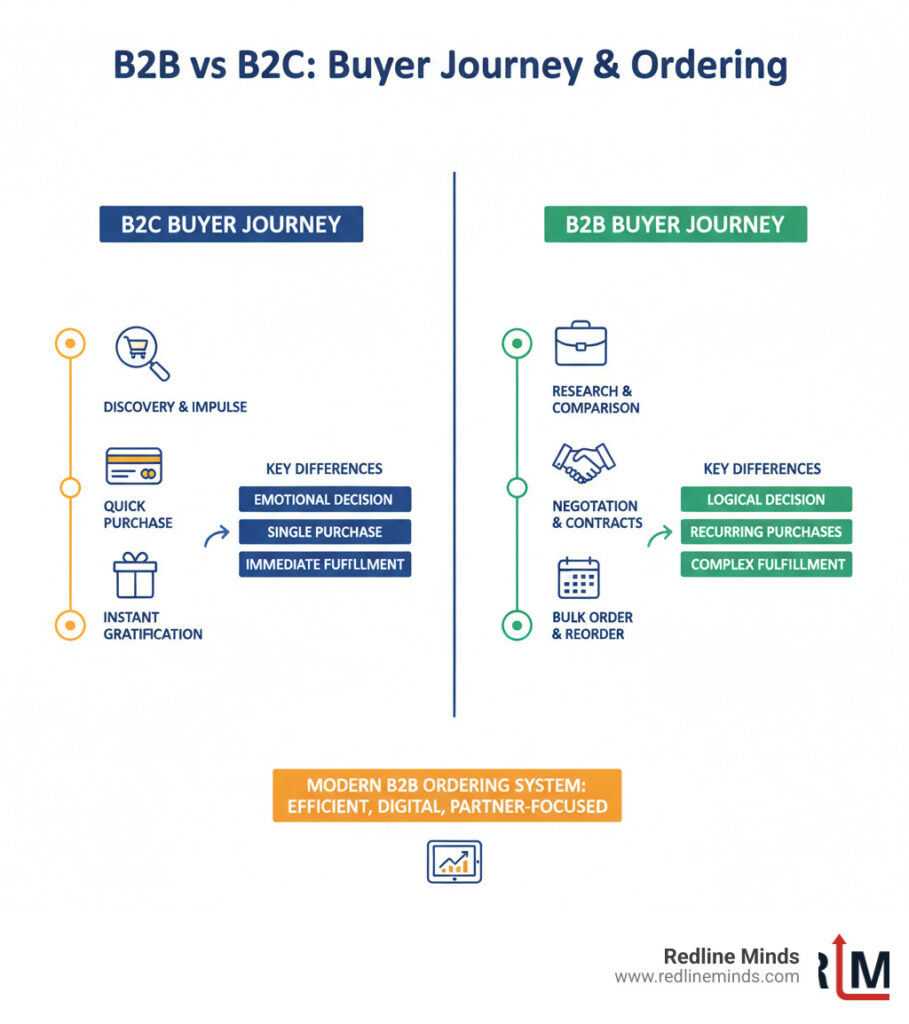
At its core, a B2B online ordering system is about more than just a “buy” button. While B2C (Business-to-Consumer) sites focus on quick, one-off emotional purchases, B2B platforms are built for logic, volume, and long-term partnerships.
In the B2B world, we deal with bulk ordering, complex shipping requirements, and negotiated contracts. You aren’t just selling a pair of shoes; you’re selling 500 units of a specific SKU to a retailer who has been your partner for ten years and expects a 15% discount. This is why a standard retail website usually fails the wholesale test.
The global B2B eCommerce market growth is staggering. With the market projected to reach $66 trillion by 2029, the shift isn’t just a trend; it’s a total transformation of how commerce works. Modern buyers—especially Millennials and Gen Z—prefer a “do-it-myself” approach. They don’t want to wait for a sales rep to call them back with a quote. They want to log in at 11:00 PM, see their specific pricing, check stock levels, and hit “order.”
This is why we often tell our clients that Why B2B Self-Service Portals Are the Future of Wholesale is the most important concept to grasp. These portals handle the longer buyer journeys typical of business transactions. They allow for relationship building through account-based marketing and personalized content, ensuring that your brand stays top-of-mind throughout a procurement process that might take weeks or months.
The Shift to Digital B2B Online Ordering System
The transition to a digital-first model means moving away from “business hours” and moving toward 24/7 access. Research shows that B2B buyer mobile usage is skyrocketing, with over 50% of buyers relying on mobile devices for business transactions. If your ordering “system” is a PDF form that needs to be printed and scanned, you are effectively locking out half of your potential market.
Digital-first operations also lean into sustainability. By moving to paperless processing, you aren’t just saving trees; you’re saving the thousands of dollars spent on toner, paper, and the physical storage of records. More importantly, you’re eliminating the “data silo” where information lives only on one person’s desk.
Key Features for Wholesalers and Distributors
When we help businesses select a B2B online ordering system, we look for features that solve the unique headaches of wholesale. You need a platform that acts as a “digital twin” of your physical sales operation.
A high-quality Dealer Portal should offer:

- Customer-Specific Catalogs: Not every buyer should see every product. You might have exclusive items for certain regions or “privacy groups” for specific high-tier retailers.
- Tiered Pricing & Volume Breaks: The system must automatically apply discounts based on the quantity in the cart. If a customer buys 100 units, the price should drop without a human having to manually adjust the invoice.
- Real-Time Stock Visibility: There is nothing worse than a buyer placing a large order only to find out three days later that the items are backordered. Using the Best E-Commerce Inventory Control Options 2024 ensures that what the customer sees on the screen matches what is actually sitting on your warehouse shelves.
- Multi-lingual & Multi-currency Support: If you’re selling globally, your portal should speak the language of your buyers. Platforms like B2B Wave support over 10 languages, making international expansion much simpler.
- Barcode Scanning: For warehouse-based buyers or sales reps in the field, the ability to scan a SKU with a mobile camera to add it to a cart is a massive time-saver.
According to the NuORDER retail insights, the “Age of Intelligent Buying” is here. Buyers want data-driven insights, visual roll-ups of their purchases, and automated inventory allocation to help them make better decisions.
Enhancing Customer Experience via a B2B Online Ordering System
We often hear from wholesalers who worry that a digital system will “kill the personal touch.” In reality, it does the opposite. By automating the boring stuff—like checking an order status or reordering the same 20 SKUs they buy every month—you free up your sales reps to actually consult with your customers.
Personalized dashboards allow buyers to see their order history, saved favorites, and current credit limits. You can set delivery date expectations and allow for multiple shipping addresses per account. For the finance department, features like purchase order (PO) uploads and credit limit tracking ensure that the digital storefront respects your existing credit policies.
Integration and Orchestration: Beyond Standalone Portals
A common mistake we see is the “standalone portal” trap. This is a system that collects orders but doesn’t talk to anything else. When an order comes in, someone still has to manually type that data into your ERP or accounting software. This isn’t digital transformation; it’s just moving the fax machine to a web browser.
| Feature | Standalone Portal | Integrated Orchestration Platform |
|---|---|---|
| Data Entry | Manual re-keying required | Automated bi-directional sync |
| Inventory | Often delayed or manual updates | Real-time stock reservation |
| Order Status | Customer must call for updates | Real-time tracking in portal |
| Scalability | Limited by headcount | Scales without extra staff |
True efficiency comes from a B2B online ordering system that offers “order orchestration.” This means the platform integrates with your ERP (Enterprise Resource Planning), CRM, and Ecommerce Inventory Control Options.
For larger retailers like Costco or Home Depot, EDI (Electronic Data Interchange) compliance is a must. A modern system like OrderEase or NuORDER handles these complex connections, ensuring that your data flows seamlessly from the buyer’s system to your warehouse without a single human finger touching a keyboard.
If you are already using a platform like BigCommerce, you can leverage BigCommerce services to build out these B2B functionalities, such as quote management and bulk pricing, while keeping your existing tech stack intact.
Integration Strategies for a B2B Online Ordering System
The goal of integration is to create a “single source of truth.” When an order is placed, the system should automatically:
- Reserve the inventory so it can’t be sold to someone else.
- Generate a picking list for the warehouse.
- Create a commercial invoice or delivery note.
- Update the customer’s account balance in your accounting software.
This requires payment flexibility. While 94% of B2B payments still involve credit cards at some point, 53% of transactions use net terms and 50% use purchase orders. Your system needs to handle ACH payments and credit card processing alongside traditional “Net 30” billing.
For those using Shopify, we often implement Shopify services that allow for “hybrid” stores—selling both to the public and to wholesale groups within the same backend, but with completely different pricing and checkout rules.
Frequently Asked Questions about B2B Ordering
How does a B2B online ordering system handle customer-specific pricing?
One of the biggest hurdles in B2B is that “the price is almost never the price.” Most wholesalers have negotiated rates for different tiers of customers. A modern system handles this through Price Lists.
When a customer logs in, the system recognizes their “Customer Group” and hides the MSRP, showing only their negotiated SKU-level discounts. You can even “gate” content so that only approved, logged-in wholesalers can see your catalog at all. This protects your margins and prevents your retail prices from being visible to the general public.
Can these systems integrate with my existing ERP or accounting software?
Yes, and they should! Bi-directional sync is the gold standard. This means when you change a price in your ERP, it updates on the web portal instantly. When a customer places an order online, it appears in your accounting software as a “Sales Order” ready for fulfillment.
Systems like the Blue Link ERP customer portal are designed specifically for this. They eliminate the need for re-keying data, which is where 99% of order errors happen. Whether you use QuickBooks, NetSuite, or a specialized wholesale ERP, there is usually an XML or API connector available to bridge the gap.
What is the typical ROI of adopting B2B ordering software?
The return on investment (ROI) isn’t just about “more sales”—it’s about “better profit.” By automating the order-to-cash cycle, businesses often see:
- 90%+ faster order fulfillment: No more waiting for a rep to check their email.
- 30% reduction in operational costs: You can handle more orders without hiring more admin staff.
- 24x faster order processing: Orders move from “placed” to “picking” in seconds.
As seen in various OrderEase case studies, moving to a digital platform allows even small sales teams to act like giants, processing thousands of orders with incredible accuracy.
Conclusion
The days of “chasing faxes” are coming to an end. If your business is still leaning on manual processes, you aren’t just losing time—you’re losing the trust of a new generation of buyers who value speed and self-service above all else.
At Redline Minds, we specialize in helping wholesalers, distributors, and manufacturers navigate this digital shift. As ecommerce consulting experts based in Tennessee, we don’t just “build websites.” We develop end-to-end strategies that focus on operational efficiency and UX/UI design tailored specifically for B2B and hybrid stores.
Whether you need to integrate a complex ERP, set up a dealer portal, or optimize your SEO to find new wholesale leads, we are here to help you establish a sales channel that works while you sleep.
Ready to stop the manual madness and start scaling? Explore our Redline Minds services and let’s build a system that moves your business forward.
Share this article
Tap into years of experience and turn your site’s visitors into buyers.
Related Posts
-
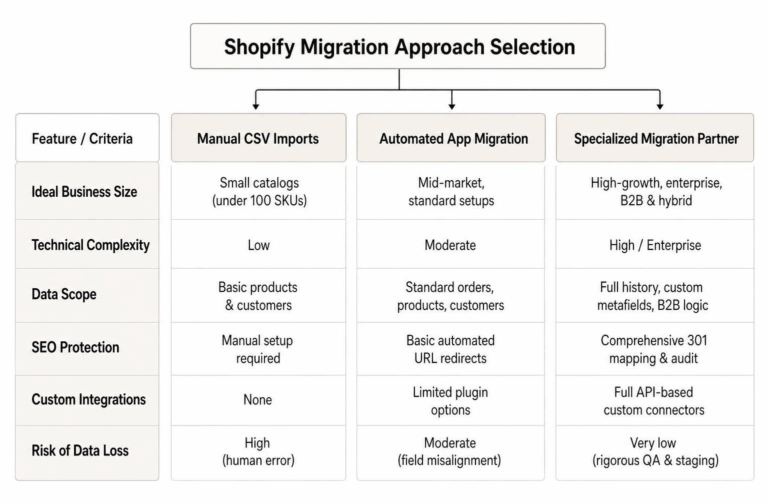
Compare Shopify Migration Services: Options Cheat Sheet
Compare Shopify migration services and find the right Shopify migration company for your store, from manual imports to…
-
Ultimate Checklist for Improving B2B Customer Experience
Ultimate Checklist for Improving B2B Customer Experience – Learn about b2b ecommerce customer experience
-

A Practical Guide to What to Sell Online for Profit
A Practical Guide to What to Sell Online for Profit – Learn about i don t know what…