
The Complete Guide to Affiliate App for Shopify
The Best Affiliate Apps for Shopify in 2026
Choosing the right affiliate app for Shopify can be the difference between a stagnant referral program and a reliable new revenue channel. Here are the top options to consider:
| App | Best For | Rating | Reviews |
|---|---|---|---|
| UpPromote | All store sizes, scaling | 4.9/5 | 3,499 |
| BixGrow | Small stores, budget-friendly | 4.9/5 | 1,221 |
| Referral Candy | Referral-focused programs | 4.9/5 | 1,448 |
| AfterShip Referral | Easy setup, growth stores | 4.9/5 | 972 |
| GoAffPro | Feature-rich, free start | 4.7/5 | 890 |
| Refersion | Mid-to-large stores | 4.7/5 | 483 |
| Komissio | High-volume, flat pricing | — | New |
| Jump | Creator networks, brands | 4.9/5 | 18 |
There are over 229 affiliate program apps on the Shopify App Store. That’s a lot of options — and a lot of room to pick the wrong one.
For a store doing $1M–$10M a year, a poorly chosen affiliate app can quietly eat into your margins, miss attributed sales due to ad blockers, or charge you more as your affiliate revenue grows. None of those are good outcomes.
The good news? The right app turns your existing customers, creators, and influencers into a low-cost sales force — tracking every referral, automating payouts, and running in the background while you focus on growing the business.
This guide cuts through the noise and gives you a clear, honest comparison of the best Shopify affiliate apps available in 2026.
Why Your Store Needs an Affiliate App for Shopify in 2026
In the current ecommerce landscape of July 2026, customer acquisition costs (CAC) continue to climb. Relying solely on paid social and search ads is a fast track to squeezed margins. That is why smart brands are shifting their focus to community-led growth, influencer partnerships, and structured referral programs.
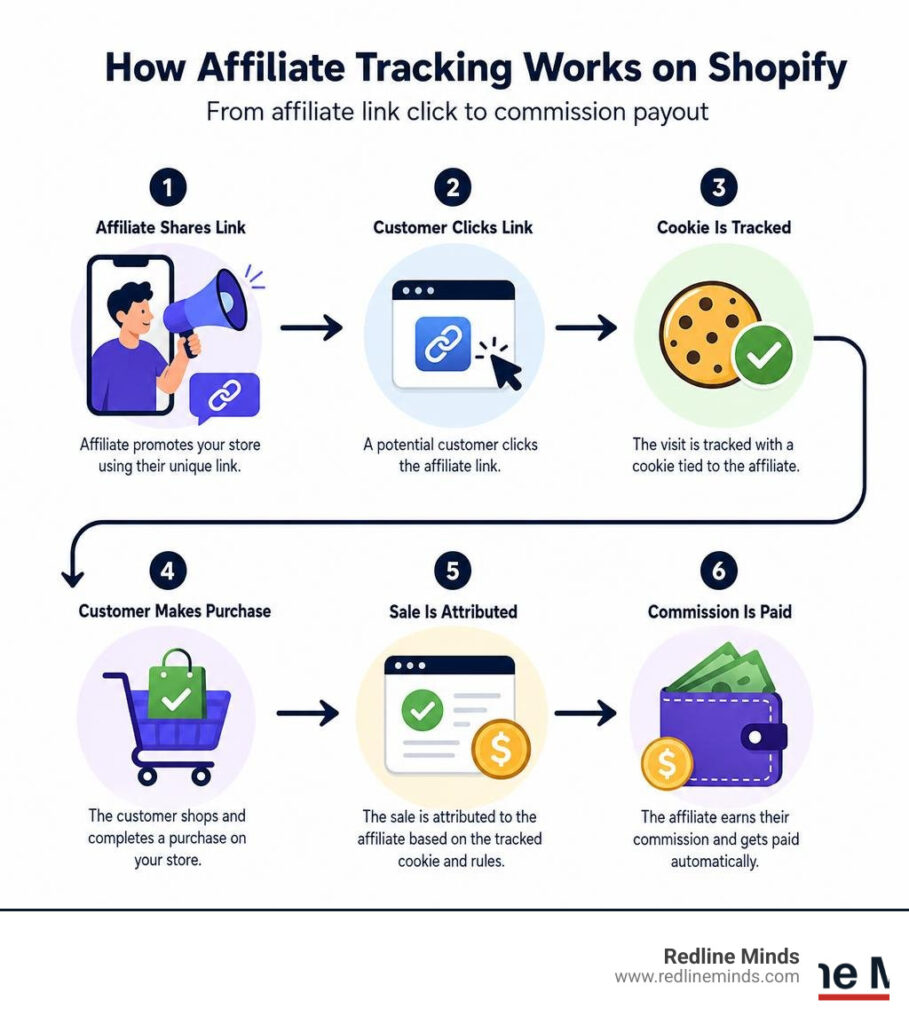
To run these programs efficiently, you cannot rely on messy spreadsheets or manual tracking. You need a dedicated affiliate app for Shopify to automate the heavy lifting.

An affiliate program allows you to partner with content creators, industry influencers, loyal customers, and even other businesses (B2B partners) who promote your products in exchange for a commission on sales. By leveraging these relationships, you tap into pre-built trust and passive traffic.
This strategy is particularly powerful for B2B and hybrid stores—which we specialize in here at Redline Minds. When you establish a structured program, your partners act as extended sales representatives, introducing your brand to highly targeted audiences.
To discover where affiliate tools fit into your broader tech stack, you can read our breakdown of the Top 10 Most Popular Shopify Plug-ins. If you are ready to explore the full directory of available tools directly, you can browse the Best Affiliate programs Apps For 2026 on the Shopify App Store.
Key Features to Look For in a Shopify Affiliate App
Not all affiliate apps are built the same. Some are designed for simple refer-a-friend programs, while others are built to handle complex multi-level marketing (MLM) networks and enterprise-level tracking.
When evaluating which affiliate app for Shopify is right for your store, you must look closely at how they handle tracking, payouts, branding, and billing structures.
Pricing Models: Flat Fee vs. Revenue Share vs. Hybrid
The pricing architecture of your affiliate app can dramatically impact your long-term return on investment (ROI). Most apps on the market fall into one of three pricing models:
| Pricing Model | How It Works | Best For | Pros | Cons |
|---|---|---|---|---|
| Flat Fee | You pay a set monthly subscription fee regardless of how many sales your affiliates generate. | High-volume stores and established brands | Highly predictable costs; does not penalize your growth. | Higher upfront cost for brand-new stores. |
| Revenue Share (Success Fees) | The app provider takes a percentage of your referred sales or charges a fee per approved referral. | Startups and low-volume stores testing the waters | Extremely low risk; you only pay when you make a sale. | Can become incredibly expensive as your sales scale. |
| Hybrid | A combination of a lower monthly flat fee plus a smaller percentage-based success fee. | Growing stores transitionally scaling up | Balances upfront risk with scaling costs. | Can feel like “double-dipping” by the app developer. |
Tracking Accuracy, Custom Subdomains, and Ad-Blocker Protection
Modern privacy standards and browser updates have made traditional cookie-based tracking highly unreliable. If your affiliate app relies on third-party cookies or shared tracking domains, ad blockers and privacy-focused browsers (like Safari and Brave) will block your tracking links. This means your affiliates won’t get credited for their sales, leading to frustration and broken partnerships.
To prevent this, look for apps that offer ad-blocker-safe tracking using first-party data and custom subdomains (such as partners.yourbrand.com). By routing tracking through your own domain, the links remain invisible to ad blockers, recovering an estimated 8% to 22% of otherwise lost conversions.
Fraud Protection and Anti-Leak Measures
Affiliate fraud can quietly drain your profits. Common issues include affiliates bidding on your branded keywords in search engines, submitting self-referrals, or posting discount codes to public coupon aggregator sites.
Look for apps with built-in fraud protection, blocklists, and anti-leak measures—such as single-use discount links—to ensure commissions are only paid on legitimate, high-value referrals.
White-Label Portals and Custom Branding
Your affiliate portal should feel like an organic extension of your website. A fully white-labeled portal allows you to customize the registration pages, dashboards, and emails with your brand’s colors, logos, and domain. This builds trust with high-caliber influencers and professional partners who prefer a seamless, branded experience.
Choosing the Right Affiliate App for Shopify Integrations
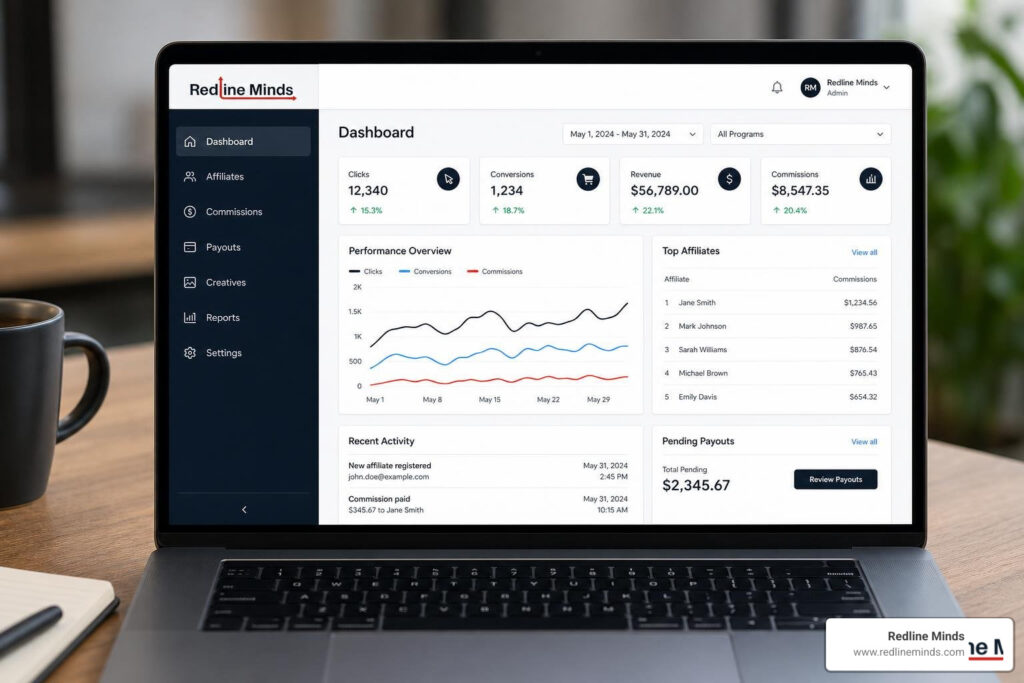
An affiliate program does not run in a vacuum. To maximize its potential, your chosen app must integrate seamlessly with your existing marketing and financial tools.
- Email Marketing (Klaviyo, Mailchimp, Omnisend): Your affiliates need constant communication. Integrating your affiliate app with your email platform allows you to automate onboarding sequences, send monthly performance reports, and share promotional assets directly. If you are deciding on the best email backbone for these operations, explore our comparisons like Klaviyo vs Omnisend for Shopify or Klaviyo vs Mailchimp for Shopify.
- Payment Gateways (PayPal, Stripe Connect): Paying your affiliates manually is a massive administrative headache. Look for apps that integrate with PayPal for bulk payouts or use Stripe Connect to handle complex multi-currency payouts and automatic tax documentation (such as W9/1099 generation) seamlessly.
The Best Shopify Affiliate Apps Reviewed
Let’s explore a detailed review of the top tools to help you find the absolute best affiliate app for Shopify for your business model.
1. UpPromote
As the most popular affiliate app on the Shopify App Store, UpPromote is built for scalability. It offers a comprehensive suite of tools that can handle traditional affiliate tracking, customer referral loops, and professional influencer management.
- Best For: Brands of all sizes looking for an all-in-one, highly scalable solution.
- Key Features: Multi-level marketing (MLM) support, creator discovery marketplace, robust fraud protection, anti-leak discount links, and automated PayPal payouts.
- Pros: Highly customizable, incredibly reliable tracking, and a massive feature set.
- Cons: The sheer number of features can feel overwhelming for beginners, and advanced features require higher-tier plans.
2. GoAffPro
GoAffPro is a powerhouse app known for its generous feature set and ease of use. It allows merchants to set up a complete affiliate portal in just a few clicks.
- Best For: Budget-conscious merchants who still want advanced tracking features.
- Key Features: Unlimited affiliates and revenue tracking, mobile apps for affiliates (iOS and Android) with push notifications, multi-level tracking, and diverse payout options (PayPal, ACH, gift cards).
- Pros: Very easy to set up; includes mobile apps to keep your affiliates engaged on the go.
- Cons: Important customization features and custom tracking subdomains are locked behind paid tiers.
3. Refersion
Refersion is an enterprise-grade platform designed specifically for ecommerce brands that require deep analytical reporting, high-performance tracking, and automated tax compliance.
- Best For: Mid-market to enterprise-level brands with large partner networks.
- Key Features: First-party cookie-less tracking, automated 1099 tax form management, AI-powered influencer discovery, and deep integrations with Stripe, Klaviyo, and Yotpo.
- Pros: Outstanding reporting capabilities, reliable first-party tracking, and excellent onboarding support.
- Cons: Can be highly expensive for growing stores due to its pricing structure.
4. BixGrow
BixGrow is a highly rated, conversion-focused affiliate and referral app that offers incredible value, particularly for small-to-medium-sized businesses.
- Best For: Growing stores looking for a cost-effective way to run both affiliate and customer referral programs.
- Key Features: Dual affiliate and referral program tracking, flexible commission structures, automated coupon code generation, and easy-to-navigate dashboards.
- Pros: User-friendly interface and highly responsive customer support.
- Cons: Lacks some of the deep enterprise integrations found in larger platforms.
5. Komissio
Komissio is a streamlined, modern alternative to traditional affiliate apps. It is designed specifically for high-volume stores that are tired of paying percentage-based success fees or revenue shares to their app providers.
- Best For: High-volume stores generating significant monthly affiliate sales.
- Key Features: Flat-rate monthly pricing with zero revenue share, ad-blocker-safe tracking subdomains by default, full white-labeling, Stripe Connect integration, and automated refund reconciliation.
- Pros: Predictable flat pricing; excellent technical setup with first-party subdomains on all plans.
- Cons: A newer player on the market with fewer third-party integrations than established giants.
6. Shoffi
Shoffi occupies a unique niche in the Shopify ecosystem. Instead of targeting traditional retail stores, Shoffi is a dedicated affiliate network built specifically for Shopify app developers to help them grow their SaaS revenue through partnerships with agencies and creators.
- Best For: Shopify app developers and SaaS companies.
- Key Features: No-code integration via the Shopify Partners API, custom commission structures, branded signups, and automated partner payouts.
- Pros: Tailor-made for the unique tracking needs of SaaS and app installs.
- Cons: Not suitable for traditional physical product ecommerce stores.
7. Jump: Affiliate Storefronts
Jump is a high-performance platform built for brands that want to move beyond simple tracking links. It allows affiliates to create their own personalized mini-storefronts directly on your domain.
- Best For: Brands focusing heavily on creator partnerships and social commerce.
- Key Features: Personalized affiliate storefronts hosted on your domain, access to a built-in commission-only creator network, multi-tier commissions, and real-time tracking.
- Pros: Highly engaging for creators; unique storefront feature drives higher conversions.
- Cons: Best suited for brands with an active, design-conscious creator base.
8. Reveshare
Reveshare is a modern, clean affiliate and ambassador management app designed to give merchants absolute clarity on which partners are driving real business growth.
- Best For: Fashion, apparel, and lifestyle brands running structured ambassador programs.
- Key Features: Multi-channel tracking (links, codes, landing pages, and post-checkout referrals), partner-specific commissions, and automated system cleaning.
- Pros: Beautiful, clean user interface and highly intuitive dashboards.
- Cons: Uses a hybrid pricing model with revenue share, which can add up as you scale.
9. CreatorCommerce: Co-branding
CreatorCommerce takes affiliate marketing to the next level by allowing you to spin up thousands of co-branded landing pages, product detail pages (PDPs), and white-label storefronts for your partners.
- Best For: High-growth DTC brands looking to white-label the entire shopping experience for influencer traffic.
- Key Features: Custom partner CMS with AI workflows for user-generated content (UGC), co-branded funnels, and deep integrations with social platforms.
- Pros: Unmatched personalization for influencer traffic; keeps shoppers highly context-aware.
- Cons: Positioned as a premium, high-cost enterprise solution.
10. Endlss
Endlss is a specialized ambassador program software designed for DTC brands that want to recruit, manage, and reward creators at scale without relying on messy spreadsheets.
- Best For: Brands that treat their affiliates as true brand ambassadors.
- Key Features: Smart Links with built-in attribution (no discount codes required), automated weekly payouts, product gifting from live inventory, and a dedicated creator mobile app.
- Pros: Streamlines product gifting and UGC collection beautifully.
- Cons: Highly focused on ambassador relationships; less suited for traditional coupon-style affiliate networks.
Top-Rated Affiliate App for Shopify Solutions
If you are looking for quick installation and immediate access, we recommend exploring these direct solutions on the Shopify App Store to see which interface aligns best with your workflow:
- For an all-in-one scalable giant, check out UpPromote Affiliate Marketing.
- For enterprise-grade tracking and tax compliance, view Refersion Affiliate Marketing.
- For dynamic creator storefronts, explore Jump: Affiliate Storefronts.
- For clean, multi-channel ambassador tracking, look into Reveshare Affiliate Marketing.
- For co-branded landing pages and white-label influencer funnels, check out CreatorCommerce: Co‑branding.
- For automated product gifting and creator management, see Endlss.
- For high-volume stores wanting flat-rate pricing and first-party tracking subdomains, visit Komissio.
To see a live walkthrough of how to leverage these platforms to scale your brand, you can watch this helpful video guide: Best Shopify Affiliate App: Free Plan to Skyrocket Your ….
Frequently Asked Questions About Shopify Affiliate Apps
How do Shopify affiliate apps handle refunds and multi-currency?
When a customer requests a refund, you don’t want to be left paying an affiliate commission on a canceled sale. High-quality Shopify affiliate apps use refund webhooks to read Shopify’s order status in real time. If an order is refunded, the app automatically reverses or adjusts the pending commission in the affiliate’s balance before the payout cycle.
For global brands, managing multi-currency is equally critical. Modern apps track commissions in the customer’s local purchasing currency and automatically convert the commission balance using real-time exchange rates. Tools like Komissio leverage Stripe Connect to handle KYC (Know Your Customer) verifications and automatically distribute payouts in multiple currencies (USD, EUR, GBP, etc.) directly to the affiliate’s bank account.
What is the difference between free and paid Shopify affiliate apps?
Free plans or cheaper apps are fantastic for proof-of-concept testing. They typically allow you to onboard a limited number of affiliates and track basic referral links.
However, free plans usually come with strict referral limits (e.g., capping you at a set number of approved referrals per month) and lack custom branding. As your store grows, you should upgrade to a paid plan to unlock critical features like:
- First-party tracking subdomains to bypass ad blockers.
- Fully white-labeled dashboards and portals.
- Advanced commission rules (e.g., product-specific or tiered performance bonuses).
- Automated bulk payouts and tax form generation.
How do I migrate between different Shopify affiliate apps?
Migrating from an older platform (like Refersion or GoAffPro) to a newer solution (like Komissio) is much easier than it sounds. Most modern apps feature an import tool that allows you to upload your existing affiliate list via CSV.
To ensure a seamless transition without disrupting your partners:
- Export your active affiliate list, including their unique tracking codes and historical data, from your old app.
- Import the data into your new app, preserving their existing tracking handles so their shared links do not break.
- Keep both tracking scripts active on your store during a brief “migration window” (usually 14 to 30 days) to catch any lingering cookie-based traffic.
- Fully deactivate the old app once you verify all tracking is routing correctly through the new system.
Conclusion
Building a successful affiliate program is one of the most cost-effective ways to scale an ecommerce store in 2026. By choosing the right affiliate app for Shopify, you protect your profit margins, ensure highly accurate tracking, and provide a professional, branded experience for your partners.
Whether you need a simple referral tool, a complex multi-level marketing system, or a flat-rate platform to support high-volume sales, the right tech stack is out there.
At Redline Minds, we specialize in helping B2B, hybrid, and high-growth DTC retail brands build, optimize, and scale their online sales channels. Based in beautiful Tennessee, our team of ecommerce consultants, developers, and SEO strategists can help you select, integrate, and manage the perfect tools for your business goals.
Ready to take your Shopify store to the next level? Contact us today to explore our Redline Minds Shopify Services and let’s grow your business together.
Share this article
Tap into years of experience and turn your site’s visitors into buyers.
Related Posts
-
Compare Shopify Migration Services: Options Cheat Sheet
Compare Shopify migration services and find the right Shopify migration company for your store, from manual imports to…
-

Ultimate Checklist for Improving B2B Customer Experience
Ultimate Checklist for Improving B2B Customer Experience – Learn about b2b ecommerce customer experience
-

A Practical Guide to What to Sell Online for Profit
A Practical Guide to What to Sell Online for Profit – Learn about i don t know what…