
Top tools for ecommerce keyword research in 2025

The Best Keyword Research Ecommerce Tools in 2026
The best keyword research ecommerce tools help you find the exact search terms your customers use when they’re ready to buy — not just browse.
Top picks at a glance:
| Tool | Best For | Free Option? |
|---|---|---|
| Semrush Keyword Magic Tool | Full-scale research & competitor analysis | Yes (limited) |
| Google Keyword Planner | PPC + organic volume data | Yes |
| Ahrefs | Deep keyword & backlink research | No |
| KWFinder | Low-competition keyword discovery | Yes (limited) |
| Ubersuggest | Budget-friendly starter research | Yes |
| Keyword Tool Dominator | Amazon & marketplace keywords | Yes (limited) |
If your ecommerce store is pulling in steady revenue but growth has stalled, there’s a good chance your SEO strategy is missing the right keywords — specifically the ones that signal buying intent.
Most online retailers already know that organic search is one of the most cost-effective ways to drive sales. Pay-per-click ads for competitive ecommerce keywords can run anywhere from $5 to $50 per click. That adds up fast.
Keyword research is the foundation that makes organic traffic work. But ecommerce keyword research isn’t the same as general SEO keyword research. You need tools built — or at least well-suited — for finding commercial and transactional terms, handling large product catalogs, and uncovering gaps your competitors haven’t filled yet.
This guide cuts through the noise and shows you exactly which tools are worth your time in 2026.
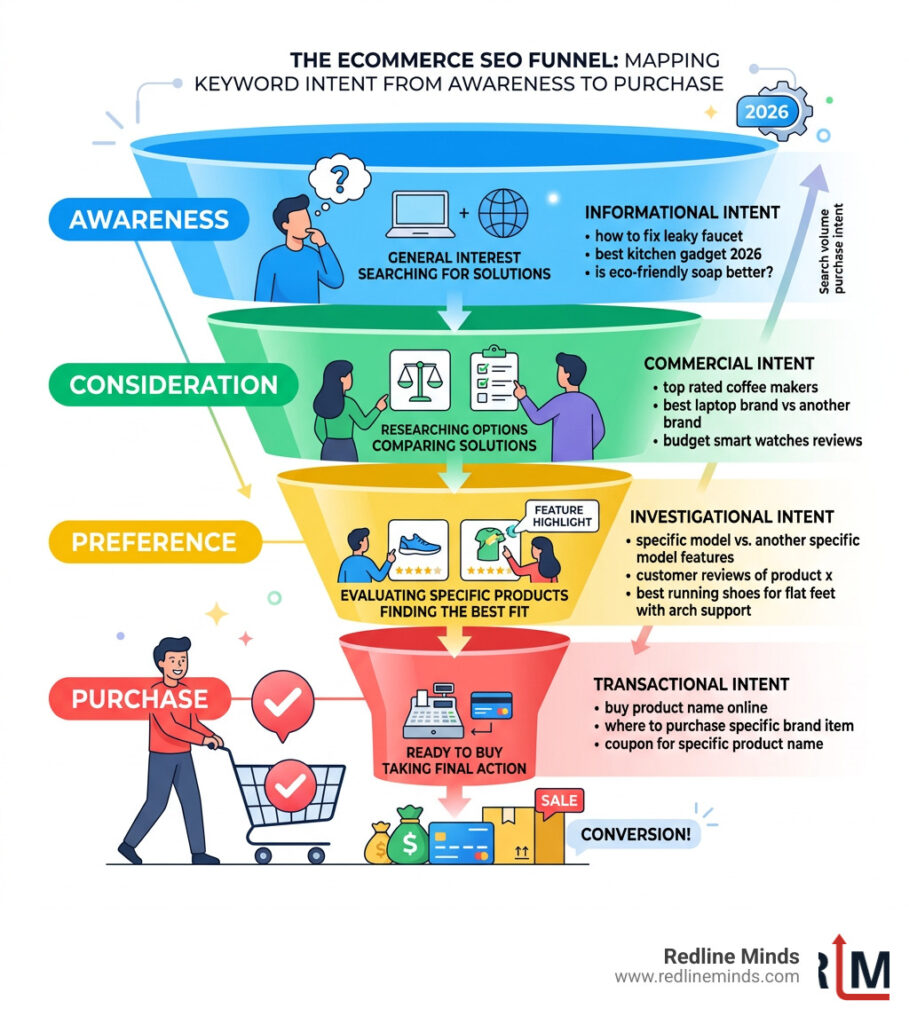
Why Ecommerce Keyword Research is Different in 2026
In standard blogging, you might target “how to clean leather boots.” In ecommerce, we want the person searching for “men’s waterproof insulated leather hiking boots size 11.” The difference is intent. General SEO focuses on information; ecommerce SEO focuses on transactions.
As we move through 2026, the landscape has shifted. We’ve seen that traffic from AI sources to retail websites jumped 1,200% recently. This means customers are asking complex, conversational questions to AI chatbots before they ever land on a product page. Your keyword research ecommerce tools need to help you capture these long-tail, specific queries.

Commercial vs. Informational Intent
Ecommerce sites must prioritize commercial and transactional intent. If you sell yoga gear, a blog post about “the history of yoga” is nice, but a category page optimized for “non-slip natural rubber yoga mats” is what pays the bills. Successful stores use an SEO Checklist for Ecommerce to ensure every high-intent keyword has a dedicated home on the site.
Handling Product Variations and Seasonality
Unlike a static service website, online stores deal with massive catalogs. You aren’t just ranking for “shirts”; you’re ranking for colors, sizes, materials, and brands. Furthermore, ecommerce is highly seasonal. A keyword that explodes in November for Black Friday might be dead weight in July. Understanding these “peaks and valleys” is essential for a sustainable SEO strategy for ecommerce.
B2B vs. B2C Nuances
At Redline Minds, we specialize in B2B and hybrid stores. B2B keyword research often involves part numbers, bulk-buy terms, and technical specifications that a standard B2C shopper would never use. The tools you choose must be able to surface these niche, low-volume but high-value technical terms.
Essential keyword research ecommerce tools for every budget
Choosing the right tool often comes down to the size of your catalog and your growth goals. If you are just starting, free tools are a fantastic way to build a foundation. If you are managing thousands of SKUs, premium tools become a necessity for efficiency.
| Feature | Free Tools | Premium Tools |
|---|---|---|
| Search Volume | Often provided in ranges | Precise monthly estimates |
| Keyword Difficulty | Basic or missing | Advanced (e.g., PKD%) |
| Competitor Gap | Manual work required | Automated “Keyword Gap” reports |
| Data Export | Limited | Full CSV/Excel/PDF |
| AI Integration | Minimal | Proactive AI recommendations |
Using professional ecommerce SEO tools allows you to stop guessing and start making data-driven decisions.
Best free keyword research ecommerce tools
You don’t always need a massive budget to find gold-mine keywords. Here are the most reliable free options for 2026:
- Google Keyword Planner: Originally built for ads, Google Keyword Planner is still a powerhouse for organic research. It provides “from the source” data on search volume and competition levels. While it groups volumes into ranges for non-advertisers, it’s unbeatable for finding related phrases.
- Google Autocomplete: This is the most underrated tool in your arsenal. By typing a seed keyword into the search bar, Google Autocomplete reveals what real people are searching for right now.
- WordStream’s Free Keyword Tool: This tool is a great alternative to Google’s planner. It allows you to filter by industry (24 different verticals!) and location, which is vital for niche ecommerce stores. You can even enter a competitor’s URL to see what keywords they are targeting.
- Ubersuggest (Free Tier): Neil Patel’s Ubersuggest offers a generous free version that provides keyword ideas, seasonal trends, and even some competitor data. It’s particularly good at showing “comparison” keywords (e.g., “Brand A vs Brand B”), which are high-intent gems.
- Keyword Tool Dominator: If you sell on marketplaces, this is a must-have. It pulls autocomplete data from Amazon, Walmart, and eBay. Since people on Amazon are there specifically to buy, these keywords often convert much higher than general Google searches.
Premium keyword research ecommerce tools for scaling
When you’re ready to dominate your niche, premium tools provide the “unfair advantage” of deep data and automation.
- Semrush Keyword Magic Tool: This is arguably the gold standard for keyword research ecommerce tools. With a database of over 25 billion keywords, Semrush allows you to filter by “Intent” (Informational, Navigational, Commercial, Transactional) with a single click. Their “Personal Keyword Difficulty” (PKD%) also tells you how hard it will be for your specific site to rank, not just a generic score.
- KWFinder: Part of the Mangools suite, KWFinder is beloved for its user-friendly interface. It excels at finding long-tail keywords with low SEO difficulty. It also has a unique feature that identifies “weak spots” in the top 10 search results, such as pages with outdated content or missing meta tags.
- Ahrefs: Known for having the best backlink index in the world, Ahrefs is also a beast for keyword research. Its “Top Pages” report lets you see exactly which keywords are driving the most traffic to your competitors’ stores.
- Moz Pro Keyword Explorer: Moz uses a unique formula for keyword difficulty that many pros prefer. It incorporates page and domain authority to give you a realistic look at your chances of hitting page one.
How to Conduct Ecommerce Keyword Research Step-by-Step
Knowing the tools is only half the battle; you need a repeatable process to turn data into sales.
1. Build a List of Seed Keywords
Start with what you know. If you sell “organic dog treats,” that’s your seed. Don’t worry about volume yet; just list the core categories and products you offer.
2. Expand with Autocomplete and Marketplace Data
Take those seeds and plug them into tools like Keyword Tool Dominator or the Amazon search bar. Look for modifiers like “grain-free,” “for small dogs,” or “bulk.” These modifiers represent the specific problems your customers are trying to solve.
3. Filter by Intent and Difficulty
This is where many store owners fail. They target high-volume words like “dog treats” and get crushed by big-box retailers. Instead, use your keyword research ecommerce tools to filter for “Commercial” or “Transactional” intent. Look for keywords with a difficulty score that is feasible for your site’s current authority. If you’re a newer store, aim for keywords with a difficulty under 50%.
4. Conduct a Competitor Gap Analysis
Tools like Semrush’s Keyword Gap allow you to put your URL side-by-side with your biggest competitors. The tool will show you “Missing” keywords—terms your competitors rank for, but you don’t. This is often the fastest way to find high-value content ideas.
5. Map Keywords to the Right Pages
Once you have your list, you need to assign them to your site structure:
- Broad terms (e.g., “Dog Treats”) go to your main Category pages.
- Specific terms (e.g., “Organic Grain-Free Chicken Dog Treats”) go to Product pages.
- Informational terms (e.g., “Are organic treats better for dogs?”) go to your Blog.
As you become more comfortable, you might want to learn how to become an SEO expert for your ecommerce site to handle more advanced tasks like technical audits and internal link siloing.
6. Leverage AI Assistance
In 2026, AI is your co-pilot. Tools like Copilot AI can proactively flag when your rankings for a specific product drop or suggest new keywords based on emerging search trends. AI doesn’t replace research, but it certainly makes it faster.
Frequently Asked Questions about Ecommerce Keywords
What is the best tool for finding Amazon-specific keywords?
Keyword Tool Dominator and the Semrush App Center’s ecommerce analytics tools are excellent for this. They pull directly from Amazon’s search API, reflecting what buyers are actually typing into the marketplace, which often differs from what they type into Google.
How do I identify keywords with high commercial intent?
Look for “modifier” words. Words like buy, price, sale, discount, shipping, vs, and review almost always signal that a user is in the middle or end of the buying funnel. Most premium keyword research ecommerce tools now include an “Intent” filter to automate this process for you.
How often should I update my ecommerce keyword strategy?
We recommend a deep dive every six months, but you should monitor your rankings monthly. Ecommerce moves fast—new competitors emerge, and consumer trends change. If you notice a specific category page’s traffic dipping, it’s time to re-run your research and see if the search intent for those terms has shifted.
Conclusion
Mastering keyword research ecommerce tools is about more than just finding high numbers; it’s about understanding the psychology of your shopper. Whether you are using free tools like Google Keyword Planner or investing in the deep analytics of Semrush, the goal remains the same: connect the right product with the right person at the right time.
At Redline Minds, we understand that for B2B and hybrid stores, the stakes are even higher. You need a strategy that balances the massive volume of B2C with the technical precision of B2B. From strategy development to UX/UI design that converts that hard-earned traffic, we help retailers build sustainable growth.
Ready to stop guessing and start growing? Explore more info about ecommerce marketing services and let us help you build an SEO foundation that lasts.
Share this article
Tap into years of experience and turn your site’s visitors into buyers.
Related Posts
-
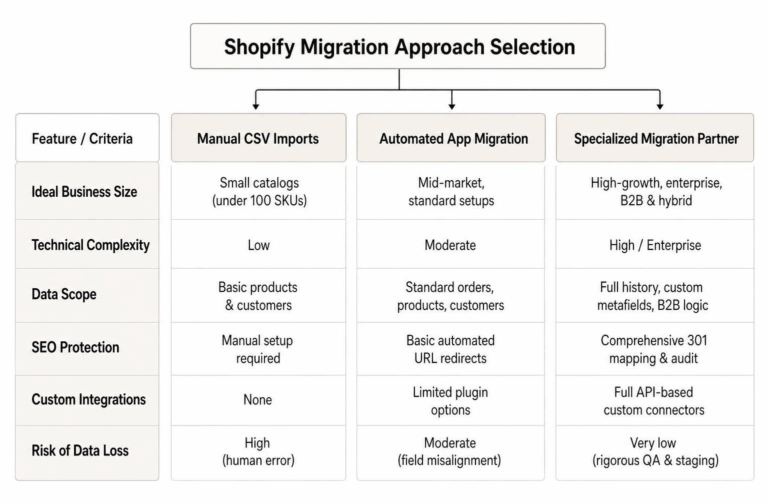
Compare Shopify Migration Services: Options Cheat Sheet
Compare Shopify migration services and find the right Shopify migration company for your store, from manual imports to…
-

Ultimate Checklist for Improving B2B Customer Experience
Ultimate Checklist for Improving B2B Customer Experience – Learn about b2b ecommerce customer experience
-

A Practical Guide to What to Sell Online for Profit
A Practical Guide to What to Sell Online for Profit – Learn about i don t know what…