
Step-by-Step Guide to Improve Ecommerce SEO
Mastering Keyword Research and Intent Mapping
Improving ecommerce SEO means making your online store easier for search engines to find, understand, and rank — so more shoppers discover your products without you paying for every click.
Here’s a quick overview of the most impactful steps:
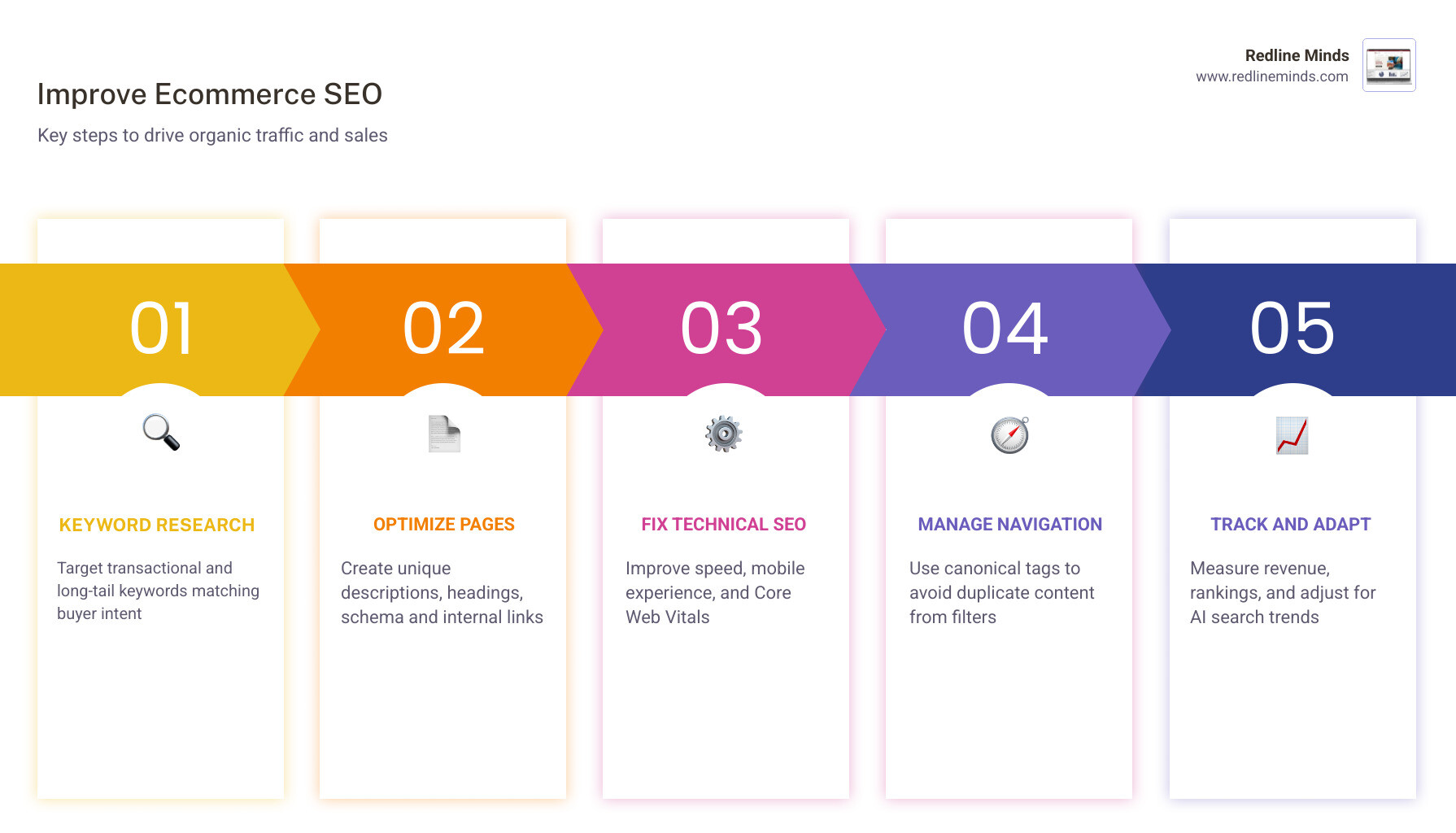
- Do keyword research by buyer intent — target transactional and long-tail terms, not just high-volume ones
- Optimize product and category pages — unique descriptions, clear headings, schema markup, and strong internal links
- Fix technical SEO foundations — site speed, mobile-first design, crawl budget, and Core Web Vitals
- Manage faceted navigation — use canonical tags and noindex to prevent duplicate content from filter URLs
- Build authority — earn backlinks, collect real customer reviews, and syndicate them where buyers look
- Track what matters — organic revenue, conversion rate, and keyword rankings in GA4 and Google Search Console
- Adapt to AI search — optimize for AI Overviews, zero-click results, and visual search trends
Organic search is one of the most valuable channels an online retailer can invest in. It converts better than social media, compounds over time, and doesn’t disappear the moment you stop paying.
But for mid-sized stores doing $1M–$10M in annual revenue, organic traffic often feels stuck. The homepage looks fine. A few product pages rank. But sales from search? Flat.
Here’s the reality: most ecommerce stores optimize the wrong things. They focus on the homepage or a handful of products, while the real opportunity — category pages, technical structure, and intent-matched content — goes untouched.
And the landscape is shifting fast. As of 2026, Google AI Overviews appear on roughly 50–60% of US searches. When they show up, organic clicks can drop by as much as 64%, and even the top-ranked result sees its click-through rate fall from 24.7% to just 15.8%. Visibility alone isn’t enough anymore.
At the same time, around 60% of shoppers now browse and buy on mobile, which means a slow or clunky mobile experience doesn’t just hurt conversions — it hurts rankings too.
This guide walks you through a practical, step-by-step system to fix what’s holding your store back and build organic growth that actually lasts.
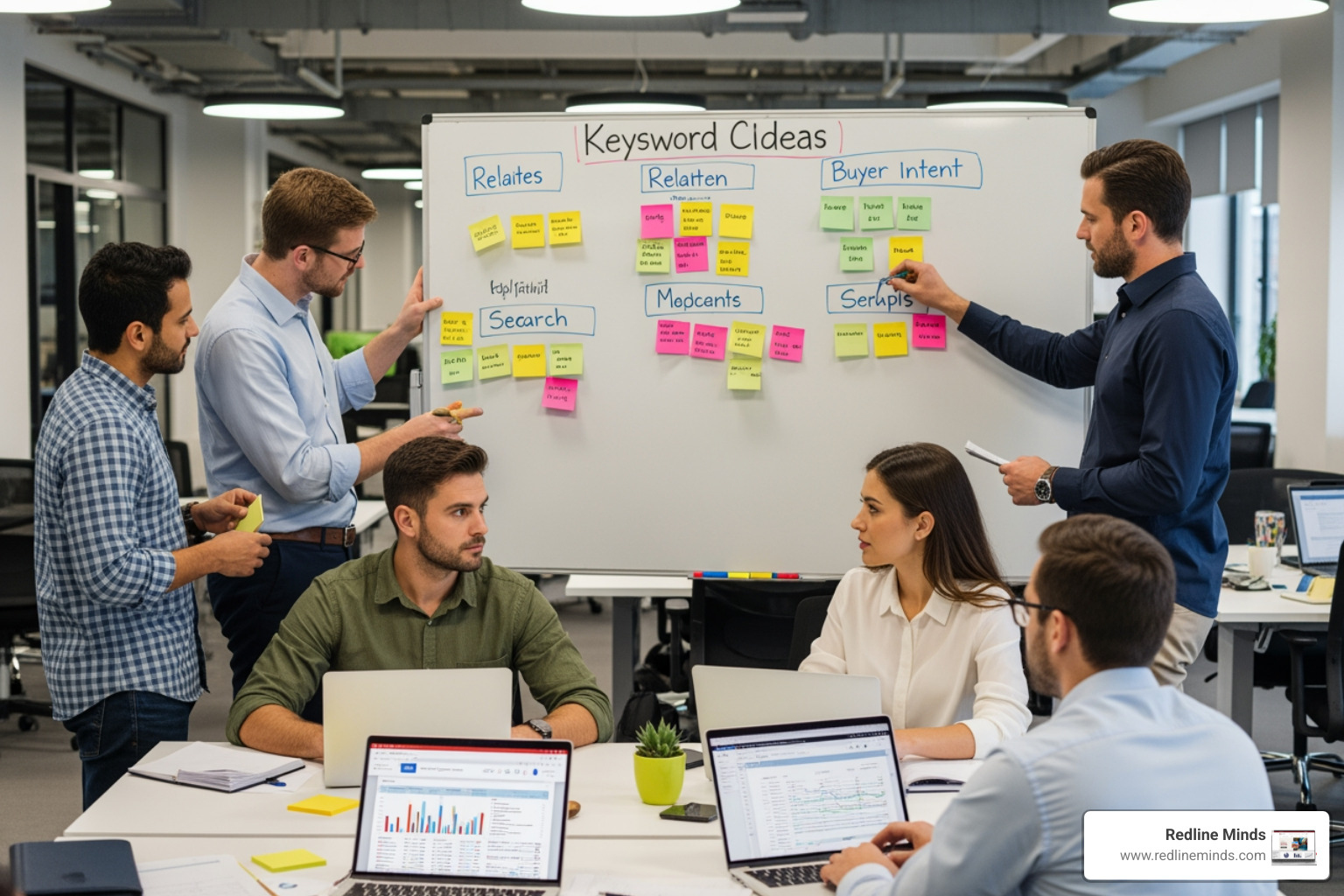
If you want to improve ecommerce SEO, you have to stop thinking about keywords as a list of words and start thinking about them as “intent buckets.” In 2026, Google is incredibly good at understanding why someone is searching. If you try to rank a blog post for a term where people want to buy a product, you’ll lose every time.
The Four Buckets of Buyer Intent
To scale effectively, we map keywords to these four stages:
- Informational (Top of Funnel): Shoppers are looking for answers. “How to choose a mountain bike” or “Benefits of merino wool.” These belong on your blog.
- Navigational: They are looking for a specific brand or store. “Redline Minds SEO services.”
- Commercial Investigation (Middle of Funnel): They know what they need but are comparing options. “Best trail running shoes 2026” or “Nike vs. Adidas for flat feet.” These are perfect for buying guides and comparison pages.
- Transactional (Bottom of Funnel): They are ready to pull out the credit card. “Buy waterproof hiking boots size 11” or “Men’s leather tote bag discount.” These must map directly to your product or category pages.
Semantic SEO and Keyword Clustering
Gone are the days of one keyword per page. We now use semantic SEO to group related terms. For example, a category page for “Winter Jackets” should also naturally include terms like “parkas,” “waterproof outerwear,” and “insulated coats.” This builds a “topic cluster” that tells search engines you are an authority on the subject.
Using top tools for ecommerce keyword research in 2026 like Semrush, Ahrefs, or even Google Search Console data allows us to find these clusters. Look for “People Also Ask” boxes—they are a goldmine for finding the exact questions your customers are typing into their phones.
Technical Strategies to Improve Ecommerce SEO
Technical SEO is the invisible foundation of your store. You can have the best products in the world, but if Google’s bots get lost in a maze of broken links or slow-loading scripts, they won’t index your pages.
Site Architecture: The Three-Click Rule
A common mistake in large stores is a “deep” architecture where products are buried five or six clicks away from the homepage. To improve ecommerce SEO, we aim for a “flat” structure. Every single product should be reachable within three clicks of the homepage. This ensures “link equity” (ranking power) flows through your site efficiently.
Core Web Vitals and Mobile-First Indexing
Since 99% of sites are now on mobile-first indexing, your mobile site is your site in Google’s eyes. We focus on three main metrics:
- LCP (Largest Contentful Paint): How fast the main content loads. Target: Under 2.5 seconds.
- INP (Interaction to Next Paint): How responsive your site is when someone clicks a button. Target: Under 200ms.
- CLS (Cumulative Layout Shift): Does the page jump around while loading? Target: Under 0.1.
Crawl Budget and Faceted Navigation
If you have 1,000 products but your filters (size, color, price) create 100,000 unique URLs, you are wasting your “crawl budget.” Google will spend all its time looking at useless filter combinations instead of your new arrivals.
| Feature | Faceted Navigation | Canonicalization |
|---|---|---|
| Purpose | Allows users to filter products. | Tells Google which URL is the “master” version. |
| SEO Risk | Creates massive duplicate content. | Consolidates ranking power to one page. |
| Best Practice | Use AJAX or block low-value filters. | Always point variants to the main category. |
Check out our SEO checklist for ecommerce for a full breakdown of how to audit your technical health.
On-Page Optimization for High-Intent Traffic
On-page SEO is where you tell Google exactly what you’re selling. It’s not just about keyword placement; it’s about creating a superior user experience that converts.
The Power of Internal Linking
Internal links are the “roads” of your website. They help bots find new pages and help users discover related items. We recommend:
- Linking from category pages to your best-selling products.
- Linking from blog posts to relevant categories.
- Using descriptive anchor text (e.g., “view our merino wool socks” instead of “click here”).
Optimizing Product Pages to Improve Ecommerce SEO
Product pages are your “money pages,” but they are often the most neglected. To improve ecommerce SEO here, you need to move beyond the manufacturer’s provided description.
- Unique Benefit-Led Copy: Aim for at least 300 words. Don’t just list features; explain how the product solves a problem.
- Attribute-Rich Schema Markup: This is critical for 2026. Use Product Schema to include GTIN, price, availability, and brand. This helps your product appear in “rich results” and AI Overviews with price tags and star ratings.
- Image Optimization: Use WebP or AVIF formats to keep speeds high. Ensure every image has descriptive alt-text (e.g.,
alt="mens-blue-waterproof-hiking-boot-side-view"). - Trust Signals: Display verified reviews and clear shipping policies near the “Add to Cart” button.
For a deeper dive, read how to optimize product pages without losing your mind.
Leveraging Category Hubs to Improve Ecommerce SEO
Category pages often drive 3-5x more traffic than individual product pages because they target broader, higher-volume terms.
To turn a category grid into an SEO powerhouse:
- Editorial Sections: Add 200-400 words of introductory text above the product grid and a longer FAQ or “How to Choose” section below it.
- Breadcrumb Navigation: This helps Google understand the site hierarchy and provides a better UX for shoppers.
- Filter Control: Ensure that search engines aren’t indexing every possible filter combination. Use canonical tags to point “Blue Shirts,” “Large Shirts,” and “Cotton Shirts” back to the main “Shirts” category unless those specific combinations have high search volume.
If you’re struggling with “thin” content or duplicates, learn how to fix duplicate content on your product pages.
Navigating AI Overviews and Search Trends in 2026
The search landscape has changed. In May 2026, we aren’t just optimizing for a list of ten blue links. We are optimizing for AI engines that synthesize information.
Winning in the Age of AI Overviews
Google’s AI Overviews (SGE) now appear on over half of all US searches. To be cited by the AI, your content must be:
- Fact-Dense: Use specific attributes, dimensions, and data points.
- Structured: Use clear H2 and H3 headings.
- Authoritative: Include real-world expertise and unique insights that a robot couldn’t just guess.
Visual and Voice Search
With 60% of shoppers on mobile, visual search (searching with a photo) and voice search are booming.
- Visual SEO: Use high-quality, original photography. Google can “read” images to identify products.
- Voice SEO: Optimize for natural language. Instead of “waterproof tent,” think about the question: “What is the best waterproof tent for family camping?”
Stay ahead of the curve with our guide on e-commerce SEO in 2026 and beyond.
Measuring Performance and Scaling SEO Workflows
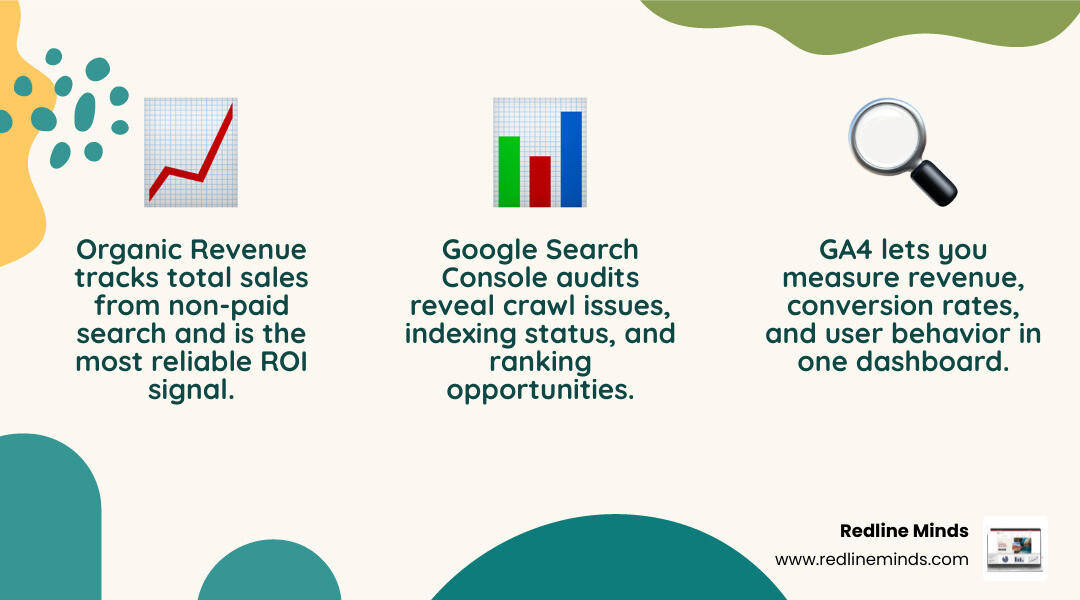
You can’t improve ecommerce SEO if you aren’t measuring the right things. Rankings are nice, but revenue is what keeps the lights on.
Key Metrics to Track
In Google Analytics 4 (GA4), we focus on:
- Organic Revenue: Total sales driven by non-paid search.
- Organic Conversion Rate: Are the people coming from Google actually buying?
- Revenue Per Session: This helps you identify which categories are your “heavy hitters.”
- Assisted Conversions: SEO often starts the journey, even if the final click comes from an email or a direct visit.
Creating Repeatable Workflows
SEO isn’t a “one and done” project. To scale, you need systems:
- Monthly Audits: Check Google Search Console for new crawl errors or 404s.
- Content Cadence: Commit to updating your top 10 category pages every quarter with fresh copy or FAQs.
- Automated Schema: Ensure your platform (Shopify, WooCommerce, Magento) is automatically generating Product Schema as you add new SKUs.
For a masterclass in tracking, see beyond the numbers: a guide to ecommerce SEO analytics.
Frequently Asked Questions about Ecommerce SEO
How long does it take to see results from ecommerce SEO?
SEO is a marathon, not a sprint. While technical fixes (like fixing a “noindex” error) can show results in weeks, a comprehensive strategy usually takes 3 to 6 months to show significant movement in organic traffic and revenue. For brand-new domains, it can take up to a year to build enough authority to compete for high-volume terms.
What is the biggest mistake in ecommerce SEO?
The “Manufacturer’s Curse.” Copying and pasting the product descriptions provided by the manufacturer is the fastest way to get flagged for duplicate content. If 500 other stores are using the same text, Google has no reason to rank yours. Always write unique, benefit-driven copy.
Do product reviews actually help search rankings?
Yes—massively! Reviews provide a constant stream of fresh, unique content that includes long-tail keywords you might have missed. Furthermore, having review stars appear in search results (via AggregateRating schema) can increase your click-through rate by 20-30%.
Conclusion
Improving your store’s visibility in 2026 requires more than just keywords; it requires a commitment to technical excellence and user-focused content. At Redline Minds, we specialize in helping B2B and hybrid retailers navigate these complexities. Whether you are battling AI Overviews or trying to untangle a messy site architecture, the goal remains the same: getting your products in front of the people who are ready to buy.
Ready to take your store to the next level? Establish your online sales strategy with us today and let’s start building a search presence that actually converts.
Share this article
Tap into years of experience and turn your site’s visitors into buyers.
Related Posts
-

The Complete Guide to Affiliate App for Shopify
Discover the best affiliate app for Shopify to grow sales, manage referrals, and boost merchant revenue in 2026.
-

The Ultimate Guide to Types of E-Commerce Payment Systems
Learn the types of e commerce payment system to boost sales and reduce cart abandonment in this complete…
-

A Practical Guide to AI Agent Integration Methods
Learn how AI agent integration connects enterprise systems with MCP, Unified APIs, and custom code for secure, real-time…