
The Complete Guide to Conversion Optimisation Software

Why the Right Conversion Optimisation Software Can Transform Your Online Revenue
Conversion optimisation software helps you turn more of your existing website visitors into paying customers — without spending more on ads.
Here are the top CRO tools worth knowing about in 2026:
| Tool | Best For | Key Strength |
|---|---|---|
| Google Analytics / GA4 | Analytics | Free, powerful traffic & funnel data |
| Hotjar | Behavior analysis | Heatmaps & session recordings |
| VWO | A/B testing | Full-featured experimentation suite |
| Optimizely | Enterprise testing | Multivariate & server-side testing |
| Wisepops | Lead capture | Exit-intent + A/B testing combined |
| Microsoft Clarity | Behavior (budget) | Completely free heatmaps & recordings |
| Crazy Egg | Visual analysis | Affordable heatmaps & split testing |
| LimeSpot | Personalization | AI product recommendations |
| Optibase | No-code testing | Simple A/B testing for Webflow/WordPress |
| Dalton | AI automation | Developer-free automated optimization |
If your online store is pulling in traffic but sales feel stuck, the problem usually isn’t your ads or your products. It’s what happens after the click.
Most mid-sized retailers are losing sales to friction they can’t see — confusing checkout flows, weak calls to action, product pages that don’t build trust. The visitors are there. The conversions aren’t.
That gap is exactly what CRO software is designed to close.
When properly implemented, CRO tools have been shown to increase website conversions by an average of 223%. And unlike paid traffic, every improvement you make compounds over time — more revenue from the same visitors, month after month.
This guide covers the best conversion optimisation tools available in 2026, who they’re built for, and how to pick the right ones for your business.
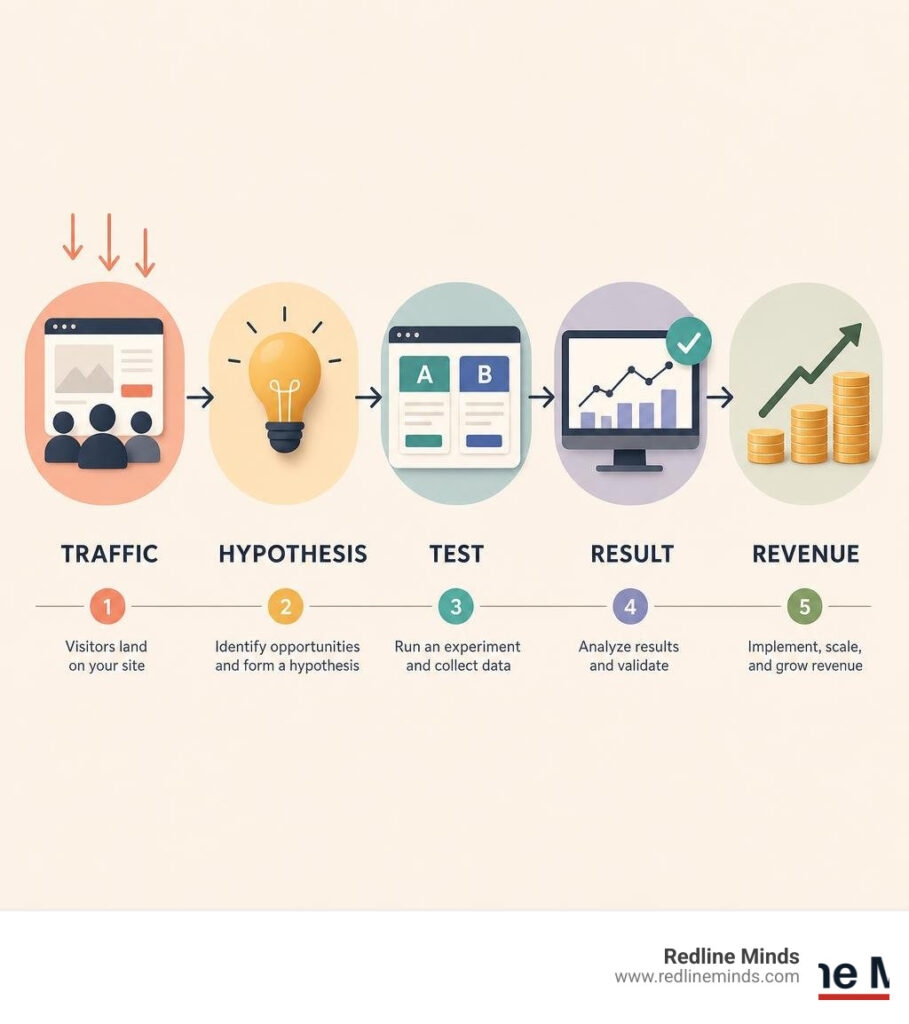
Conversion optimisation software word roundup:
What is Conversion Optimisation Software and Why Your Business Needs It
At its core, conversion rate optimization (CRO) is the systematic process of increasing the percentage of website visitors who take a desired action—whether that’s purchasing a product, signing up for a newsletter, or filling out a wholesale inquiry form. If you want to dive deeper into the fundamentals, check out our comprehensive guide on Everything You Need to Know About Conversion Rate Optimisation.
Conversion optimisation software is the toolkit that makes this process possible. Without these tools, you are essentially flying blind, guessing what your users want based on gut feelings. CRO software replaces guesswork with hard data. It reveals exactly how users interact with your site, where they get confused, and what ultimately convinces them to buy.
For B2B and e-commerce brands alike, this software serves three vital functions:
- Discovering the “Why”: Identifying exactly why visitors are leaving your site without buying.
- Determining the “What”: Formulating data-backed hypotheses about what changes will fix these issues.
- Testing the “How”: Experimenting with different layouts, copy, and designs to prove which version performs best.
The ROI of Implementing Conversion Optimisation Software
Traffic without conversions is just an expensive vanity metric. When you invest heavily in paid search, social media ads, and search engine optimization, a low conversion rate means you are actively draining your marketing budget.
By implementing the right CRO tools, you can lower your customer acquisition cost (CAC) and significantly boost your average order value (AOV). For example, if your website currently converts at 1.5% with 50,000 monthly visitors, you get 750 customers. If you can optimize that conversion rate to 3% using targeted testing and personalization, you double your customers to 1,500 without spending an extra dime on advertising.
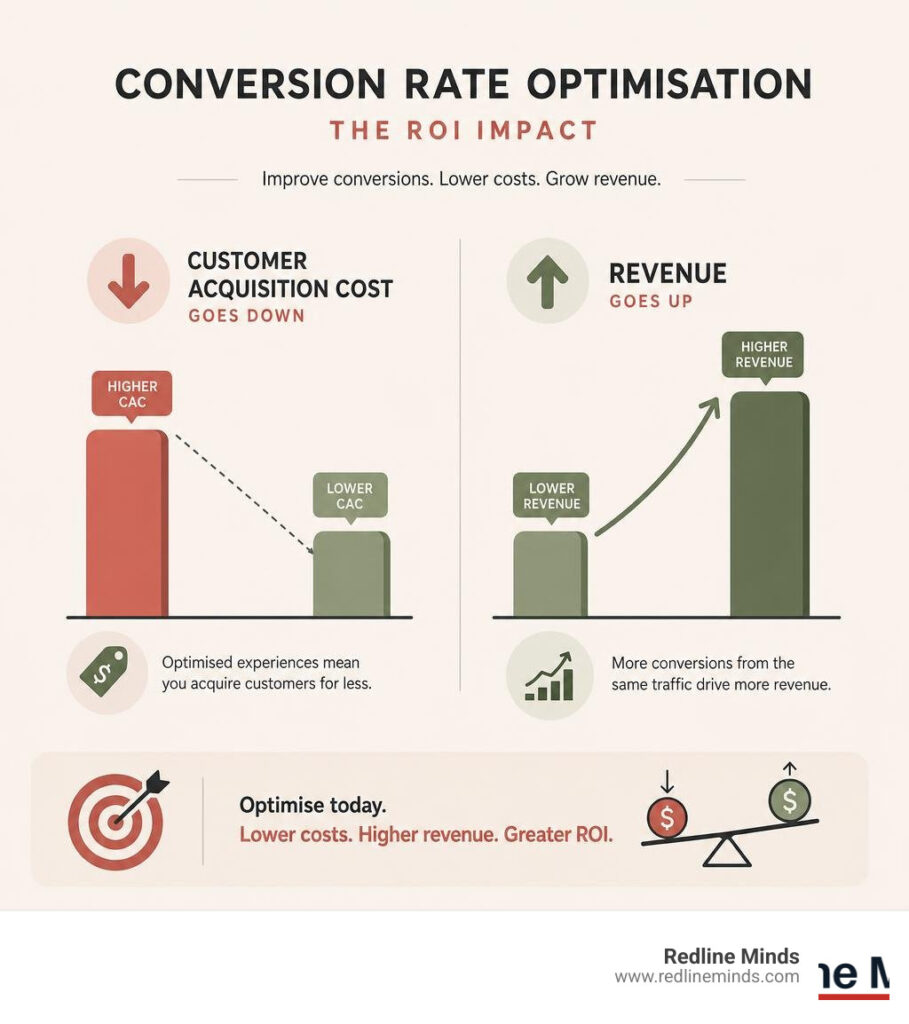
This compounding effect is why smart brands don’t leave money on the table. If you want to maximize your marketing spend, read our breakdown on why you shouldn’t Don’t Leave Money on the Table with Digital Marketing Conversion Rate Optimization.
How CRO Tools Diagnose Website Friction
Every website has friction points—moments of hesitation, confusion, or technical errors that cause a user to abandon their cart or bounce from a landing page. CRO software diagnoses this friction by pairing quantitative analytics (the “what”) with qualitative insights (the “why”).
While quantitative data might show you that 70% of users drop off at the shipping stage of your checkout, qualitative tools like session recordings and heatmaps will show you why they are leaving. Perhaps they are encountering a hidden shipping fee, or maybe a mobile button is overlapping with text, making it impossible to click.
By identifying these user intent barriers, you can systematically remove them, turning a leaky sales funnel into a highly efficient conversion engine. To understand the strategic approach to winning this battle, explore CRO Optimization 101: How to Win at Digital Marketing.
Core Categories of CRO Tools
No single software solution does everything. To build a highly effective conversion engine, most successful brands combine tools from several core categories to gain a complete 360-degree view of their customer journey. For a stellar starting point, we compiled a curated list of 27 Conversion Optimization Tools that span these very categories.
Let’s break down the primary types of CRO software you should consider for your marketing stack.
Quantitative Analytics vs. Qualitative Behavior Tools
Understanding the distinction between quantitative and qualitative tools is the foundation of any successful optimization strategy.
- Quantitative Analytics Tools (like Google Analytics 4, Adobe Analytics, and Heap) track numerical data and user events. They tell you what is happening on your site. They measure page views, bounce rates, traffic sources, cart abandonment rates, and overall conversion funnels.
- Qualitative/User Behavior Tools (like Hotjar, Microsoft Clarity, Glassbox, and Smartlook) capture visual representations of real human behavior. They tell you why things are happening.
By utilizing heatmaps, you can see exactly where users click, scroll, and hover. Session recordings allow you to watch real-time replays of visitors navigating your site, making it easy to spot “rage clicks” (when a user repeatedly clicks a broken element) or confusing navigation paths. For a detailed review of how to track these metrics without breaking the bank, read about The Best Free and Paid Tools for Tracking Your Marketing Conversions.
A/B Testing and Experimentation Platforms
Once you have identified a friction point, you need a way to test your proposed solution. This is where A/B testing and experimentation platforms come in.
These tools allow you to split your website traffic between two or more versions of a page:
- A/B Testing (Split Testing): Compares the original page (Control) against one modified version (Variation A) to see which one performs better.
- Multivariate Testing (MVT): Evaluates multiple combinations of different elements (such as testing three different headlines and two different CTA button colors simultaneously) to find the absolute best-performing layout.
Modern experimentation tools like VWO, Optimizely, and the highly intuitive Optibase — A/B Testing & Website Optimization Platform allow marketers to design, launch, and measure these tests without relying on a developer to rewrite the site’s code for every single experiment. They use statistical analysis (often Bayesian models) to determine when a test has reached statistical significance, ensuring your decisions are backed by math, not luck.
Personalization and Lead Capture Software
Not all website visitors are the same. A returning customer from Tennessee has different needs and buying patterns than a first-time visitor from New York. Personalization engines allow you to dynamically alter your website’s content, layout, and product recommendations based on real-time user attributes, referral sources, and past browsing behavior.
AI-powered personalization tools like LimeSpot can deliver tailored product recommendations that increase conversion rates by up to 5%.
Simultaneously, lead capture software (such as Wisepops or OptinMonster) helps you recover abandoning visitors. By utilizing exit-intent technology, these tools detect when a user’s mouse is moving toward the “close tab” button and trigger a well-timed popup, discount, or newsletter signup form. This simple tactic can recover up to 15% of abandoning traffic and turn window shoppers into long-term leads. For more strategies on refining this part of your store, explore our Checkout Optimization Tips to Turn Window Shoppers into Buyers.
The Best CRO Tools to Maximize Your Website ROI
Selecting the best conversion optimisation software requires balancing your team’s technical expertise, your existing tech stack, and your marketing budget. To avoid getting overwhelmed by the hundreds of options on the market, we recommend focusing on tools that offer clear, actionable insights without requiring a massive engineering lift. You can read our detailed guide on CRO Software Reviews That Won’t Waste Your Time for a deeper dive.
| Software | Primary Category | Best For | Key Feature |
|---|---|---|---|
| VWO | Experimentation | Mid-Market to Enterprise | Visual no-code editor + behavioral analytics integration |
| Hotjar | Qualitative Analytics | SMBs & Agencies | Visual heatmaps, session replays, and quick user surveys |
| Wisepops | Lead Capture | E-commerce & SaaS | Exit-intent popups with built-in A/B testing and AI cart recovery |
| Optibase | No-Code Testing | Webflow & WordPress Users | Native page builder integrations with zero layout shifting |
| Dalton | AI Optimization | Fast-Growing Brands | Autonomous AI-generated test variants and self-optimizing code |
| Microsoft Clarity | Qualitative Analytics | Budget-Conscious Teams | Completely free session recordings and rage-click tracking |
How to Choose the Right Conversion Optimisation Software for Your Tech Stack
When evaluating CRO software, don’t just look at the feature list. You must also consider how well the tool respects user privacy, maintains site security, and integrates with your current systems.
- GDPR Compliance and Data Privacy: Ensure any tool you implement offers robust data-masking capabilities. This prevents sensitive customer information (like credit card numbers or personal addresses) from being captured in session recordings or sent to third-party servers.
- API and Universal Integrations: Your CRO tools shouldn’t live in a silo. Look for software that integrates natively with your CMS (Shopify, WooCommerce, Webflow), your CRM (HubSpot, Salesforce), and your primary analytics platform (GA4).
- Performance and Site Speed: Heavy scripts can slow down your website, hurting your SEO and your conversion rates. Choose tools that utilize lightweight, asynchronous scripts to protect your Core Web Vitals.
To see how industry experts rank and evaluate these tools, watch this video on the 9 Best CRO Tools to 10X Your Conversion Rates in 2025 (Ranked ….
Top AI-Powered and No-Code Testing Platforms
The CRO landscape has shifted dramatically with the rise of agentic AI and no-code experimentation platforms. Traditionally, running an A/B test required a designer to create new assets, a copywriter to draft variations, and a developer to code the test into existence. This manual process often meant that testing was too slow and expensive for smaller teams.
Today, platforms like Dalton: AI-Powered Website Optimization & CRO Platform have revolutionized the workflow. Dalton scans your website, automatically identifies conversion bottlenecks, generates optimized copy and layout variants using AI, and runs the tests autonomously—requiring only a single click for approval from your team.
Similarly, tools like CROAI and pagent.ai act as self-optimizing engines that continuously test headlines, call-to-action buttons, and value propositions in the background while you sleep. These tools are game-changers for lean marketing teams who want enterprise-level optimization without the enterprise-level resource drain. To ensure your baseline user experience is solid before layering on these AI tools, consult The Ultimate Guide to Ecommerce UX That Actually Converts.
Frequently Asked Questions
What is the difference between quantitative and qualitative CRO tools?
Quantitative tools focus on the “What”—they provide hard, numerical data about user actions. They track metrics like page views, bounce rates, conversion funnels, and click-through rates. Google Analytics is the classic example of a quantitative tool.
Qualitative tools focus on the “Why”—they offer visual and experiential insights into how users actually interact with your site. They include heatmaps, session recordings, and user feedback surveys.
To achieve the best results, you should always combine both. Use quantitative tools to find out where your website is losing money, and qualitative tools to understand why users are leaving. For a deeper look at how these two methodologies work together, read our dedicated guide on Conversion Rate Optimization (CRO).
How much traffic do I need to run A/B tests effectively?
Historically, traditional A/B testing required tens of thousands of monthly visitors to achieve statistical significance. If your traffic is too low, a single random purchase can skew your test results.
However, modern CRO tools have developed clever workarounds for low-traffic websites:
- Micro-Conversions: Instead of testing for final purchases, optimize for earlier steps in the funnel, such as “Add to Cart” clicks or newsletter signups, which naturally occur more frequently.
- Engagement-Based Testing: Tools like CROAI use advanced algorithms to measure user engagement scores (combining scroll depth, time on site, and clicks) to determine winning variations with as few as a few hundred visitors per month.
Can I combine multiple CRO tools without slowing down my website?
Yes, but you must be strategic. Installing too many heavy JavaScript snippets into your website’s header can increase page load times, which directly harms your user experience and SEO.
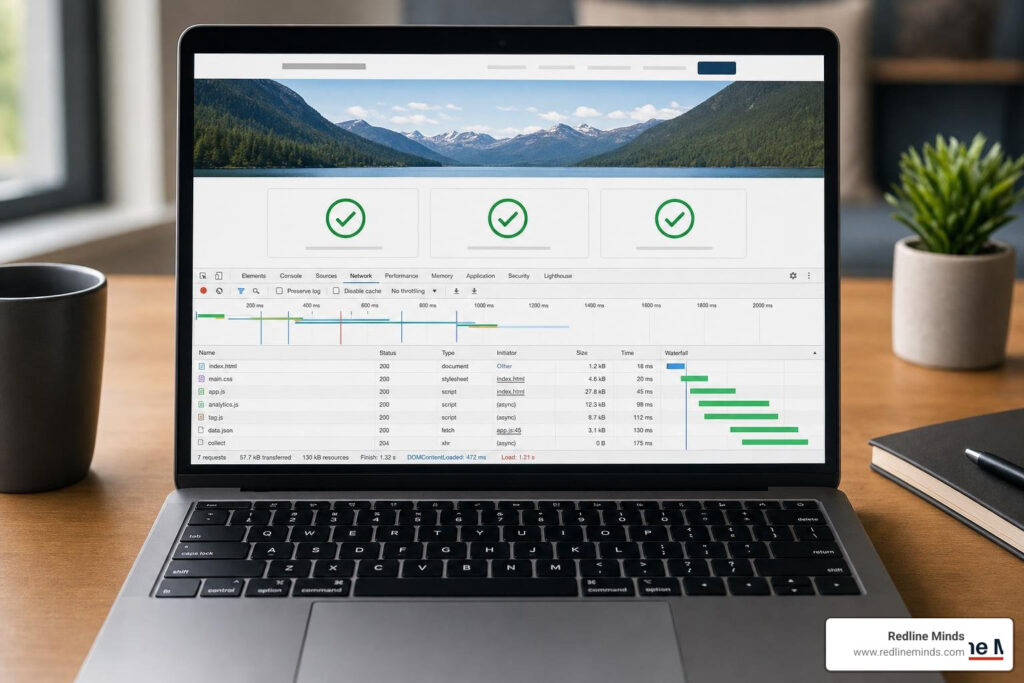
To keep your site fast while using a multi-tool CRO stack, follow these best practices:
- Use Asynchronous Scripts: Ensure all your CRO tools load asynchronously. This means the script loads in the background without blocking the visual elements of your page from rendering.
- Prioritize No-Flicker Technology: Choose testing platforms (like Optibase or Dalton) that apply visual variations in under 100 milliseconds to prevent the “flicker effect” (where the user briefly sees the old page before the new variation loads).
- Consolidate with All-in-One Platforms: Where possible, use platforms like VWO or Hotjar that bundle multiple features (heatmaps, session recordings, and surveys) into a single, optimized tracking script.
Conclusion
Maximizing your online revenue shouldn’t feel like a guessing game. By implementing the right conversion optimisation software, you can stop leaving money on the table, lower your customer acquisition costs, and turn your website into a self-optimizing sales engine.
At Redline Minds, we specialize in helping ecommerce retailers, B2B brands, and hybrid stores build high-converting digital experiences. From strategic consulting and custom web development to UX/UI design and deep-dive SEO audits, our team is dedicated to helping you scale your online sales channels.
We are proudly based in Tennessee, with our main office located at 349 Nancy Dr, Jefferson City, TN 37760. If you are ready to stop guessing and start growing, learn more about our dedicated Conversion Rate Optimisation services or check out our location and reviews on Mapquest. Let’s work together to unlock the true potential of your online store!
Share this article
Tap into years of experience and turn your site’s visitors into buyers.
Related Posts
-
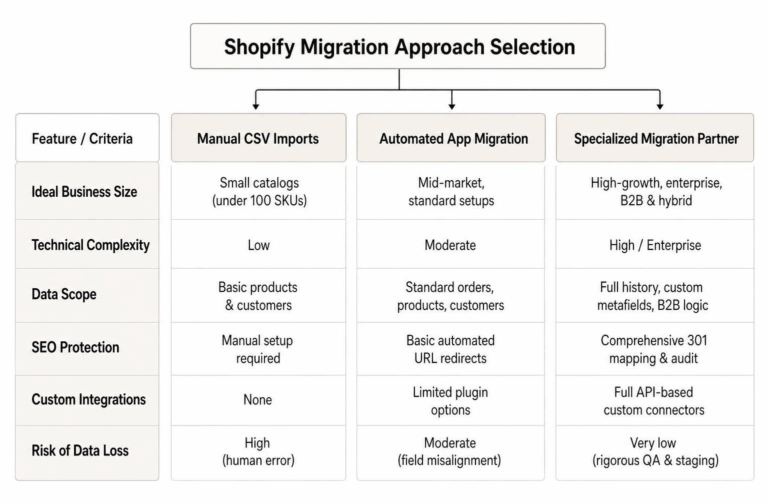
Compare Shopify Migration Services: Options Cheat Sheet
Compare Shopify migration services and find the right Shopify migration company for your store, from manual imports to…
-

Ultimate Checklist for Improving B2B Customer Experience
Ultimate Checklist for Improving B2B Customer Experience – Learn about b2b ecommerce customer experience
-

A Practical Guide to What to Sell Online for Profit
A Practical Guide to What to Sell Online for Profit – Learn about i don t know what…