
The Definitive Guide to B2B Ecommerce Strategy

Why Your B2B Ecommerce Strategy Determines Who Wins Online in 2026
A strong B2B ecommerce strategy is the difference between scaling past $10M in revenue and watching your growth flatline. Here’s what you need to know at a glance:
A B2B ecommerce strategy is your plan for selling products or services to other businesses online. It covers your technology, buyer experience, pricing logic, marketing, and operations — all working together to drive revenue and retention.
The core components of a successful B2B ecommerce strategy:
- Clear objectives — revenue growth, cost reduction, customer retention, or brand awareness
- Defined business model — wholesale, B2B2C, distributor-based, or manufacturer direct
- Deep buyer understanding — who buys, how they buy, and what they need
- A strong USP — why buyers choose you over competitors
The numbers make the opportunity hard to ignore.
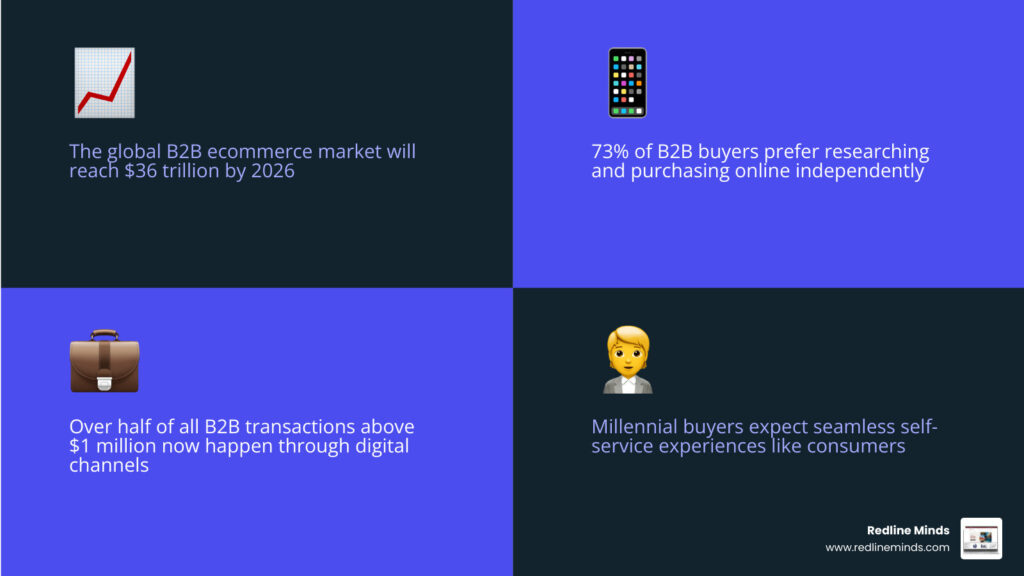
The global B2B ecommerce market is projected to hit $36 trillion by 2026. More than half of all B2B transactions over $1 million are now processed through digital channels. And 73% of B2B buyers prefer to research and purchase independently online — without ever talking to a sales rep.
The old model — where a sales rep controlled the entire buyer journey — is becoming obsolete fast.
Today’s B2B buyers are largely millennials. They expect the same seamless, self-serve experience they get as consumers. They’re researching on mobile, making large purchases online, and choosing vendors based on the quality of the digital experience as much as the product itself.
But here’s the problem most mid-sized businesses run into:
They treat B2B ecommerce like B2C with a bulk pricing tag. That approach misses the complexity — custom catalogs, approval workflows, net terms, multi-user accounts, ERP integrations — and it leaves serious revenue on the table.
This guide walks you through everything: the four strategic pillars, the right tech stack, proven marketing tactics, and a phased implementation roadmap you can actually use.
B2b ecommerce strategy terms at a glance:
- b2b lead generation strategies
- b2b online store
Understanding the B2B Ecommerce Landscape in 2026
As we navigate through May 2026, the B2B world looks very different than it did just a few years ago. The “consumerization of B2B” is no longer a buzzword; it is the standard. We’ve seen a massive shift where 73% of B2B buyers now prefer to research and purchase independently online. If your website isn’t providing a frictionless path to purchase, you aren’t just losing a sale—you’re losing a long-term relationship.
Mobile commerce has also taken center stage. Mobile devices now generate or influence about 70% of online sales in leading B2B organizations. Procurement managers are no longer tethered to their desks; they are scanning barcodes in warehouses, checking order statuses on job sites, and approving multi-thousand-dollar quotes from their phones during their commute. To stay competitive, your b2b ecommerce strategy must be mobile-first, not just “mobile-friendly.”
Furthermore, the complexity of the B2B sales cycle hasn’t disappeared—it has simply moved online. We are dealing with longer sales cycles, multi-user accounts where five different people might need to approve a single purchase, and highly specific data requirements. To win, businesses must implement winning strategies for B2B ecommerce in 2023 – Adobe for Business that bridge the gap between complex logic and simple user experiences.
B2B vs. B2C: Key Strategic Differences
While B2C focuses on emotional triggers and quick, individual transactions, B2B is built on logic, efficiency, and long-term partnerships. In B2B, we aren’t just selling a product; we are selling a solution that fits into another company’s workflow.
Key differences include:
- Order Volume and Frequency: B2B involves bulk ordering and predictable reorder cycles.
- Pricing Complexity: Instead of one price for everyone, B2B requires negotiated, account-specific pricing.
- Decision-Making Units: You aren’t selling to one person; you’re selling to a committee of procurement officers, engineers, and C-suite executives.
- Payment Terms: While B2C is almost exclusively credit card or digital wallet, B2B requires net terms (Net 30/60/90), purchase orders, and trade credit.
Understanding why B2B self-service portals are the future of wholesale is critical here. These portals allow your customers to manage their own accounts, view their specific pricing, and reorder in seconds, which removes the friction inherent in traditional sales calls.
Primary B2B Ecommerce Models
Before you can build a strategy, you need to know which model you’re operating under. We often see businesses successfully blending these models as they grow.
- Wholesale: Selling goods in bulk to other businesses who then resell them.
- B2B2C: A model where a manufacturer sells to a wholesaler or retailer, who then sells to the end consumer, with the manufacturer often supporting the digital experience.
- Distributor-Based: Acting as the middleman, offering products from various manufacturers to a specific niche of contractors or businesses.
- Manufacturer Direct: Bypassing traditional distribution to sell directly to the end business user, often resulting in higher margins.
If you’re looking to scale, learning how to build a B2B empire with custom solutions and bulk ordering can provide the blueprint for moving from a simple storefront to a complex, high-volume operation.
The 4 Pillars of a Successful B2B Ecommerce Strategy
Success in B2B ecommerce doesn’t happen by accident. It requires a stable foundation built on four critical pillars. If one of these is weak, the entire project can topple.
| Pillar | Strategic Objective | Tactical Execution |
|---|---|---|
| Objectives | Define what “success” looks like | Set KPIs for revenue, cost savings, and adoption |
| Business Model | Choose how you will go to market | Select between wholesale, D2C, or hybrid models |
| Target Audience | Understand who is actually buying | Create detailed buyer personas and journey maps |
| USP | Differentiate from the competition | Highlight custom pricing, fast shipping, or tech specs |
According to How To Build a Successful B2B Ecommerce Strategy in 2025 – Shopify Canada, these pillars ensure that your technology serves your business goals, rather than the other way around.
Defining Your B2B Ecommerce Strategy Objectives
We always tell our clients: if you don’t know where you’re going, you’ll never know when you’ve arrived. Your objectives should fall into five main categories:
- Revenue Growth: Reaching new markets and increasing the Average Order Value (AOV).
- Cost Reduction: Automating manual order entry to free up your sales team for high-value consulting.
- Process Optimization: Streamlining the “quote-to-cash” cycle.
- Brand Awareness: Becoming the “go-to” authority in your specific niche.
- Customer Retention: Making it so easy to reorder that customers wouldn’t dream of switching to a competitor.
Identifying Your Target Audience and Buyer Personas
In B2B, your “customer” is actually several different people with different motivations.
- The Procurement Manager: Cares about budget, net terms, and reliable delivery.
- The Technical Engineer: Cares about CAD models, STEP files, and exact specifications.
- The C-Suite Executive: Cares about ROI, long-term stability, and strategic partnership.
By identifying these psychographics and purchase motivators, we can tailor the site’s content to answer their specific questions before they even ask them.
Building Your Technical Infrastructure and Platform Selection
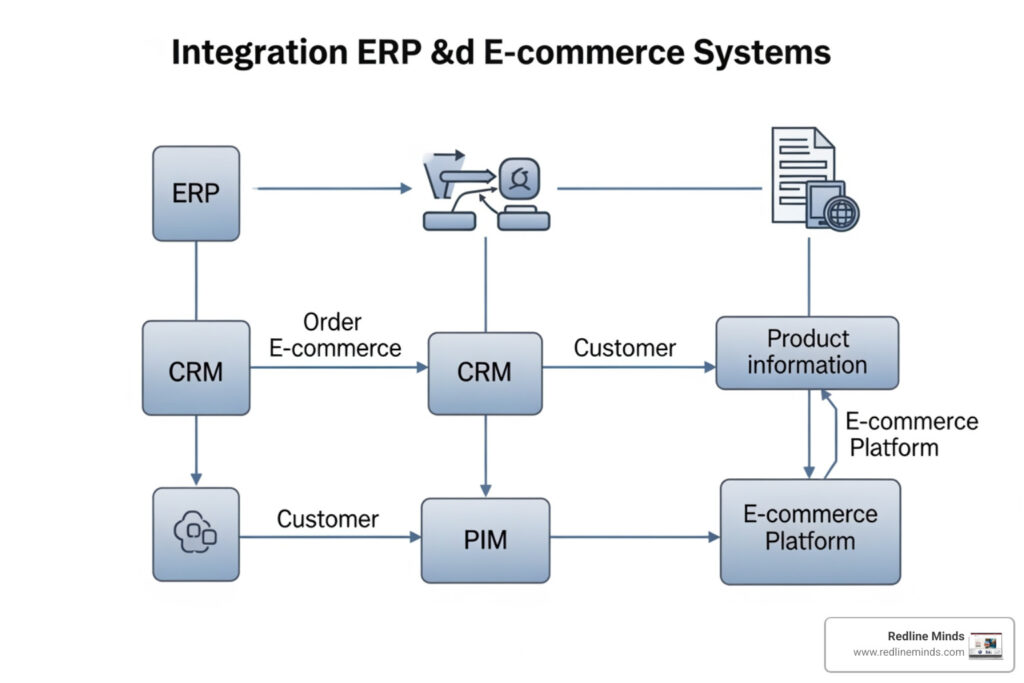
Your technology stack is the engine of your b2b ecommerce strategy. In 2026, a standalone “shopping cart” isn’t enough. You need a unified ecosystem where your ecommerce platform, ERP (Enterprise Resource Planning), CRM (Customer Relationship Management), and PIM (Product Information Management) systems talk to each other in real-time.
We recommend an API-first or “headless” approach for complex businesses. This decouples the front-end (what the user sees) from the back-end (the logic and data), allowing for extreme site speed and the ability to push data to any device—from a smart watch to a warehouse scanner—without breaking the core system.
Essential Features for a B2B Ecommerce Strategy
To meet the high expectations of modern buyers, your platform must include:
- Custom Catalogs: Showing only the products a specific customer is authorized to buy.
- Tiered and Negotiated Pricing: Logged-in users should see their specific contracted rates.
- Net Terms and Credit Limits: Allowing buyers to checkout using their existing trade credit.
- Requisition Templates: Enabling buyers to save “shopping lists” for frequent restocks.
- Quick Order Tools: Letting users upload a CSV or enter SKUs directly to build a massive order in seconds.
Choosing the right foundation is vital, so be sure to review the best platforms for scaling your B2B ecommerce operations to find a fit for your specific complexity level.
Selecting the Right Vendor and Technology Stack
When selecting a vendor, don’t just look at the sticker price. Consider the Total Cost of Ownership (TCO). SaaS (Software as a Service) solutions are often preferable because they handle security compliance (like PCI DSS) and automatic updates, reducing your long-term maintenance burden.
The most important technical factor is bidirectional data sync. If your website shows a product is in stock, but your ERP says it’s sold out, you’re going to have a very unhappy customer. At Redline Minds, we specialize in ensuring these systems work in perfect harmony. You can learn more about our approach to B2B Ecommerce and how we handle these complex integrations.
High-Impact B2B Marketing and Retention Tactics
Once the site is live, the work of driving and keeping traffic begins. In B2B, traditional “spray and pray” advertising rarely works. Instead, we focus on high-intent, relationship-driven tactics.
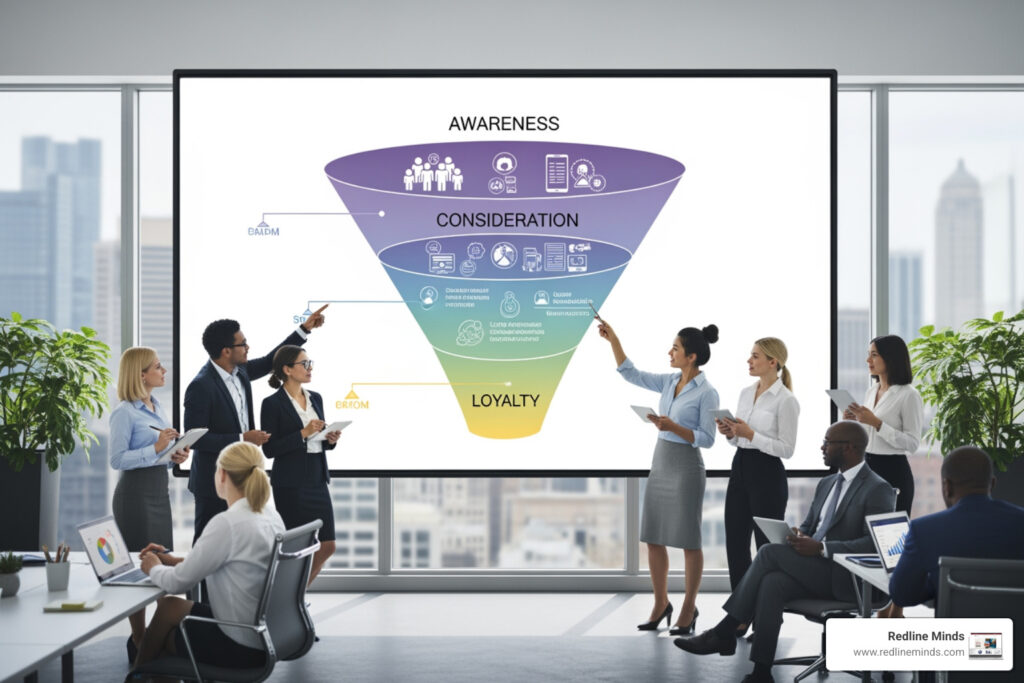
Account-Based Marketing (ABM) is the gold standard for 2026. Instead of targeting everyone, you target specific high-value accounts with personalized ads, custom landing pages, and tailored catalogs. This, combined with Search Engine Optimization (SEO) focused on long-tail, intent-based keywords (like “wholesale industrial grade hydraulic pumps” rather than just “pumps”), ensures you are found by the right people at the right time.
Driving Traffic with B2B Lead Generation
B2B buyers are researchers. They want whitepapers, webinars, and case studies that prove your solution works. Thought leadership isn’t just about ego; it’s about building the “category authority” that makes a buyer trust you with a $500,000 order.
We’ve put together a specialized resource on the no-nonsense guide to B2B lead generation strategies that covers how to capture this demand effectively.
Optimizing the B2B Ecommerce Strategy for Conversions
Conversion Rate Optimization (CRO) in B2B is about removing friction.
- Site Speed: A one-second delay can cost millions in lost B2B revenue.
- Mobile Optimization: Ensure the checkout process is seamless on a thumb-driven interface.
- Buyer Assistance: Features like “Save for Later” or “Download Quote” allow buyers to get internal approval before finalizing the purchase.
The checkout page is where the most friction occurs. For inspiration, check out the ultimate list of high-converting checkout page designs to see how to handle complex B2B fields without overwhelming the user.
Implementation Roadmap and Post-Launch Optimization
We recommend a phased approach. Trying to launch a “perfect” system with every single feature on day one is a recipe for delay and budget overruns.
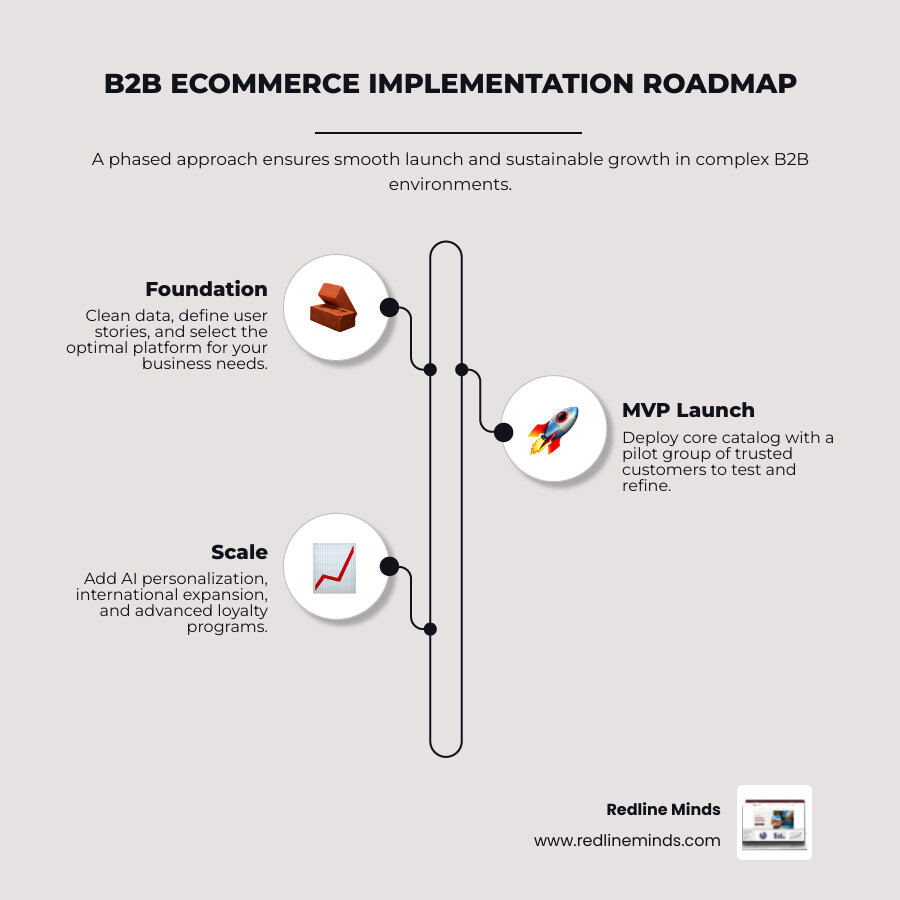
- Phase 1 (Months 1-3): Foundation. Clean your data, define user stories, and select your platform.
- Phase 2 (Months 4-6): MVP Launch. Launch with a core catalog and a pilot group of trusted customers.
- Phase 3 (Months 7+): Scale. Add AI personalization, international expansion, and advanced loyalty programs.
Common Mistakes to Avoid During Launch
In our years of consulting, we’ve seen the same hurdles trip up even the best companies:
- Dirty Data: Garbage in, garbage out. If your ERP data is messy, your website will be too.
- Ignoring Stakeholders: If your sales team feels threatened by the website, they won’t promote it. Involve them early.
- Feature Bloat: Don’t build a “space shuttle” when a “reliable truck” will do the job.
- Underestimating Content: B2B buyers need more data—specs, manuals, videos—than B2C buyers.
Measuring Success: KPIs and Analytics
Move beyond vanity metrics like “traffic.” To see if your b2b ecommerce strategy is actually working, track:
- Account Activation Rate: What percentage of your existing offline customers have logged into the portal?
- Self-Service Adoption: How many orders are placed online vs. via phone/email?
- Customer Lifetime Value (CLV): Are digital customers staying longer and spending more?
- Commercial Velocity: How long does it take for a lead to become a closed order?
Frequently Asked Questions about B2B Ecommerce
What are the 4 pillars of a successful B2B ecommerce strategy?
The four pillars are: Objectives (defining goals), Business Model (wholesale, B2B2C, etc.), Target Audience (buyer personas), and Unique Selling Point (your competitive edge).
How does B2B ecommerce differ from B2C?
B2B involves longer sales cycles, multiple decision-makers, account-specific pricing, bulk ordering, and complex payment terms like net terms and purchase orders, whereas B2C is generally simpler and more transactional.
What are the key trends shaping B2B ecommerce in 2026?
The dominant trends include Answer Engine Optimization (AEO) for AI-driven research, mobile-first procurement, AI-powered predictive reordering, and a massive shift toward fully autonomous self-service for even high-value transactions.
Conclusion
Building a b2b ecommerce strategy for 2026 is no small feat, but it is the single most important investment you can make for the future of your business. The transition from a sales-rep-led model to a digital-first, buyer-controlled journey is happening whether you’re ready or not.
At Redline Minds, we specialize in helping mid-market businesses in Tennessee and beyond navigate this complexity. We don’t just build websites; we build commercial architectures that drive real growth. Whether you need to integrate a legacy ERP, design a high-converting UX, or launch an ABM campaign that actually moves the needle, we are here to help.
Ready to stop leaving revenue on the table? More info about our services is just a click away. Let’s build your B2B empire together.
Share this article
Tap into years of experience and turn your site’s visitors into buyers.
Related Posts
-

The Complete Guide to Affiliate App for Shopify
Discover the best affiliate app for Shopify to grow sales, manage referrals, and boost merchant revenue in 2026.
-

The Ultimate Guide to Types of E-Commerce Payment Systems
Learn the types of e commerce payment system to boost sales and reduce cart abandonment in this complete…
-

A Practical Guide to AI Agent Integration Methods
Learn how AI agent integration connects enterprise systems with MCP, Unified APIs, and custom code for secure, real-time…