
Ecommerce Marketing 101

The Ecommerce Marketing Landscape Has Never Been More Competitive
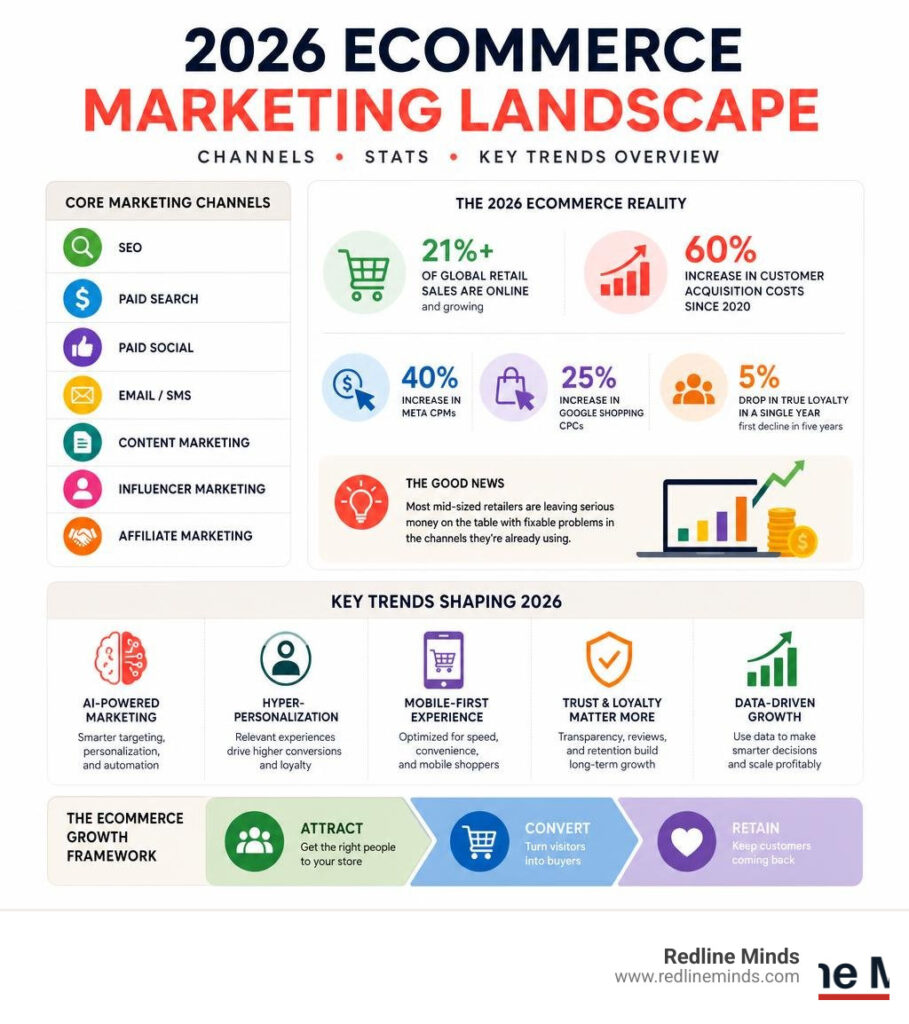
Ecommerce marketing is the practice of driving awareness, qualified traffic, and repeat purchases for an online store — across every channel where your customers spend time.
Quick answer: What is ecommerce marketing?
| Goal | What it means |
|---|---|
| Attract | Get the right people to your store (SEO, paid ads, social) |
| Convert | Turn visitors into buyers (product pages, CRO, offers) |
| Retain | Keep customers coming back (email, SMS, loyalty) |
The core channels are: SEO, paid search, paid social, email/SMS, content marketing, influencer marketing, and affiliate marketing.
E-commerce now accounts for over 21% of global retail sales. That share keeps climbing. And so does the cost of competing for attention.
Average customer acquisition costs have risen 60% since 2020. Meta CPMs are up 40%. Google Shopping CPCs are up 25%. Simply running ads is no longer enough.
At the same time, True Loyalty has dropped 5% in a single year — the first decline in five years. Customers have more choices and less patience than ever before.
If you’re doing $1M–$10M in annual sales, you’ve likely felt this squeeze. Traffic is expensive. Conversion rates are flat. Repeat purchase rates aren’t where they need to be.
The good news? Most mid-sized retailers are leaving serious money on the table with fixable problems — in the channels they’re already using.
This guide breaks down exactly what works in 2026: which channels drive the best ROI, how to use data and AI to personalize at scale, and how to build a system that compounds over time.
Key ecommerce marketing vocabulary:
What is Ecommerce Marketing in 2026?
At its core, ecommerce marketing is the strategic engine that powers your online business. It is not just about throwing money at ads and hoping for the best; it is a continuous loop of awareness building, qualified traffic generation, and customer retention.
To understand where your efforts should go, we must look at the Ecommerce Marketing Funnel, which tracks the customer’s journey from absolute stranger to passionate brand advocate. In 2026, the funnel is no longer a linear bucket where you pour traffic at the top and collect cash at the bottom. Instead, it is an interconnected ecosystem. If you want to know How to Market Your Online Store Get Your First Sale and keep those sales coming predictably, you must master the unit economics of this funnel.
The survival of your brand depends on three critical metrics:
- Average Order Value (AOV): How much a customer spends during a single checkout.
- Contribution Margin: Your revenue minus variable costs (including shipping, fulfillment, and direct marketing). In 2026, a healthy brand needs a contribution margin of at least 30%. Anything below 25% indicates structural business issues.
- LTV:CAC Ratio: The relationship between the Lifetime Value (LTV) of a customer and the Customer Acquisition Cost (CAC).
With CAC rising dramatically, first-purchase profitability has become incredibly rare. If you acquire a customer for $40 but their first order only nets you a $30 margin, you are operating in the red. This is why retention is the ultimate profit driver. Your LTV:CAC ratio must target a minimum of 3:1, while the healthiest brands operate at 4:1 to 6:1. By focusing on customer lifetime value, you turn one-time buyers into recurring revenue streams.
High-ROI Channels and Strategies to Drive Online Sales
To scale profitably, you cannot afford to treat all marketing channels equally. You need a balanced channel mix that aligns with your business maturity and target audience.
When we design strategies for our clients, we rely on the 70/20/10 Budget Allocation Rule:
- 70% to Proven Channels: Allocate the bulk of your budget to stable, high-intent channels that consistently drive profitable sales (typically Google Shopping, Performance Max, and core Meta campaigns).
- 20% to Testing and Scaling: Use this portion to scale emerging channels or target new audience segments that show promise.
- 10% to Experimental Tactics: Protect your brand’s future by testing cutting-edge platforms, interactive content, or brand-new creative formats.
Understanding how these channels work together is crucial for Driving Traffic to Your Store Which Methods Drive Buyers. Let’s explore how to structure your Online Marketing Ecommerce channels to maximize ROI.
Search Engine Optimization for Ecommerce Marketing
Organic search remains one of the few channels where your investment compounds over time. While paid ads stop delivering traffic the second you turn off the budget, SEO continues to drive high-intent shoppers to your store for months and years to come.
This is particularly important because the first organic result on Google is 10 times likelier to get clicked than the 10th result. To capture this traffic, your strategy must focus on three core pillars:
- Keyword Research: Identify high-intent, transactional keywords that your customers use when they are ready to buy, rather than just informational terms.
- Technical SEO: Ensure your site loads lightning-fast and is fully optimized for mobile devices. A one-second page load delay can reduce conversions by 7%.
- Content Strategy: Create comprehensive gift guides, product comparisons, and educational blog posts that address your buyers’ questions.
To make this work, there must be absolute alignment between your marketing goals and your platform’s capabilities. This is a primary reason why Ecommerce Marketing Optimization and Why Your Product Team Needs to Care is so critical—your technical site structure directly dictates your organic visibility. Staying ahead of search engine updates and implementing structured data will allow you to capitalize on the Top Ecommerce Marketing Trends 2024 and beyond.
Paid Search and Social Commerce
Paid channels are your fastest way to scale, but they require a sophisticated approach in 2026. The days of hyper-specific interest targeting are gone; algorithms on Meta and Google now perform best when given broad targeting and high-quality creative assets.
- Google Shopping & Performance Max: To win here, focus heavily on product feed optimization. Clean data, high-quality images, and descriptive titles are what feed Google’s AI the context it needs to find buyers.
- Meta & Instagram (Advantage+ Shopping): Creative is the new targeting. To prevent creative fatigue, you should aim to build 15 to 20 new ad assets monthly.
- Social Commerce & TikTok Shop: Social platforms have evolved into complete commerce environments where discovery, consideration, and purchase happen in one place.
Influencer marketing has become a massive driver of this social discovery. In fact, 20% of consumers follow influencers specifically to discover what’s worth buying, and 18% have bought a product purely because an influencer promoted it.
To leverage this trend, you can Use Instagram Drive Product Sales by collaborating with nano-influencers (who often charge very reasonable rates while maintaining highly engaged audiences) and integrating user-generated content (UGC) directly onto your product pages. This creates a cohesive Social Media Marketing Ecommerce engine that turns social proof into direct sales.
Email and SMS: The Conversational Heart of Ecommerce Marketing
If paid ads are how you introduce your brand, email and SMS are how you build a relationship. These owned channels are your highest-ROI tools because they allow you to speak directly to your customers without paying a toll to ad networks.
69% of consumers name email as their preferred way for brands to contact them. However, how you treat this channel matters. 23% of consumers say batch-and-blast marketing actively damages their loyalty. Modern email marketing must be behavioral and conversational.
By setting up automated, trigger-based flows, you can deliver highly relevant messages based on exactly what a shopper is doing on your site. Every store should run these core flows:
- Welcome Series: Introduce your brand story and offer a small incentive to convert new subscribers.
- Browse Abandonment: Automatically follow up when someone views a product but doesn’t add it to their cart.
- Cart Abandonment: Remind shoppers of what they left behind with a clear path to complete checkout.
- Post-Purchase Education: Send helpful tips on how to use or care for the product, building trust before asking for a review.
By implementing these automated sequences via a dedicated Email SMS Marketing strategy, you can easily drive 25% to 40% of your total store revenue through automated, highly targeted messages.
Data-Driven Personalization and AI Automation
In 2026, personalization is no longer a luxury—it is table stakes. 58% of consumers value personalized product recommendations, and 55% appreciate highly personalized content. However, a massive gap exists between what marketers think they are delivering and what consumers actually experience.
While 79% of marketers use AI to personalize content, only 25% of consumers say they want more of what they’re currently getting. This is because many brands rely on shallow personalization, like simply dropping a first-name token into an email subject line. True personalization requires a unified data foundation.
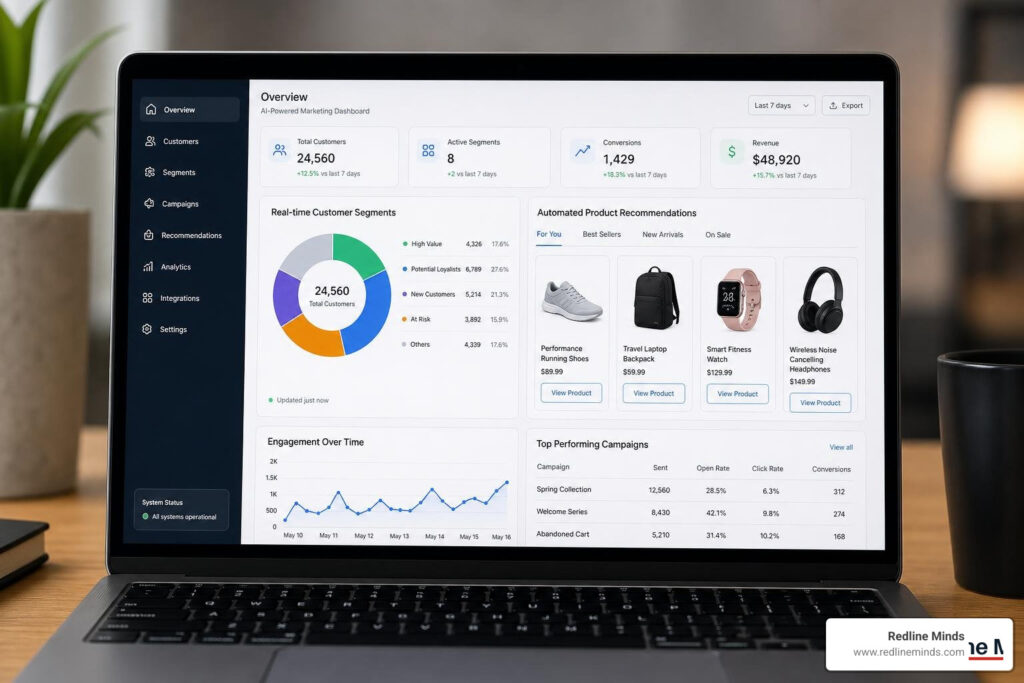
When you pull customer, product, and transaction data into a single source of truth, you can leverage predictive AI to anticipate what your customers want next. Marketers who have embraced this data-driven approach are seeing massive gains: 60% of marketers have seen an increase in customer engagement, and 58% report higher customer loyalty as a direct result of AI adoption.
This scientific approach is supported by academic research. A study on Optimizing e-commerce marketing strategies in the digital economy: a big data approach enhanced by genetic algorithms | Humanities and Social Sciences Communications highlights how advanced algorithmic optimization can dramatically improve promotional campaign reliability and customer satisfaction. By moving away from standardized, one-size-fits-all campaigns and embracing a structured data strategy, brands can deliver personalized experiences that build genuine trust.
Frequently Asked Questions
What is the average ROI for ecommerce marketing campaigns?
The return on investment varies widely by channel, target audience, and product margins. Google estimates that its pay-per-click (PPC) online advertising offers an average ROI of $8 for every $1 spent. Meanwhile, email marketing remains one of the most cost-effective channels, generating an average of $36 for every $1 spent when executed with proper segmentation and automation.
To measure your overall success, we recommend looking beyond platform-reported ROAS (which can often be inaccurate due to attribution issues) and focusing on your Marketing Efficiency Ratio (MER). MER measures your total marketing spend against your total revenue, giving you a clear, blended view of your marketing efficiency. You can find more details on setting realistic benchmarks in this guide on Ecommerce Marketing in 2026 (Create a Winning Strategy).
How do you reduce cart abandonment in 2026?
Cart abandonment happens just over 70% of the time. The primary reason shoppers walk away is unexpected costs at checkout (such as shipping fees or taxes). To combat this, we recommend implementing five key tactics:
- Offer Guest Checkout: Do not force users to create an account just to buy a product.
- Provide Transparent Pricing: Show shipping costs early in the process, or offer free shipping with a clear minimum order value threshold.
- Simplify Checkout: Use a clean, one-page checkout optimized for mobile devices.
- Deploy Exit-Intent Popups: Trigger a targeted offer or assistance message when a user’s cursor moves to close the browser tab.
- Send SMS Reminders: Send a polite, automated text message to shoppers who have consented, which typically achieves a much higher open rate than email.
What is the difference between B2B and B2C ecommerce marketing?
While B2C marketing focuses on emotional appeal, speed, and individual decision-making, B2B ecommerce marketing involves longer sales cycles, multiple stakeholders, and highly rational buying decisions. Many modern brands now operate as hybrid stores, serving both retail consumers and wholesale buyers from a single platform.
| Marketing Dynamic | B2C Marketing | B2B / Hybrid Marketing |
|---|---|---|
| Target Audience | Individual consumers | Procurement managers, business owners |
| Sales Cycle | Short (minutes to days) | Long (weeks to months) |
| Pricing Structure | Standardized pricing | Custom tiered pricing, contract accounts |
| Ordering Process | Single-item or small cart sizes | Bulk ordering, quick reorder forms |
| Key Decision Driver | Emotion, brand identity, social proof | ROI, efficiency, reliability, custom specs |
Conclusion

Building a successful ecommerce marketing strategy in 2026 requires a careful balance of data, technology, and human connection. Whether you are running a fast-growing B2C brand or managing a complex hybrid B2B store, the key to sustainable growth is building a system where your acquisition, conversion, and retention efforts work in perfect harmony.
At Redline Minds, we specialize in helping mid-sized retailers navigate this complex landscape. Based in Jefferson City, Tennessee, our team focuses exclusively on ecommerce consulting, custom web development, UX/UI design, and online marketing. We specialize in B2B and hybrid stores, helping businesses transform standard websites into high-performing, scalable sales channels.
Ready to take your online store to the next level?
- Connect with us on Redline Minds – LinkedIn to stay updated on the latest industry insights.
- Check out our local reviews and business hours on Redline Minds in Jefferson City, TN – Reviews, Hours, and Contact ….
- Find our physical location at 349 Nancy Drive via Redline Minds, 349 Nancy Drive, Jefferson City, TN 37760-4623, US.
- Explore how we can help you scale your business by visiting our Redline Minds Marketing Services.
Share this article
Tap into years of experience and turn your site’s visitors into buyers.
Related Posts
-
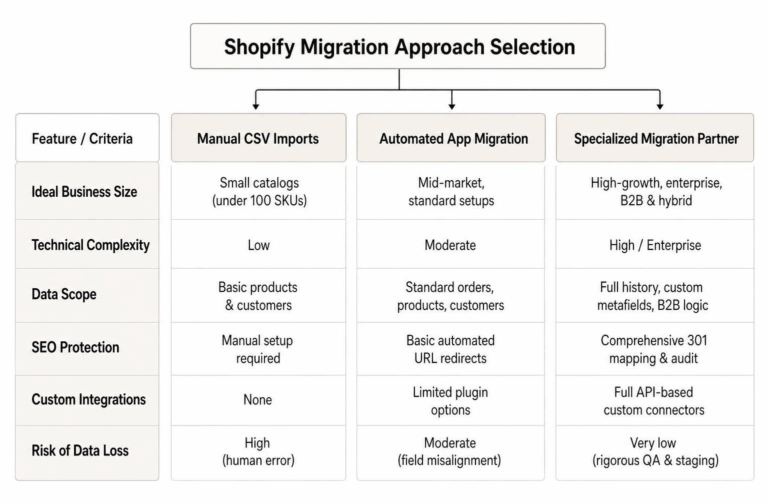
Compare Shopify Migration Services: Options Cheat Sheet
Compare Shopify migration services and find the right Shopify migration company for your store, from manual imports to…
-
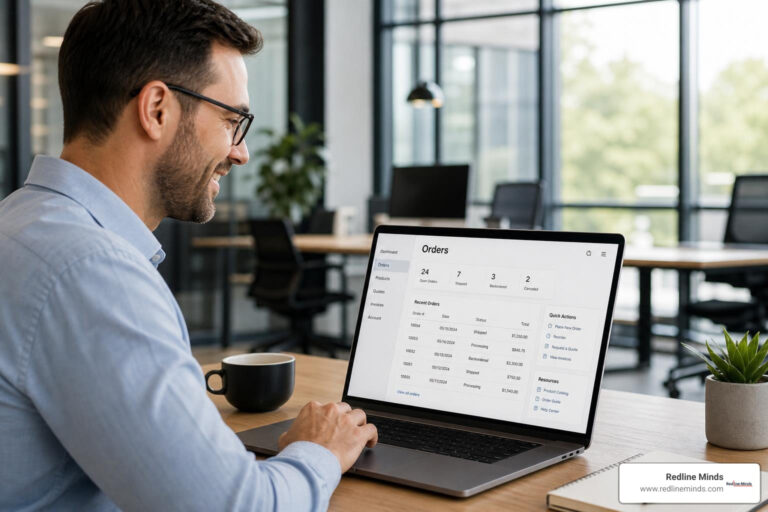
Ultimate Checklist for Improving B2B Customer Experience
Ultimate Checklist for Improving B2B Customer Experience – Learn about b2b ecommerce customer experience
-

A Practical Guide to What to Sell Online for Profit
A Practical Guide to What to Sell Online for Profit – Learn about i don t know what…