
A Quick Start Guide to Ecommerce Basics

What Is Ecommerce and Why It Matters for Your Online Store
What is ecommerce? It’s the buying and selling of goods and services over the internet — through websites, mobile apps, or social media platforms.
Here’s the short version:
- Who: Businesses, consumers, and governments
- What: Physical products, digital goods, or services
- Where: Websites, apps, marketplaces, social media
- How: Digital payments, automated order processing, online fulfillment
By August 2026, ecommerce accounts for roughly 20% of all retail sales worldwide. In the U.S. alone, online sales make up about 16% of total retail — and that number has been climbing steadily since the pandemic doubled it almost overnight in 2020.
The first ever online sale happened in 1994 — a Sting CD sold for $12.48 plus shipping. Today, Amazon alone generates over $700 billion in annual sales. That’s how fast this industry moves.
If you’re running an online store doing $1M–$10M a year, understanding the foundations of ecommerce isn’t just academic. It’s the difference between growing strategically and guessing your way through stagnant sales.
This guide breaks down exactly what ecommerce is, how it works, and what you need to know to compete in today’s market.
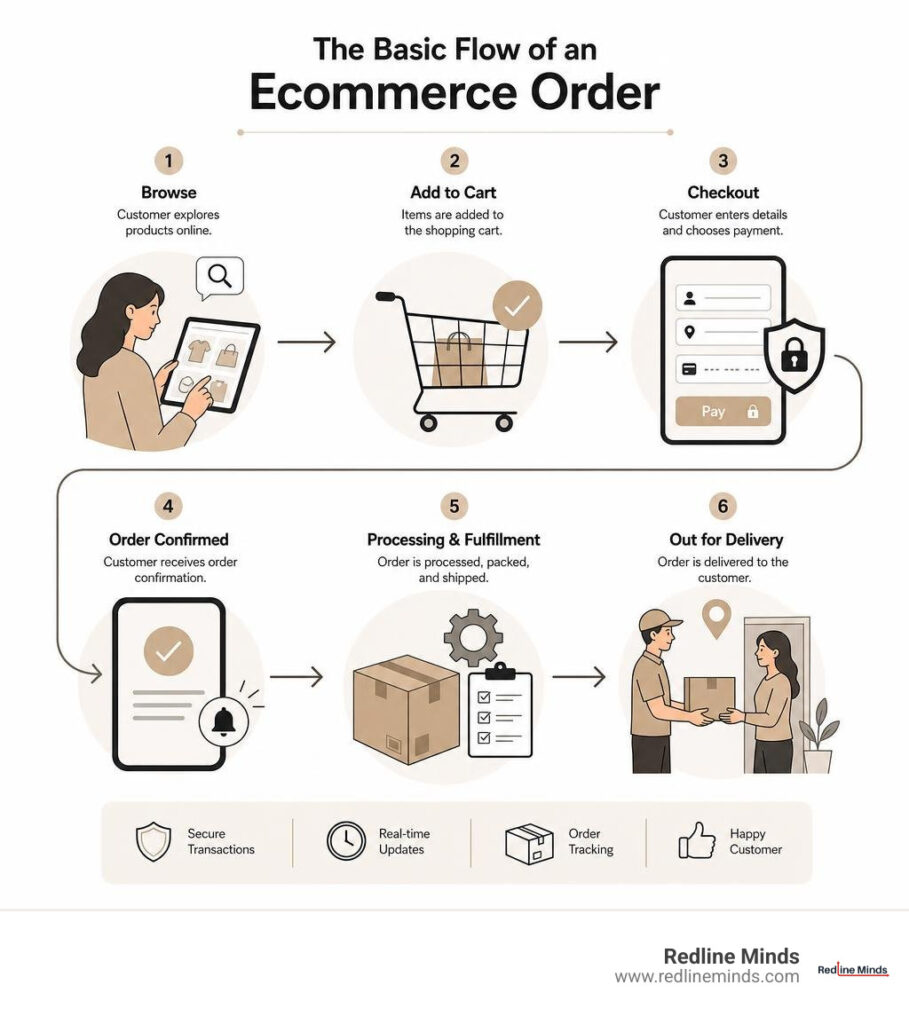
What Is Ecommerce: Core Definition and Evolution

To truly grasp what is ecommerce, it helps to look under the hood at how digital transactions actually work and where they came from.
At its core, electronic commerce relies on a series of interconnected digital technologies. Before a customer ever clicks a “Buy Now” button, systems like Electronic Data Interchange (EDI), automated inventory management, electronic funds transfer (EFT), and secure database protocols are quietly working together in the background.
While many shoppers think digital retail started with web browsers in the 1990s, the conceptual foundation traces back much earlier:
- The 1960s: Businesses began using Electronic Data Interchange (EDI) to transmit digital documents—like purchase orders and invoices—directly between computers.
- 1984: The term “e-commerce” was officially coined in a California legislative document drafted by Robert Jacobson.
- 1994: The world witnessed its first recognized secure online retail transaction on NetMarket, where a CD was purchased between friends for $12.48 plus shipping.
- Late 1990s to 2000s: The dot-com expansion brought online retail to the masses, establishing early digital marketplaces and storefronts. By December 1999, pioneer platforms had shipped over 20 million items globally.
- 2012: Global digital sales crossed the $1 trillion landmark for the first time in history.
- 2020 to 2026: Online shopping penetration surged dramatically. Driven by global shift and mobile convenience, retail ecommerce reached $5.8 trillion globally in 2023, with revenues projected to climb past $5.89 trillion as digital retail approaches a quarter of all global sales.
To dive deeper into this transformation, check out E-commerce Defined: Types, History, and Examples as well as our Ecommerce Retailing Complete Guide.
Understanding What Is Ecommerce in Modern Retail
In today’s commercial landscape, answering what is ecommerce requires looking beyond simple web listings. Modern electronic commerce encompasses every digital touchpoint where commercial transactions take place:
- Digital Storefronts: Brand websites and branded mobile applications built for direct sales.
- Online Marketplaces: Aggregated multi-seller digital platforms where merchants list products alongside competitors.
- Social Commerce: Directly Shoppable posts, video streams, and integrated checkout buttons inside social apps.
- Digital Payment Gateways: Automated processing infrastructure that safely moves money between buyers and merchants via cards, digital wallets, or bank transfers.
Whether a contractor buys bulk electrical conduits from an online wholesale platform at midnight or a consumer orders personal care items through an automated monthly app notification, both are executing ecommerce transactions.
How What Is Ecommerce Differed Historically from Brick-and-Mortar
Historically, traditional brick-and-mortar retail relied on physical location, fixed operating hours, manual point-of-sale systems, and physical mail-order catalogs. Digital commerce fundamentally transformed these dynamics:
- 24/7 Availability: Storefronts never lock their doors. Buyers can browse and purchase items day, night, or on holidays without staff physically present.
- Unlimited Geographic Reach: While a physical storefront depends on local foot traffic, an online shop can instantly serve customers across regions, countries, or globally.
- Operational Overhead: Physical stores carry substantial fixed expenses like real estate leases, floor staff, and physical displays. Online setups substitute these costs for digital hosting, software platforms, and targeted digital marketing.
- Lower Barriers to Entry: Launching a digital storefront requires significantly less capital upfront than leasing, renovating, and stocking a physical store, allowing niche businesses to thrive.
Primary Ecommerce Business and Revenue Models
Understanding what is ecommerce requires categorizing how participating parties interact and how revenue is generated.
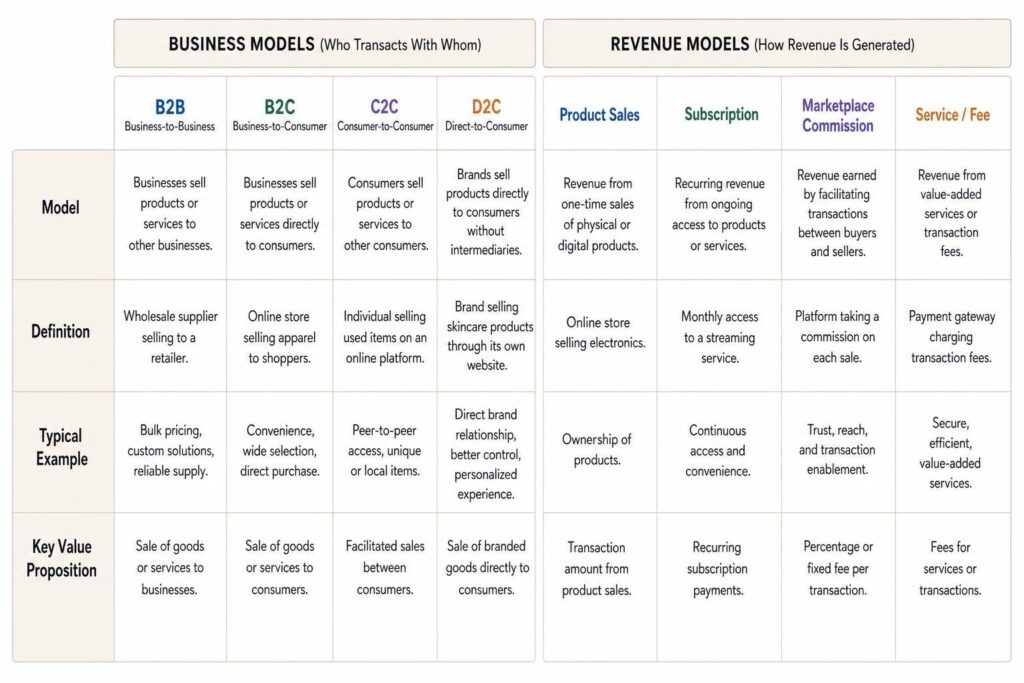
Business Models: B2B, B2C, C2C, and D2C
Business models define who is transacting with whom. Here are the four primary business structures operating online:
- Business-to-Consumer (B2C): The traditional retail structure where a business sells finished goods directly to individual shoppers. Think of buying running shoes online.
- Business-to-Business (B2B): Transactions taking place between commercial entities, such as a manufacturer selling components to a distributor or a wholesaler selling supplies to a retailer. B2B ecommerce often features custom pricing tiers, approval workflows, volume discounts, and high-ticket transactions. In fact, research shows over one-third of corporate buyers are comfortable spending $500,000 or more in a single online order!
- Consumer-to-Consumer (C2C): Digital marketplaces facilitating trade directly between private individuals, such as peer-to-peer auction sites or online community forums.
- Direct-to-Consumer (D2C): A specialized variation of B2C where manufacturers or brand creators bypass intermediary wholesalers and retailers to sell their items directly to buyers through owned digital channels.
We regularly help clients build complex B2B and hybrid (B2B + B2C) stores. Combining wholesale portal workflows with a consumer-facing catalog under one roof gives growing companies a massive operational advantage.
Revenue Models: Dropshipping, Subscriptions, and Wholesaling
While business models dictate who you sell to, your revenue model defines how you source products and structure money flow:
- Dropshipping: A low-overhead model where the seller accepts orders but delegates fulfillment, storage, and shipping to a third-party supplier. The merchant acts as the sales and marketing engine without holding physical inventory.
- Subscription Models: Customers pay a recurring fee (weekly, monthly, or annually) to receive automated periodic shipments of consumable goods or access to curated product boxes. Subscriptions deliver highly predictable recurring revenue and strong customer retention.
- Wholesaling and Private Labeling: Merchants purchase goods in bulk at discounted rates to store and resell online at retail markup, or contract with manufacturers to produce custom-branded (private label) goods. Managing inventory properly is critical here; explore our detailed breakdown on Ecommerce Inventory Control Options Best Options to streamline your warehouse.
Key Benefits and Drawbacks of Ecommerce for Businesses
Like any operational channel, online selling presents clear trade-offs. To evaluate what is ecommerce from a strategic standpoint, we must weigh its core advantages against common industry challenges.
Core Benefits
- Drastically Lower Operating Overhead: By eliminating or reducing real estate leases, store utilities, and floor staff, businesses can reallocate capital directly into product development and digital advertising.
- Uncapped Global Reach: Digital stores unlock access to millions of shoppers outside your immediate geographic region.
- Data-Driven Customer Insights: Online touchpoints track detailed analytics—including traffic sources, browsing path patterns, average order values, and conversion rates—allowing merchants to personalize marketing and maximize revenue.
- Automated Scalability: An online platform can handle 10 visitors or 10,000 simultaneous orders without requiring physical building expansions.
For a broader perspective on executive strategy, see this resource on What is e-commerce?.
Common Drawbacks and Challenges
- Shopping Cart Abandonment: Online buyers can easily open multiple tabs, compare prices instantly, or leave checkout if unexpected shipping fees appear.
- Cybersecurity and Data Risks: Storing customer information and handling financial transactions requires constant vigilance against data breaches, fraudulent card transactions, and malware.
- Lack of Tactile Evaluation: Shoppers cannot physically touch, try on, or test products before purchasing. This friction can result in lower conversion rates and higher product return rates compared to physical stores.
Essential Components of a Successful Ecommerce Platform
Building a high-performing digital retail channel requires coordinating several core technical components. Skipping even one of these elements can hurt your customer experience and sink your sales conversions.
1. User Experience (UX) and Responsive Mobile Design
More than 56% of active internet users buy products online every week, and a massive portion of those transactions happen on mobile devices. Your site layout must load quickly, feature intuitive navigation, and adjust seamlessly to screens of any size. To learn how we build conversion-focused sites, review our guide to Ecommerce Website Design.
2. Secure Payment Gateways & PCI Compliance
To accept digital payments safely, your platform must connect to reputable merchant processing gateways using SSL encryption and maintain strict compliance with Payment Card Industry Data Security Standards (PCI DSS). Offering local payment options, credit cards, and digital wallets reduces checkout friction. Read more in our guide to Ecommerce Payment Options.
3. Integrated ERP and Inventory Control
When a customer buys an item online, your inventory counts must update immediately across all channels. Synchronizing your web store with Enterprise Resource Planning (ERP) software prevents double-selling and keeps fulfillment running smoothly.
4. Customer Relationship Management (CRM)
Tracking customer purchase history, support requests, and preferences allows you to craft tailored marketing emails and reward loyal buyers. Check out our resource on Ecommerce CRM to learn how to keep customer data organized.
5. Specialized Search Engine Optimization (SEO)
Your target market won’t buy your products if they can’t find them on search engines. Ecommerce SEO involves optimizing technical site speed, organizing clean URL architectures, writing unique product descriptions, and building domain authority. Explore our strategic playbook on Ecommerce SEO in 2026 and Beyond to Increase Your Organic Traffic.
Emerging Trends Shaping the Future of Online Retail
Digital commerce evolves quickly. As technology advances, several emerging trends are actively redefining how brands engage buyers online:
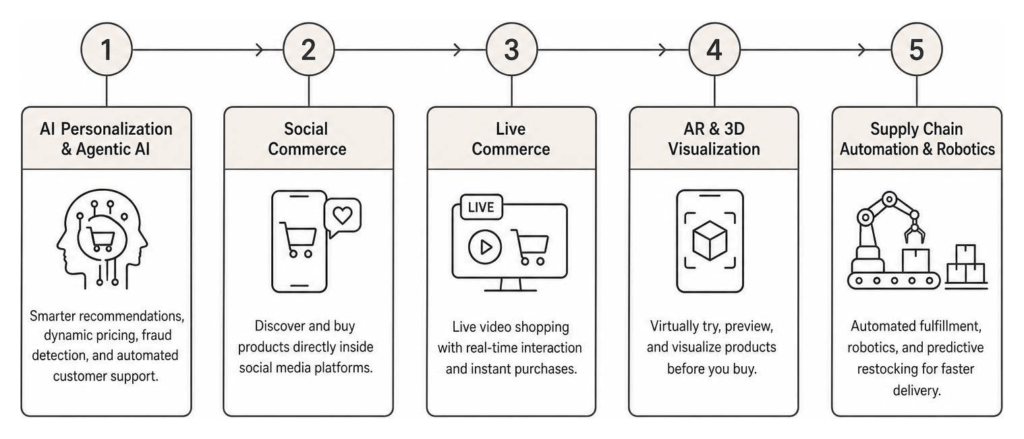
- AI Personalization and Agentic AI: Machine learning models now analyze shopper behavior in real-time to recommend relevant products, dynamically adjust pricing, detect fraud, and provide instant, automated customer support.
- Social Commerce: Shopping directly inside platforms like Instagram, TikTok, and YouTube is exploding. Social commerce allows consumers to discover and purchase products without ever leaving their favorite apps.
- Live Commerce: Combining live video streaming with real-time product purchases, live shopping hosted by creators or brand representatives gives buyers an interactive, engaging way to shop.
- Augmented Reality (AR) & 3D Visualization: AR tools allow shoppers to preview furniture inside their homes or virtually “try on” clothing and cosmetics using smartphone cameras, eliminating pre-purchase uncertainty.
- Supply Chain Automation & Robotics: Automated storage systems, warehouse robotics, and predictive restocking software are reducing order processing times and speeding up last-mile deliveries.
Frequently Asked Questions About Ecommerce Basics
How Do You Start a Basic Ecommerce Business?
Starting a successful online store requires following a logical, step-by-step process:
- Market Research: Identify product demand, research competitor pricing, analyze unit economics, and define your target audience.
- Product Sourcing: Decide whether you will manufacture items yourself, buy wholesale, create private-label goods, or partner with a dropshipping supplier.
- Legal Setup: Select a business structure, register your brand name, and obtain necessary regional business permits and tax identifiers.
- Choose a Platform: Select a web builder tailored to your technical needs and catalog complexity. Read our evaluation of an Ecommerce Website Builder to guide your decision.
- Design and Launch: Build your online storefront, upload detailed product descriptions and high-quality images, integrate secure payment gateways, and launch targeted digital marketing campaigns.
What Is the Difference Between Ecommerce and E-business?
While people often use these terms interchangeably, they have distinct operational scopes:
- Ecommerce: Focuses specifically on commercial financial transactions—buying and selling goods or services digitally over the internet.
- E-business: Encompasses the entire operation of running a business using digital tools. This includes online marketing, electronic inventory tracking, supply chain management, digital human resources, internal communication, and digital accounting. Ecommerce is simply one core function within an e-business.
How Does Ecommerce Impact Supply Chains and Employment?
Digital retail has completely reshaped modern logistics, job markets, and environmental practices:
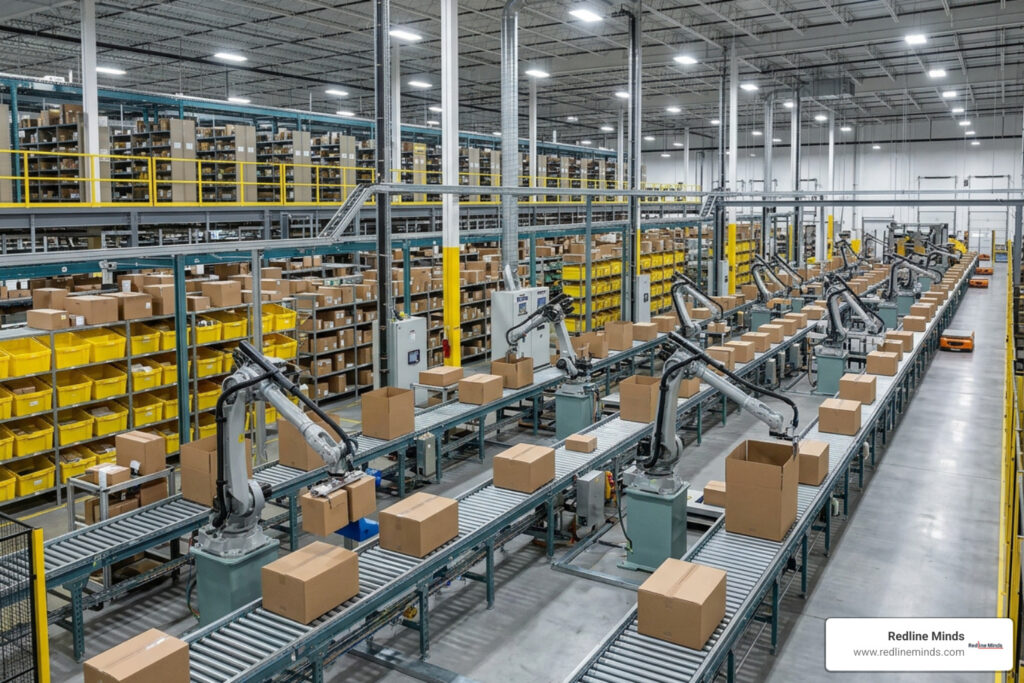
- Fulfillment Centers & Warehousing: Traditional retail relies on shipping bulk goods to stores. Ecommerce relies on specialized fulfillment centers engineered to pack and ship individual consumer packages directly to homes.
- Workforce Evolution: While physical store staff demand has shifted, employment has grown rapidly across web development, digital marketing, supply chain management, data analysis, and logistics operations.
- Packaging and Sustainability: The surge in individual doorstep deliveries generates millions of tons of cardboard and packing waste annually. As a result, merchants are rapidly adopting automated custom-box sizing, biodegradable packing materials, and eco-friendly fulfillment workflows.
Conclusion
Understanding what is ecommerce goes far beyond knowing it stands for “electronic commerce.” It represents a complete digital transformation in how businesses operate, reach customers, and deliver value across global markets. Whether you’re operating a B2C brand, managing a high-ticket B2B portal, or running a hybrid sales operation, mastering these core basics provides the foundation for sustainable long-term revenue growth.
At Redline Minds, based right here in Jefferson City, Tennessee, we specialize in helping businesses navigate this dynamic digital landscape. From high-level ecommerce consulting and UX/UI web development to complex B2B portal architecture and organic search strategies, we partner directly with growing merchants to optimize their digital storefronts and maximize profitability.
Ready to take your online store to the next level? Explore our comprehensive resource on What is Ecommerce? Comprehensive Guide to Online Retail, or reach out to our team today to build a digital commerce strategy tailored to your business goals.
Share this article
Tap into years of experience and turn your site’s visitors into buyers.
Related Posts
-

The Complete Guide to Inventory Control Best Practices
Learn inventory control best practices for warehouse execution, cost reduction, and multi-channel automation in this complete guide.
-

The Complete Guide to Affiliate App for Shopify
Discover the best affiliate app for Shopify to grow sales, manage referrals, and boost merchant revenue in 2026.
-

The Ultimate Guide to Types of E-Commerce Payment Systems
Learn the types of e commerce payment system to boost sales and reduce cart abandonment in this complete…