
Detailed Guide to B2B Ecommerce Pricing

Why B2B Ecommerce Pricing Deserves More Attention Than You’re Giving It
B2B ecommerce pricing is one of the most complex — and most profitable — levers in your entire business. Get it right, and research shows a 1% price improvement can lift operating profit by 6–14%. Get it wrong, and you bleed margin on every single order.
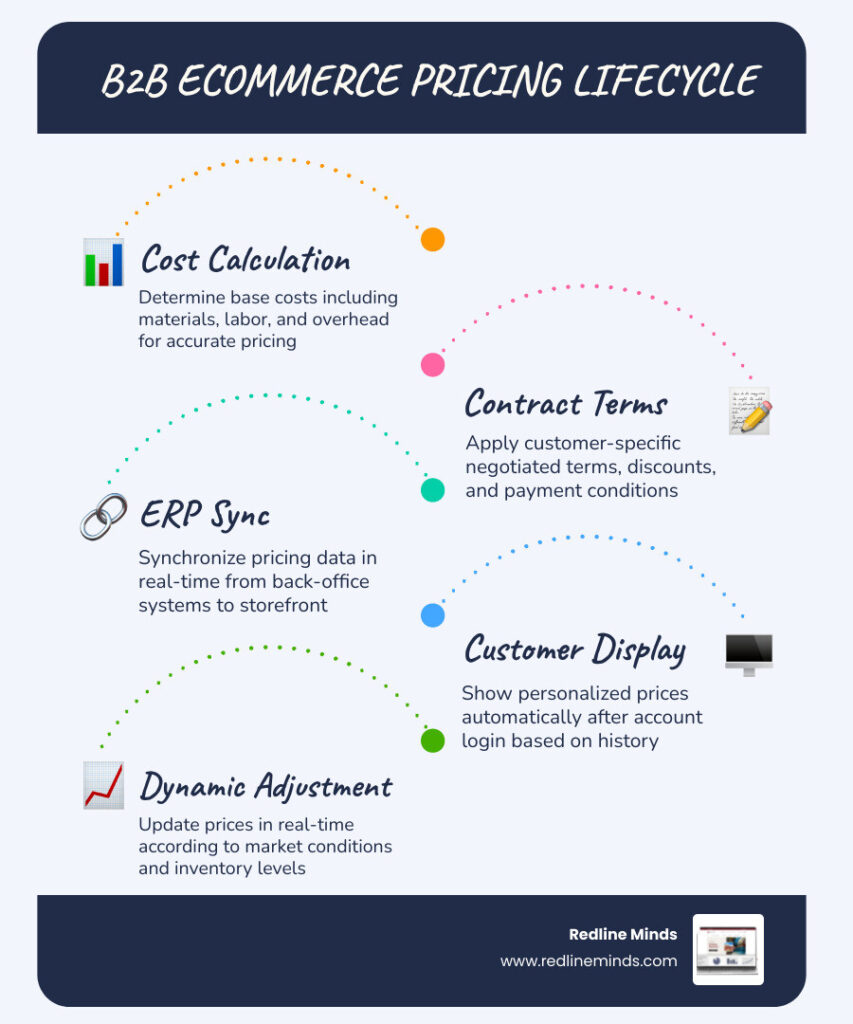
Here’s a quick overview of what B2B ecommerce pricing actually involves:
| Component | What It Means |
|---|---|
| Customer-specific pricing | Different prices for different accounts, based on contracts and history |
| Tiered/volume pricing | Discounts that scale with order size or quantity |
| Contract pricing | Pre-negotiated terms displayed automatically after login |
| Dynamic pricing | Prices that adjust in real time based on market conditions |
| ERP integration | Syncing your back-office pricing data with your online storefront |
The core challenge? Unlike B2C, there’s no single price tag. A business buyer navigates a layered set of commercial terms shaped by purchase volume, account history, geography, and contract agreements.
And the stakes are rising fast. The global B2B ecommerce market is on track to hit $61.9 trillion by 2030 — yet only 15% of B2B companies currently have effective pricing tools in place.
That gap is a real opportunity for mid-sized sellers who are willing to build a smarter pricing foundation.
This guide breaks down every major pricing model, strategy, and technical requirement — so you can stop leaving money on the table.
Related content about b2b ecommerce pricing:
- b2b lead generation strategies
- b2b online store
Why B2B Ecommerce Pricing is Fundamentally Different from B2C
In the B2C world, pricing is often about emotion and impulse. You see a pair of shoes, you see a “20% off” banner, and you click “buy.” In B2B, that impulse buy is about as rare as a quiet day in our Tennessee office. B2B buyers are strategic, analytical, and often spending someone else’s money under strict procurement guidelines.
The fundamental difference lies in the complexity of the transaction. While B2C pricing is fixed and universal, b2b ecommerce pricing is shaped by negotiation, volume commitments, and relationship history.
| Feature | B2C Pricing | B2B Pricing |
|---|---|---|
| Price Structure | Fixed and universal | Layered and account-specific |
| Decision Maker | Individual consumer | Multiple stakeholders (Procurement, Finance, Ops) |
| Purchase Volume | Small, individual units | Large, bulk orders with shifting unit economics |
| Contract Length | One-off transactions | Long-term agreements (months or years) |
| Price Discovery | Instant and transparent | Often requires login or negotiation |
When we work with clients at Redline Minds, we often see that the biggest hurdle isn’t just setting a price—it’s managing the “price discovery” process. In B2B, the price is rarely the “list price.” It’s a calculation based on who is asking, how much they are buying, and what was promised in a contract signed three years ago.
For a deeper dive into how these differences impact your overall business model, check out our Guide to B2B ecommerce strategy.
The Shift to Digital Self-Service
If you think B2B buyers still want to fax over an order form or wait three days for a sales rep to call them back with a quote, we have some news for you. By May 2026, the shift toward “Do-It-Yourself” (DIY) shopping in B2B is no longer a trend—it’s the standard.
Approximately 73% of Millennials are now involved in B2B purchasing decisions, and they bring their B2C expectations with them. They want 24/7 availability and immediate transparency. Research shows that 74% of B2B buyers expect to see clear pricing directly on the website, and 45% of tech buyers name pricing transparency as their top requirement.
This doesn’t mean you have to show your lowest negotiated rates to the general public. It means providing a portal where authenticated users can see their specific, pre-negotiated prices instantly. To understand why this is the future, read our article on Why B2B Self-Service Portals Are the Future of Wholesale.
Complexity in Account-Based Terms
B2B pricing isn’t just about the number on the invoice; it’s about the commercial terms surrounding it. You aren’t just selling a widget; you’re managing:
- Pre-negotiated prices: Ensuring the web store reflects the exact terms agreed upon by the sales team.
- Payment rules: 94% of B2B buyers expect clear information on agreed payment rules.
- Net-30 terms and Credit Limits: Managing risk while providing the liquidity your customers need to grow.
If your ecommerce platform can’t handle a customer having a $50,000 credit limit and “Net-45” terms while another has “Pay on Checkout,” you’re going to have a very frustrated accounting department.
Core B2B Ecommerce Pricing Strategies and Models
Choosing a strategy for b2b ecommerce pricing isn’t a “set it and forget it” task. It requires a blend of market awareness, cost discipline, and an understanding of customer value.
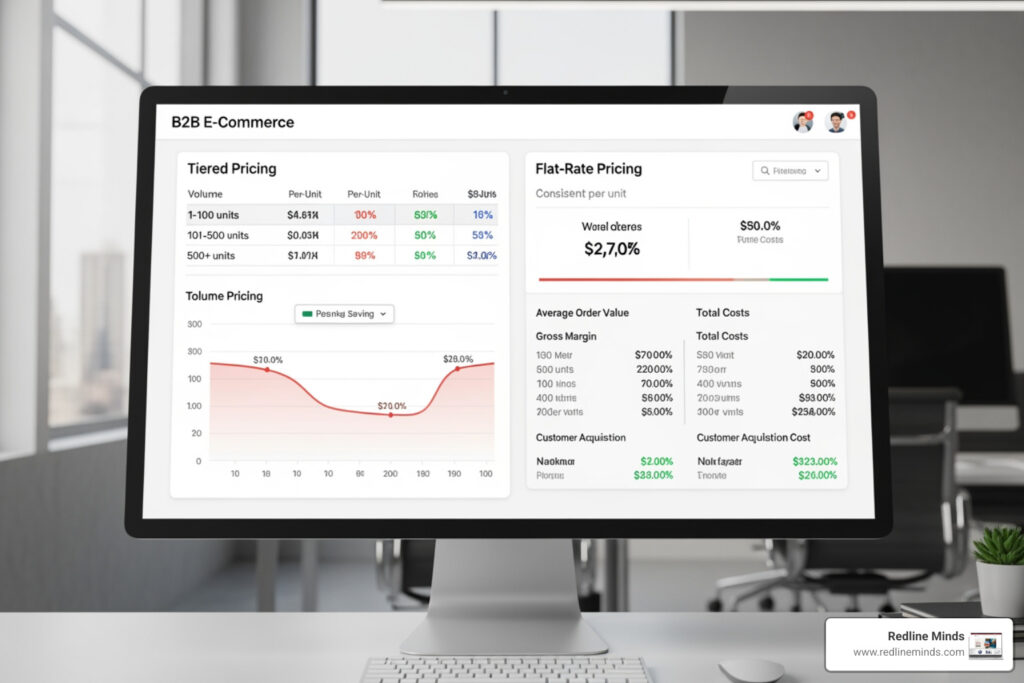
We often categorize these strategies into four main buckets:
- Cost-Plus Pricing: The “old reliable.” You calculate your costs and add a fixed margin. While easy to calculate, it often leaves money on the table because it ignores what the customer is actually willing to pay.
- Competitive Pricing: Setting prices based on what everyone else is doing. This is a “race to the bottom” unless you have a significant cost advantage.
- Value-Based Pricing: Pricing based on the perceived value to the customer. This is the gold standard but requires deep data on how your product solves problems for the buyer.
- Dynamic Pricing: Adjusting prices in real-time based on market demand, inventory levels, or even raw material fluctuations (like steel or resin prices jumping 20% overnight).
For more on how these play out in the real world, see this Guide to B2B strategic pricing models | SAP.
Customer-Specific and Contract Pricing
This is where B2B ecommerce gets “fun” (or “headache-inducing,” depending on your tech stack). Most B2B companies have hundreds, if not thousands, of unique price lists.
A high-volume OEM partner might get a 40% discount off list, while a regional wholesaler gets 25%. Managing these “unique multipliers” manually is impossible at scale. You need a system that recognizes the user upon login and serves up their specific contract price. This includes handling “ship-and-debit” programs and complex rebate structures.
We’ve helped many businesses transition from “Price available upon quote” to fully automated contract pricing. If you’re looking to scale, you might find our guide on How to Build a B2B Empire with Custom Solutions and Bulk Ordering useful.
Tiered Pricing and Volume Discounts
In B2B, the more you buy, the less you pay. It’s a simple concept that gets complicated quickly in an online store. Effective b2b ecommerce pricing should support:
- Quantity Breaks: “Buy 1-49 units for $10, buy 50+ for $8.”
- Unit of Measure (UOM) Pricing: Different prices for a single item, a case, or a pallet.
- Bundle Discounts: Encouraging larger carts by discounting complementary products.
- Loyalty Tiers: Automatically moving a customer from “Silver” to “Gold” pricing once they hit a certain annual spend.
Value-Based B2B Ecommerce Pricing
Value-based pricing is the most sophisticated model. Instead of looking at what it cost you to make a product, you look at what it costs the customer not to have it.
For example, if a maintenance sensor reduces downtime on a $2,000-an-hour production line by eight hours a month, it creates $16,000 in monthly value. Pricing that sensor at $5,000 a month is a bargain for the customer, even if it only cost you $100 to manufacture. This “value-based innovation” approach allows you to capture a significant portion of the economic value you create.
For more implementation tips on this model, check out the B2B Pricing Strategy Guide: Tools and Implementation (2025) – Shopify Canada.
The Role of ERP Integration in Managing Complex Pricing
If your ecommerce site is the “face” of your business, your ERP (Enterprise Resource Planning) system is the “brain.” For b2b ecommerce pricing to work at scale, these two must be in constant, real-time communication.
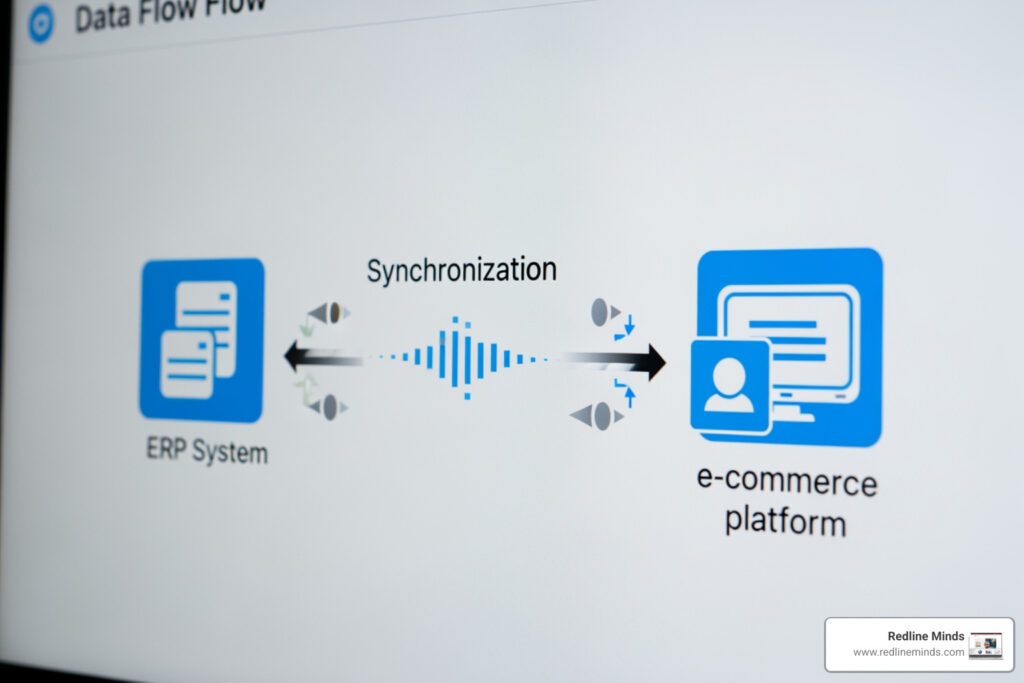
Without ERP integration, you are forced to manually update spreadsheets, which leads to “spreadsheet lag”—where the price on the website is different from the price in your accounting system. This is a recipe for buyer disputes and margin erosion.
A bidirectional real-time connection ensures:
- Data Accuracy: The online shop always carries the most current contract conditions.
- SKU-Level Segmentation: Different pricing logic can be applied to thousands of individual SKUs.
- Inventory-Driven Pricing: Automatically raising prices when stock is low to protect margins, or lowering them to move overstock.
Choosing the right platform is critical here. You can see how different systems stack up in our review of The Best Platforms for Scaling Your B2B Ecommerce Operations.
Technical Requirements for B2B Ecommerce Pricing at Scale
When you have billions of possible SKU-pricelist combinations, performance becomes a major issue. Traditional systems often collapse under the weight of large catalogs, leading to slow page loads or, worse, “stale” prices.
Key technical requirements include:
- Sub-millisecond API Latency: Customers won’t wait for a slow server to calculate their discount.
- Pricelist Inheritance: Creating hierarchies where a customer-specific price falls back to a “Parent” or “Global” list automatically.
- VAT and Tax Resolution: Handling complex tax exemptions and multi-currency support (like live ECB rates for 32+ currencies).
For a comparison of how different online stores handle these technical hurdles, read The Ultimate B2B Online Store Comparison.
Ensuring Omnichannel Price Consistency
There is nothing that kills trust faster than a buyer seeing one price in their online portal and receiving a different, higher quote from their sales rep the next day.
Omnichannel consistency means that whether a customer orders through a web portal, a mobile app, or over the phone with a rep, the price is identical. This requires a centralized pricing engine that acts as the “single source of truth” for all channels. It frees up your sales team from “firefighting” pricing disputes and allows them to focus on building relationships.
Optimizing Margins with AI and Dynamic B2B Ecommerce Pricing
As we move through 2026, AI is no longer a “nice-to-have” in b2b ecommerce pricing. It is the tool that allows you to manage volatility. In industrial markets, raw material costs for things like steel, copper, or resin can jump 20% in a single day. If your pricing is static, your margins can vanish before you even finish your morning coffee.
AI-powered pricing can deliver a 2-5 percentage point EBITDA improvement by:
- Predicting Price Elasticity: Understanding which customers are price-sensitive and which value speed and availability more.
- Automated Negotiation: Handling 80% of routine quotes without human intervention, while staying within pre-defined margin floors.
- Market Alignment: Pulling in live feeds from commodity indexes to adjust prices instantly.
Leveraging Data for Dynamic Adjustments
Your ecommerce store is a goldmine of data. By analyzing:
- Cart Abandonment: Are buyers leaving because of a sudden price hike?
- Inventory Levels: Do you have too much capital tied up in slow-moving SKUs?
- Competitor Shifts: Are your competitors running a promotion you need to match?
You can use these insights to make “micro-adjustments” that protect your bottom line. For instance, high pageviews combined with low conversion often indicates your price is out of step with the current market.
Overcoming Implementation Pitfalls
Implementing advanced b2b ecommerce pricing isn’t without its traps. The most common “margin killers” we see include:
- Low Data Quality: If your ERP data is messy, your AI will make messy decisions.
- Sales Team Resistance: Sales reps often fear that “the computer” will take away their ability to negotiate. It’s important to show them that AI handles the “market math” so they can handle the “human relationship.”
- Transparency Balance: You don’t want to show your “secret sauce” pricing to competitors, but you must be transparent with your loyal customers.
- Ignoring Margin Floors: Without strict governance, dynamic pricing can accidentally dip below your cost of goods sold.
Frequently Asked Questions about B2B Ecommerce Pricing
What is the most effective pricing model for B2B?
There is no “one size fits all,” but most successful B2B companies use a hybrid approach. This combines stable customer-specific contract prices for core items with tiered discounts for bulk buys and dynamic, value-based logic for new or specialized products.
How does ERP integration improve pricing accuracy?
It eliminates manual entry errors. By creating a bidirectional sync, your online store reflects the real-time reality of your warehouse and your accounting office. If a price changes in the ERP, it changes on the web—instantly.
Can AI really improve B2B profit margins?
Yes. McKinsey and other researchers have consistently found that AI-driven price optimization leads to a 2-5% increase in EBITDA. It does this by identifying “hidden” opportunities to raise prices where demand is inelastic and preventing unnecessary discounting.
Conclusion
Mastering b2b ecommerce pricing is a journey from being reactive to being strategic. In the fast-moving market of 2026, relying on static annual contracts and manual spreadsheets is a recipe for stagnation. By leveraging ERP integration, tiered structures, and AI-driven insights, you can protect your margins while providing the seamless, transparent experience your buyers now demand.
At Redline Minds, we specialize in helping B2B and hybrid stores navigate these complexities. Whether you are looking to integrate a legacy ERP or build a high-performance pricing engine from scratch, our team in Tennessee is ready to help you scale.
Ready to optimize your pricing strategy and drive real revenue growth? Contact Redline Minds for B2B Ecommerce Consulting today.
Share this article
Tap into years of experience and turn your site’s visitors into buyers.
Related Posts
-
Compare Shopify Migration Services: Options Cheat Sheet
Compare Shopify migration services and find the right Shopify migration company for your store, from manual imports to…
-

Ultimate Checklist for Improving B2B Customer Experience
Ultimate Checklist for Improving B2B Customer Experience – Learn about b2b ecommerce customer experience
-

A Practical Guide to What to Sell Online for Profit
A Practical Guide to What to Sell Online for Profit – Learn about i don t know what…