
How to Build a B2B Online Store That Actually Works
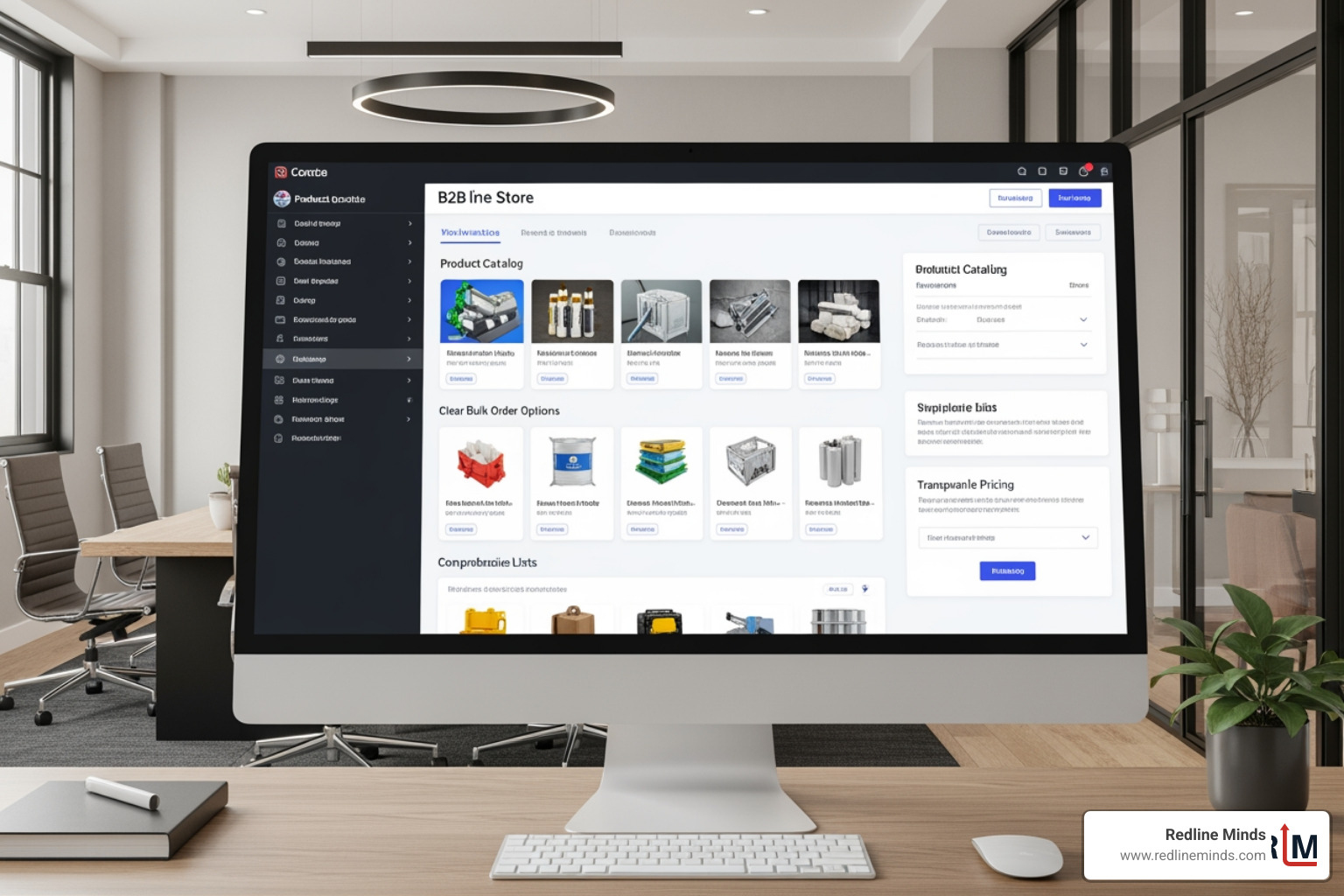
The $36 Trillion Shift: Why Your B2B Online Store Matters Now
A b2b online store is no longer optional — it’s the baseline expectation for any wholesale or manufacturing business that wants to grow in 2025.
Here’s a quick look at the top platforms to consider:
| Platform | Best For | Key Strength |
|---|---|---|
| Shopify B2B | Brands already on Shopify Plus | Native B2B + DTC in one store |
| BigCommerce B2B Edition | Mid-market & enterprise | Open-source buyer portal, strong ROI |
| SparkLayer | Shopify brands not on Plus | Affordable B2B layer, fast setup |
| B2B Wave | Small wholesalers | Simple, quick to launch |
| NuORDER | Fashion & wholesale brands | Marketplace + order management |
| JOOR | Fashion wholesale | End-to-end, ERP integrations |
| OroCommerce | Manufacturers & distributors | B2B-first, built-in CRM |
| Adobe Commerce (Magento) | Complex, custom needs | Deep customization |
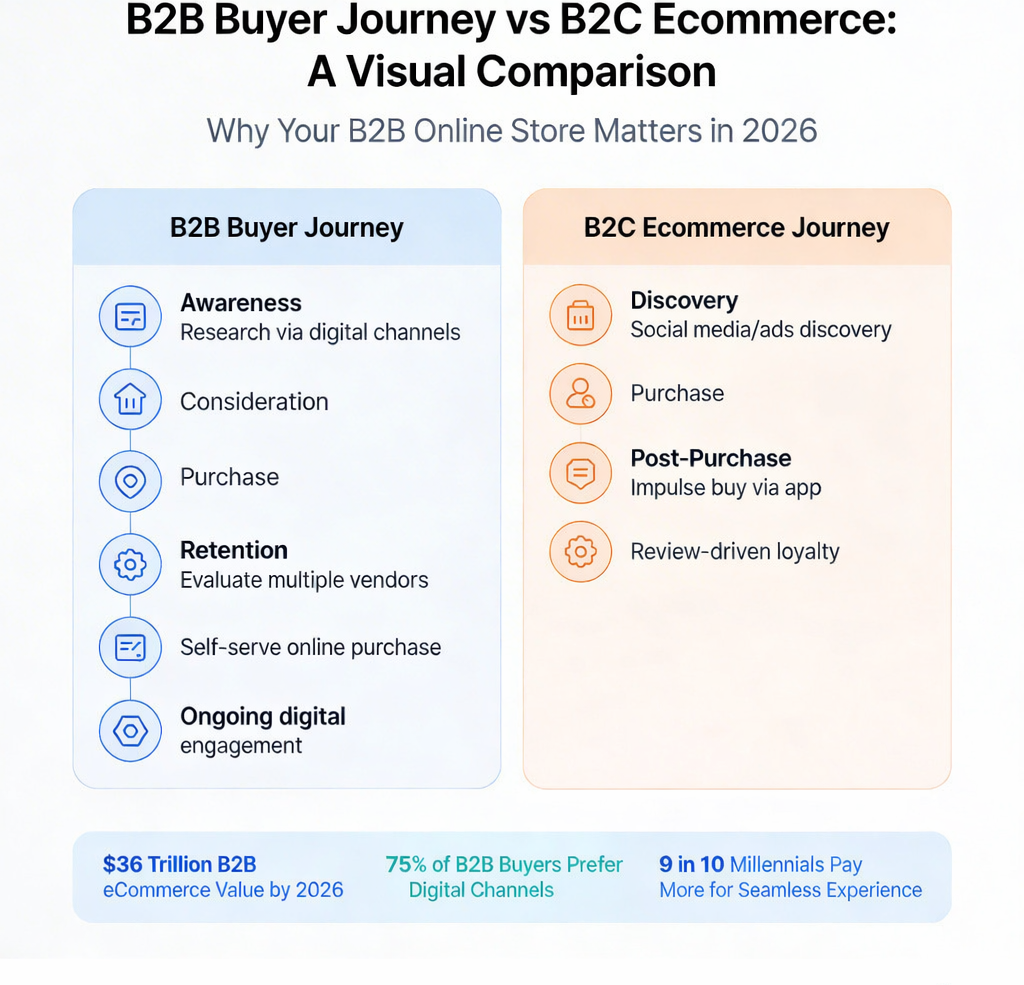
The numbers are hard to ignore. B2B eCommerce is on track to hit $36 trillion in value by 2026. And 75% of B2B buyers now prefer digital channels — websites, portals, apps — over calling a sales rep.
The buyers driving those decisions? Mostly millennials. And nearly 9 in 10 of them say they’ll pay more for a seamless buying experience.
The old way — PDF price lists, phone orders, manual invoicing — is losing ground fast. Businesses that digitize their wholesale operations are seeing real results. BigCommerce B2B Edition customers report a 391% ROI with a 7-month payback period. JOOR users have seen order processing time drop by 60% and operational costs fall by 80%.
The gap between businesses with a modern B2B store and those without is only getting wider.
This guide compares the top platforms, features, and strategies so you can make the right call for your business — without wasting time or budget on the wrong tool.
Defining the Modern B2B Online Store vs. B2C
When we talk about a b2b online store, we aren’t just talking about a standard retail site with a login page. B2B commerce is fundamentally more complex than B2C. While a B2C customer buys a single pair of shoes for themselves, a B2B buyer might be purchasing 500 pairs for a regional chain of boutiques, requiring specific tax exemptions, negotiated pricing, and pallet-sized shipping logistics.
According to the NuORDER retail insights report 2025, the “age of intelligent buying” is here. Modern buyers expect data-driven insights and a frictionless interface. This shift toward “consumerized” B2B means your portal needs to look as good as a retail site while handling heavy-duty back-end logic.
Key differences include:
- Account Hierarchy: In B2C, one login equals one person. In B2B, one “Company” might have dozens of buyers across different locations, each with different permission levels.
- Quote Management: Unlike the fixed prices of retail, B2B often involves a “Request for Quote” (RFQ) process where buyers and sellers negotiate before a sale is finalized.
- Business Resilience: A digital store provides a 24/7 sales channel that doesn’t rely on a sales rep being awake or a trade show being in session.
Designing these experiences requires a deep understanding of ecommerce website design principles tailored specifically for professional users.
Key Features of a High-Performing B2B Online Store
To truly serve a professional buyer, your b2b online store needs a specific set of tools that go beyond the standard “Add to Cart” button.
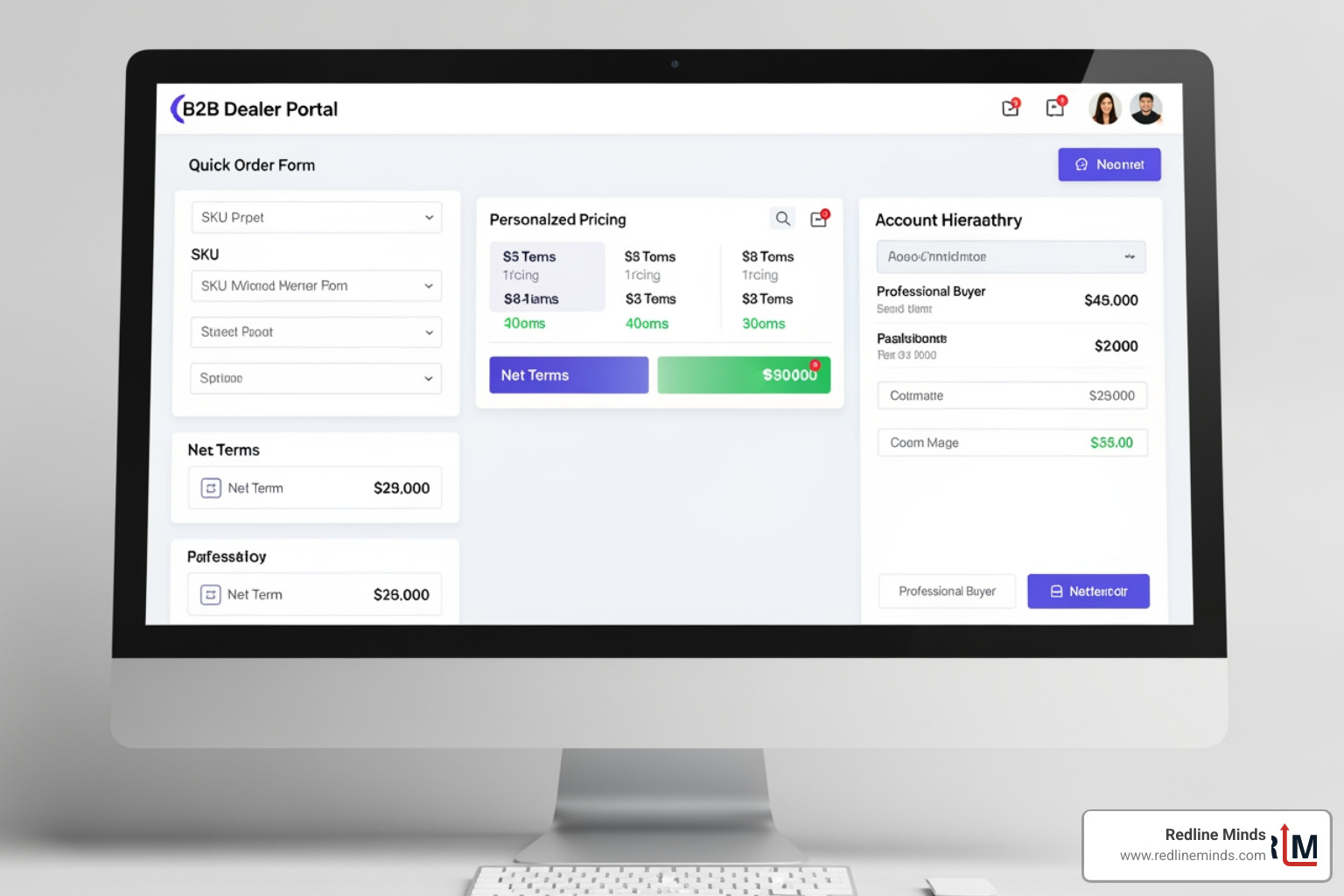
One of the most critical elements is a dedicated dealer portal. This is a gated area where authenticated customers can manage their entire relationship with your brand. Within this portal, several features are non-negotiable:

- Quick Order Forms: Professional buyers often know exactly what they need. Instead of browsing categories, they want to upload a CSV or type in SKUs to build a massive order in seconds.
- SKU-Level Pricing: You might have five different price lists for five different tiers of customers. Your platform must be able to show the correct, negotiated price the moment a user logs in.
- Net Terms and Credit Management: Most B2B transactions don’t happen via credit card. Offering “Net 30” or “Net 60” terms, and allowing buyers to pay via Purchase Order (PO), is essential for high-volume trade.
- Advanced Inventory Control: Buyers need real-time visibility into what’s in stock. If they are planning a seasonal launch, they need to know if you have 1,000 units ready to ship. Explore ecommerce inventory control options to ensure your data stays accurate across all channels.
- Role-Based Access: A junior buyer might be able to build a cart, but a senior manager might need to click “Approve” before the order is placed.
Comparing the Top B2B eCommerce Platforms for 2025
Choosing a platform is the biggest decision you’ll make. We generally categorize these into SaaS (Software as a Service) and Open Source.
SaaS platforms like BigCommerce and Shopify offer lower maintenance and faster rollouts. Open-source options like Magento (Adobe Commerce) offer infinite customization but come with higher maintenance costs and technical debt.
When evaluating the total cost of ownership (TCO), don’t just look at the monthly subscription. Consider developer fees, security patches, and the cost of “downtime” if a manual update goes wrong. Modern platforms are moving toward API-first architecture and MACH principles (Microservices, API-first, Cloud-native, and Headless), which allow you to swap out different parts of your tech stack without rebuilding the entire store.
Enterprise Solutions for a Scalable B2B Online Store
For larger organizations, a standard store won’t cut it. You likely need multi-storefront capabilities, allowing you to run a DTC store, a US wholesale store, and an EU wholesale store from a single dashboard.
Shopify B2B (included in Shopify Plus) is a powerhouse for brands that want to keep their wholesale and retail operations under one roof. It utilizes Shopify B2B APIs to allow for deep customization while maintaining the ease of the Shopify ecosystem.
BigCommerce B2B Edition is often our top recommendation for complex mid-market needs. It offers an open-source buyer portal that you can customize to your heart’s content. We provide specialized services for BigCommerce to help manufacturers leverage its “Sales Rep Masquerade” and advanced quoting tools.
For fashion brands, the ecosystem often extends into global trade shows. Platforms like JOOR offer the JOOR Passport digital tradeshow, which allows you to connect with over 600,000 retail buyers globally without the travel costs of a physical booth.
Lightweight and Integrated B2B Online Store Options
You don’t always need a multi-million dollar enterprise setup to start selling wholesale. Many of our clients find success with hybrid stores — adding B2B functionality to their existing retail site.
- SparkLayer: This is a fantastic “layer” that sits on top of a standard Shopify store. It provides a B2B checkout, custom pricing, and “My Account” area without requiring a move to Shopify Plus. Check out our services for Shopify to see how this fits into a growth strategy.
- B2B Wave: A standalone, “simpler” B2B platform that can be up and running in as little as 24 hours. It’s perfect for small wholesalers who need a dedicated portal without the complexity of a full eCommerce suite.
- NuORDER by Lightspeed: Focuses heavily on the “transformation” of wholesale. You can watch the NuORDER transformation webinar to see how brands move from manual spreadsheets to a visual, collaborative ordering environment.
- Wholesale Gorilla: A popular Shopify app for those just dipping their toes into B2B, offering basic password protection and wholesale registration forms.
Critical Integrations for Operational Efficiency
A b2b online store that isn’t connected to your back-office systems is just a fancy order-taking machine that creates more work for your team. To achieve the “80% reduction in operational costs” mentioned earlier, your integrations must be seamless.
The “Holy Trinity” of B2B integrations includes:
- ERP (Enterprise Resource Planning): This is the brain of your business. When an order is placed on your b2b online store, it should automatically create a sales order in your ERP (like NetSuite, SAP, or Microsoft Dynamics).
- CRM (Customer Relationship Management): Your sales team needs to know what their accounts are doing. Integrating your ecommerce CRM ensures that every online interaction is visible to your reps.
- PIM (Product Information Management): B2B products often have hundreds of attributes (specs, certifications, material types). Using AI enrichment for product data helps clean up this data so it’s searchable and accurate for your buyers.
For enterprise buyers, you might also need Punchout catalogs, which allow their procurement systems (like Coupa or Ariba) to “punch out” to your store, build a cart, and bring that data back into their own system for approval.
Calculating ROI and Launching Your Store
Building a b2b online store is an investment, but the returns are often faster than in B2C. You aren’t just looking for more sales; you’re looking for operational savings.
If your sales team spends 20 hours a week manually entering faxed orders or emailing PDF invoices, that is “dead time.” Automating those processes allows them to focus on selling instead of data entry. Brands using modern platforms often see a 24% increase in sales team productivity.
To get a specific estimate, you can use tools like the JOOR ROI Calculator. When budgeting, remember to factor in the ecommerce website design cost, which includes not just the build, but the data migration and system integrations.
We always recommend a phased rollout. Don’t try to launch every feature for every customer on day one.
- Phase 1: Launch a simple portal for your top 10% of customers to get feedback.
- Phase 2: Integrate your ERP for real-time inventory.
- Phase 3: Roll out advanced features like “Request a Quote” or multi-user accounts.
Frequently Asked Questions about B2B eCommerce
How do I manage customer-specific pricing in a B2B online store?
Most B2B platforms use “Price Lists” or “Customer Groups.” When a user logs in, the system checks their group ID and displays the specific price assigned to them. This allows you to have a “Gold Tier” with 20% off and a “Silver Tier” with 10% off, while keeping MSRP visible to the public. You can also gate content so that only approved, logged-in wholesalers can see pricing at all.
Can I run B2B and B2C on the same platform?
Yes! This is called a hybrid store. Platforms like Shopify Plus and BigCommerce are designed for this. You can use a single backend to manage all your inventory and products, but serve different “front-end” experiences. A retail customer sees a standard shopping site, while a wholesale customer sees bulk order forms and net terms. This is often the best ecommerce website design for small business owners who want to minimize their tech stack.
What security compliance is required for B2B?
B2B stores often handle sensitive corporate data and much larger transaction volumes. At a minimum, you need PCI compliance for payments. However, many enterprise buyers will also look for SOC II or ISO certification to ensure their data is protected. Role-based permissions are also a security feature — they ensure that only authorized employees can see company credit limits or sensitive contract terms.
Conclusion
Building a b2b online store that actually works requires more than just picking a template. It requires a strategic look at your buyers’ journey, your internal workflows, and your long-term growth goals.
At Redline Minds, we specialize in helping businesses navigate this transition. Based in Tennessee, our team of ecommerce consultants and developers focuses exclusively on creating high-performing B2B and hybrid stores. Whether you need help with UX/UI design, complex ERP integrations, or choosing between Shopify and BigCommerce, we provide the strategic advising you need to succeed.
Ready to digitize your wholesale operations and capture your share of the $36 trillion market? Partner with Redline Minds for B2B services and let’s build a store that works as hard as you do.
Share this article
Tap into years of experience and turn your site’s visitors into buyers.
Related Posts
-

The Complete Guide to Affiliate App for Shopify
Discover the best affiliate app for Shopify to grow sales, manage referrals, and boost merchant revenue in 2026.
-

The Ultimate Guide to Types of E-Commerce Payment Systems
Learn the types of e commerce payment system to boost sales and reduce cart abandonment in this complete…
-

A Practical Guide to AI Agent Integration Methods
Learn how AI agent integration connects enterprise systems with MCP, Unified APIs, and custom code for secure, real-time…