
E-commerce SEO in 2026 and Beyond to Increase Your Organic Traffic
What Is E-commerce Search Engine Optimization (And Why It Matters for Your Store)
E-commerce search engine optimization is the process of improving your online store’s visibility in search results — so more of the right shoppers find your products without you paying for every click.
Here’s a quick summary of what it involves:
| Component | What It Means |
|---|---|
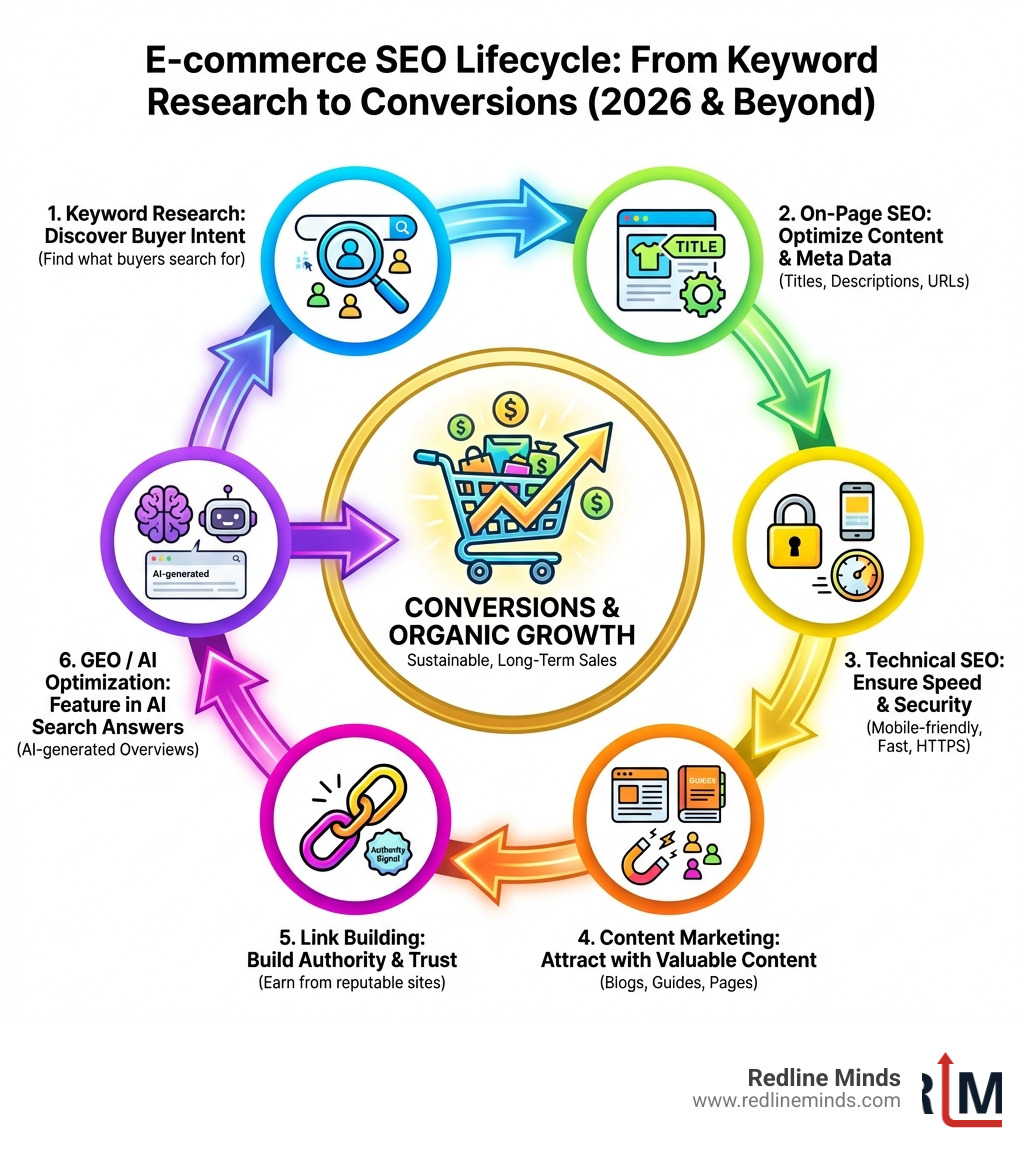
| Keyword Research | Finding what your buyers actually search for |
| On-Page SEO | Optimizing product titles, descriptions, URLs, and meta tags |
| Technical SEO | Site speed, mobile-friendliness, crawlability, HTTPS |
| Content Marketing | Blogs, guides, and pages that attract buyers at every stage |
| Link Building | Earning authority signals from other reputable sites |
| GEO / AI Optimization | Getting featured in AI-generated search answers |
If your store is doing between $1M and $10M a year in sales, you already know traffic is expensive. Paid ads eat margin. Email has limits. And social reach is unpredictable.
Organic search is different. Once it works, it keeps working.
But here’s the problem: the search landscape is changing fast. AI-powered tools like ChatGPT and Google’s AI Overviews are reshaping how people find products. What worked in 2020 — or even 2023 — isn’t enough anymore.
This guide breaks down exactly what e-commerce SEO looks like today, what’s changing, and what you need to do to grow your organic traffic in 2026 and beyond.
Whether you’re starting from scratch or trying to fix a strategy that’s gone stale, this is your roadmap.
Evolution of E-commerce Search Engine Optimization
Search optimization isn’t what it used to be. In the early days, you could sprinkle a few keywords on a page and call it a day. Now, search engines are sophisticated enough to understand intent, context, and even the quality of your site’s user experience.
The stakes are incredibly high: 75% of people never look past the first page of search results. If you aren’t on page one, you’re essentially invisible. However, the definition of “page one” is shifting. We are moving from a traditional list of “blue links” to an immersive, AI-driven experience.
Gartner predicts a 25% drop in traditional search volume by 2026 as users turn to AI chatbots for answers. This shift has led to the rise of “zero-click” results, where the user gets their answer directly on the search results page without ever clicking through to a website. To survive, your e-commerce search engine optimization strategy must adapt to these new formats. For a deeper look at the fundamentals, check out our guide on What is SEO? How to Do SEO for Ecommerce.
Strategic Differences in B2B vs. B2C E-commerce SEO
At Redline Minds, we specialize in B2B and hybrid stores, and we’ve seen that a B2B strategy requires a different lens than B2C. While a B2C shopper might buy a pair of shoes on impulse, a B2B buyer is often navigating a complex organizational hierarchy and a much longer buying cycle.
| Feature | B2C SEO | B2B SEO |
|---|---|---|
| Primary Goal | Immediate Purchase | Lead Gen / Education |
| Keyword Intent | Transactional (Buy now) | Informational/Research |
| Content Type | Product-focused, emotional | Educational, data-driven |
| Buying Cycle | Minutes to days | Months to a year |
| Order Value | Lower AOV | High LTV / Bulk orders |
B2B e commerce search engine optimization relies heavily on educational content that builds trust over time. You aren’t just selling a product; you’re selling a solution to a professional problem. You can explore more about these nuances in our Search Engine Optimization Category.
Mastering E-commerce Search Engine Optimization Keywords
Keywords are still the foundation of SEO, but the way we find them has evolved. Instead of just looking for high-volume terms, we look for buyer intent. A person searching for “how to fix a leaky faucet” has a different intent than someone searching for “commercial grade ball valves.”
We recommend using a mix of traditional and modern tools. Amazon autocomplete is a goldmine for seeing what people actually type when they are ready to buy. For those with larger catalogs, tools like Helium10 for Amazon research can accelerate the process by gathering autocomplete data at scale.
Once you have your list, use semantic clustering to group queries by meaning rather than just volume. This ensures your category pages answer all the related questions a buyer might have. For a step-by-step approach, follow our SEO Checklist for Ecommerce.
Core Components of a Modern E-commerce Strategy
A successful strategy is built on four pillars: Content, Technical SEO, User Experience, and Link Building. While technical factors are the “barrier to entry,” high-quality content is widely considered the biggest ranking factor for SEO. Without unique, high-value content, your site will struggle to maintain long-term rankings. For quick wins, see our Top SEO Tips for Online Stores.
Technical E-commerce Search Engine Optimization Essentials
Technical SEO is about making sure search engines can crawl, index, and understand your site. If your technical foundation is shaky, even the best content won’t rank.
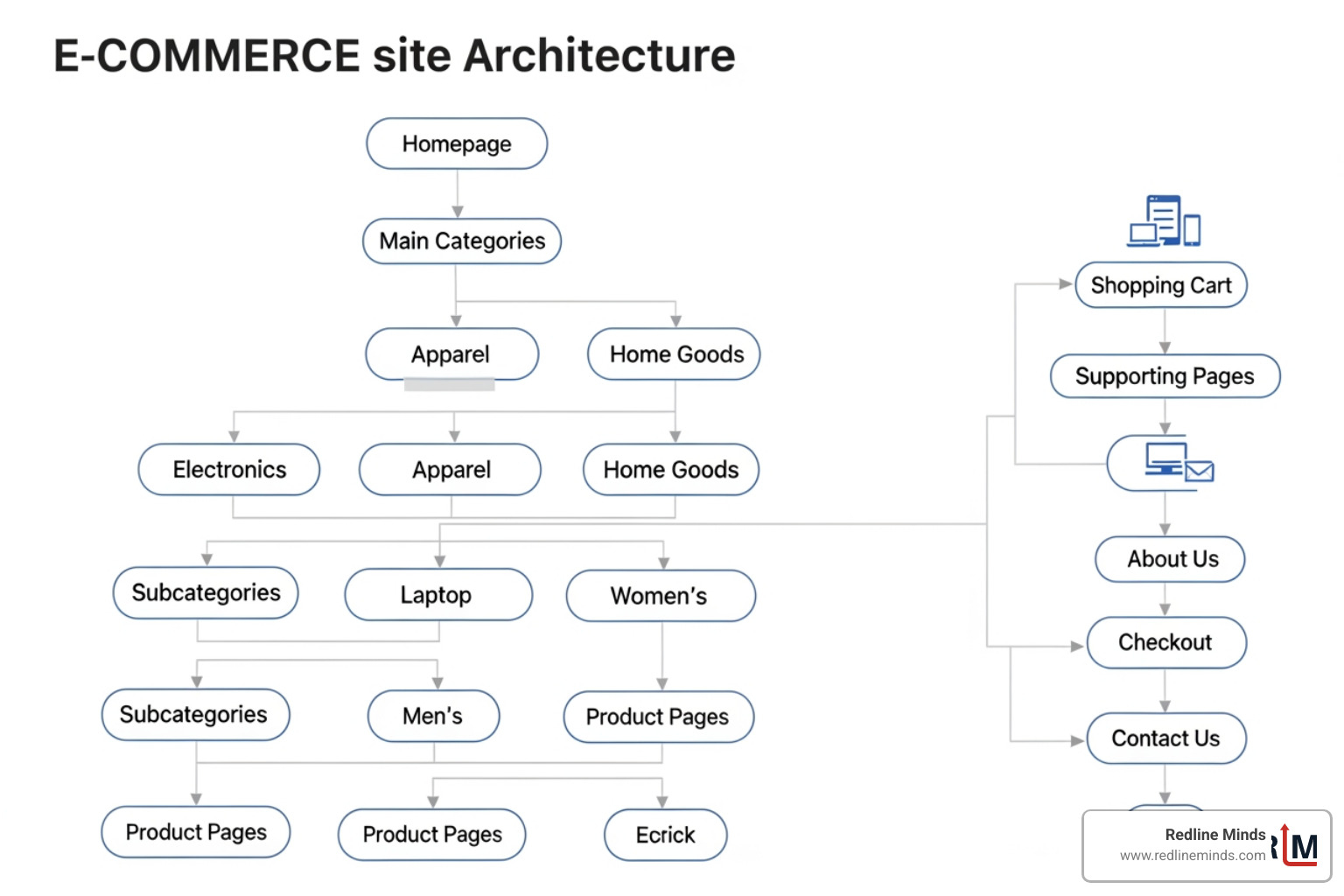
One of the most critical shifts in recent years is Mobile-first indexing. Google now uses the mobile version of your site as the primary source of truth. If your mobile site is slow or missing content, your rankings will suffer. We also keep a close eye on Core Web Vitals, which measure page speed, responsiveness, and visual stability.
Statistics show that a one-second delay in loading time can drop conversion rates by 7%. Conversely, sites that improved their load time by just one second saw an 8.4% bump in conversions. Ensure you have a secure HTTPS connection and a clean XML sitemap to help bots navigate your store. For help choosing the right software, browse our list of the Best SEO Tools for Ecommerce.
Optimizing Product and Category Pages for Conversion
Your product and category pages are where the “magic” happens. They shouldn’t just be a list of specs; they should be active participants in the sales journey.
- Unique Descriptions: Never copy-paste manufacturer descriptions. This creates duplicate content issues. Write at least 300 words of unique, keyword-rich intro copy for category pages.
- H1 Headers: Use clear, descriptive H1 tags that include your primary keyword.
- Image Alt Text: Since search engines can’t “see” images, they rely on alt text. Following W3C accessibility standards for alt text not only helps SEO but also ensures your site is accessible to visually impaired users.
- Meta Descriptions: These are your “mini-ads” in the search results. Keep them between 120-158 characters and include a clear call to action.
Optimizing these elements is a skill you can master. Learn more in our guide on How to Become an SEO Expert for Your Ecommerce Site.
Advanced Tactics: GEO, AI, and Authority Building
As we move into 2026, we are seeing the rise of Generative Engine Optimization (GEO). This involves optimizing your content to be cited by AI models like ChatGPT or Google Gemini. With 56% of marketers using generative AI in SEO workflows, the competition for these AI-driven “Answer Engine” slots is heating up.
U.S. spending on AI search advertising is projected to grow from $1 billion in 2025 to nearly $26 billion by 2029. To stay visible, you need strong EEAT signals (Experience, Expertise, Authoritativeness, and Trustworthiness). This means citing reputable sources, sharing original insights, and ensuring your product data is structured for both humans and LLMs.
High-Quality Link Building for Online Stores
Backlinks are like “votes of confidence” from other websites. However, quality outranks volume every time. One link from a reputable industry publication is worth more than a hundred links from obscure directories.
We recommend focusing on “link earning” through evergreen content—things like comprehensive buying guides or original research that people want to link to. Other effective tactics include:
- Broken Link Building: Find dead links on other sites and offer your relevant content as a replacement using tools like the Ahrefs broken link checker.
- Influencer Partnerships: Collaborating with influencers in your niche to create authentic content.
- Digital PR: Getting mentioned in news outlets or industry blogs.
For a list of resources to help you scale these efforts, see our Top Ecommerce SEO Tools for Growth.
Leveraging Structured Data and Social Proof
Structured data (schema markup) is code you add to your site to help search engines understand your content. For e-commerce, this is vital for showing product ratings, prices, and availability directly in the search results. This “social proof” can significantly increase your click-through rate.
Managing duplicate content is another hurdle. Use Google’s guide to canonical tags to tell search engines which version of a page is the “master” copy. This prevents you from being penalized for having similar product variations. Good SEO: The Point SEO Practitioners Forget is often just focusing on the user. If the user likes the page, Google eventually will too.
Measuring Success and Overcoming SEO Challenges
You can’t improve what you don’t measure. We track several key performance indicators (KPIs) to ensure our e commerce search engine optimization efforts are paying off:
- Organic Traffic: The number of visitors coming from unpaid search.
- Keyword Rankings: Monitoring your position for target terms using tools like the Ahrefs Rank Tracker.
- Revenue Attribution: Using GA4 to see exactly how much money organic search is bringing in.
We highly recommend Connecting Google Search Console with GA4. While GA4 tells you what happens on your site, Search Console tells you how people found you.
Solving Common E-commerce SEO Pitfalls
E-commerce sites are prone to specific technical issues due to their size and complexity. Duplicate content is a major issue, often caused by faceted navigation (filters). We use Screaming Frog for duplicate detection to find and fix these issues before they harm your rankings.
Other common pitfalls include:
- Thin Content: Pages with very little text that provide no value.
- Technical Debt: Old redirects or messy code that slows down the site.
- Keyword Cannibalization: When multiple pages on your site compete for the same keyword.
SEO is an ongoing battle, not a one-time project. For a look at how far we’ve come, you can revisit our thoughts on SEO 2017.
Frequently Asked Questions about E-commerce SEO
How long does it take to see results from e-commerce SEO?
SEO is a long-term play. While some technical fixes can show results in hours, significant ranking improvements usually take a few months. Most businesses should wait at least a few weeks to assess the beneficial effects of their work.
Is e-commerce SEO better than paid advertising?
It’s not necessarily “better,” but it is more cost-efficient over time. Paid ads stop the moment you stop paying. SEO builds an asset that continues to drive traffic and revenue long after the initial work is done. It is often the most reliable source of traffic for established stores.
How does AI change e-commerce keyword research?
AI allows us to cluster keywords by intent much faster. Instead of just looking at spreadsheets, we can use LLMs to understand the “why” behind a search. It also helps us identify “conversational” keywords that people use when speaking to voice assistants or AI chatbots.
Conclusion
At Redline Minds, we understand that your online store is more than just a website—it’s the engine of your business. Whether you need help with B2B strategy, hybrid store optimization, or a complete technical overhaul, we are here to help. Based in Tennessee, our team focuses exclusively on e-commerce, ensuring you get the specialized expertise you need to thrive in 2026 and beyond.
Ready to take your store to the next level? Scale your organic growth with expert marketing services and let us help you dominate the search results.
Share this article
Tap into years of experience and turn your site’s visitors into buyers.
Related Posts
-
Compare Shopify Migration Services: Options Cheat Sheet
Compare Shopify migration services and find the right Shopify migration company for your store, from manual imports to…
-

Ultimate Checklist for Improving B2B Customer Experience
Ultimate Checklist for Improving B2B Customer Experience – Learn about b2b ecommerce customer experience
-

A Practical Guide to What to Sell Online for Profit
A Practical Guide to What to Sell Online for Profit – Learn about i don t know what…