
Ultimate Checklist for Improving B2B Customer Experience
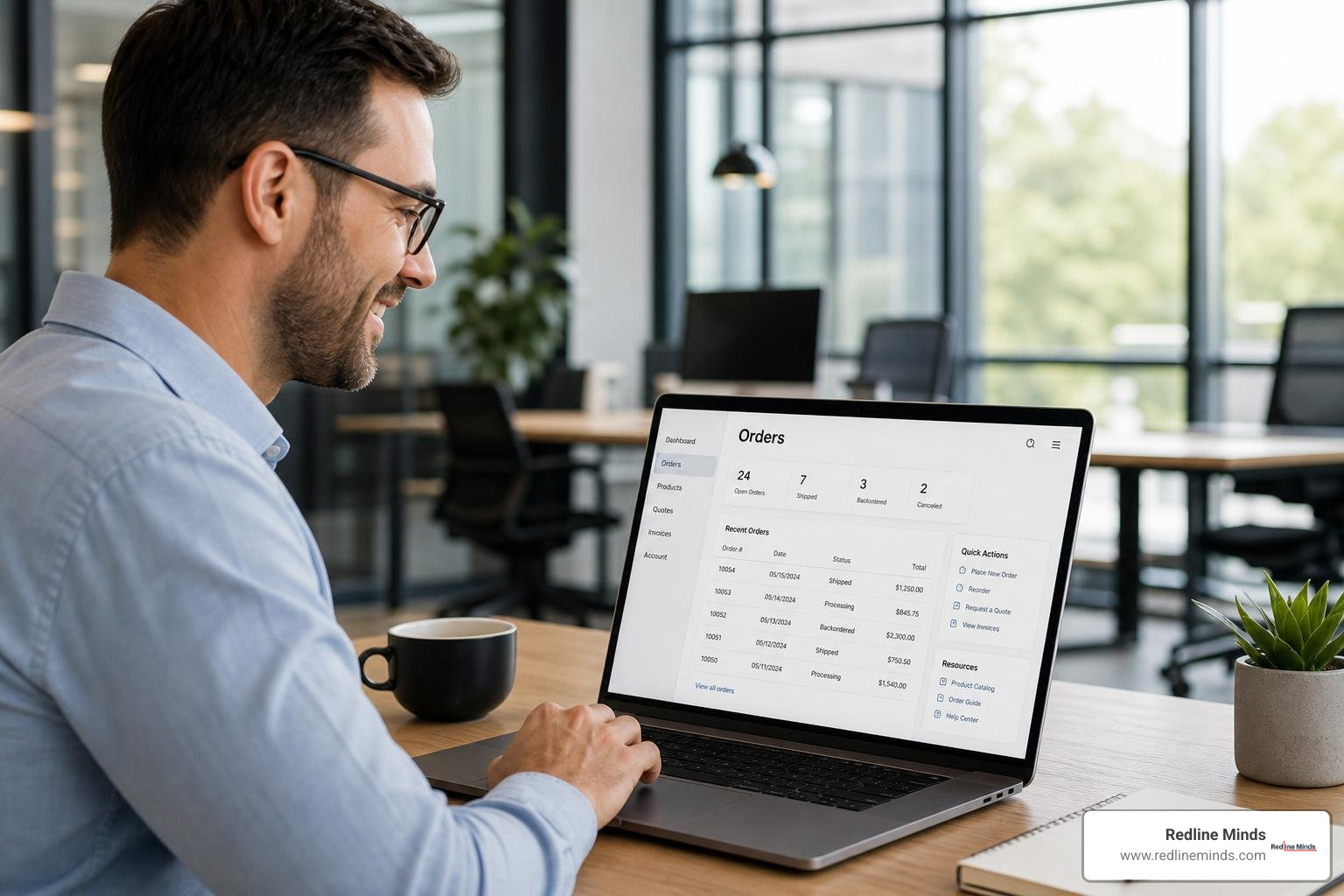
Why B2B eCommerce Customer Experience Is Your Biggest Growth Lever in 2026
Improving your B2B eCommerce customer experience is one of the highest-leverage moves you can make as a mid-sized online retailer right now. Here’s what you need to know upfront:
The core ways to improve B2B eCommerce customer experience:
- Build self-service portals — 100% of B2B buyers want self-service for at least part of their journey
- Personalize at the account level — custom catalogs, dynamic pricing, and role-based content
- Map your multi-stakeholder journey — the average B2B purchase involves 6–10 decision-makers
- Integrate your tech stack — connect CRM, ERP, and your eCommerce platform into one data layer
- Add human touchpoints where it counts — strategic accounts still need high-touch relationships
- Measure what matters — track NPS, customer health scores, and customer lifetime value
The B2B buying world has shifted fast. 80% of B2B sales interactions now happen on digital channels. Yet many mid-sized wholesalers and distributors are still running on manual processes, disconnected systems, and one-size-fits-all buying experiences.
That gap is expensive.
A 5% improvement in customer retention can increase profits by 25–95%. And B2B companies that offer a customized eCommerce experience outsell their competitors by 30%. These aren’t marginal gains — they’re business-defining ones.
But here’s what most guides miss: technology is just the foundation. The businesses winning in B2B right now are doing something more — they’re combining smart digital infrastructure with small, intentional moments that make buyers feel genuinely valued. Think of it like a restaurant that insists on boxing up your leftovers in branded packaging in the back, so they look perfect when you open your fridge at home. That level of thoughtfulness scales into B2B too.
This checklist will show you exactly how to get there.
What is B2B Customer Experience and Why Does It Matter?
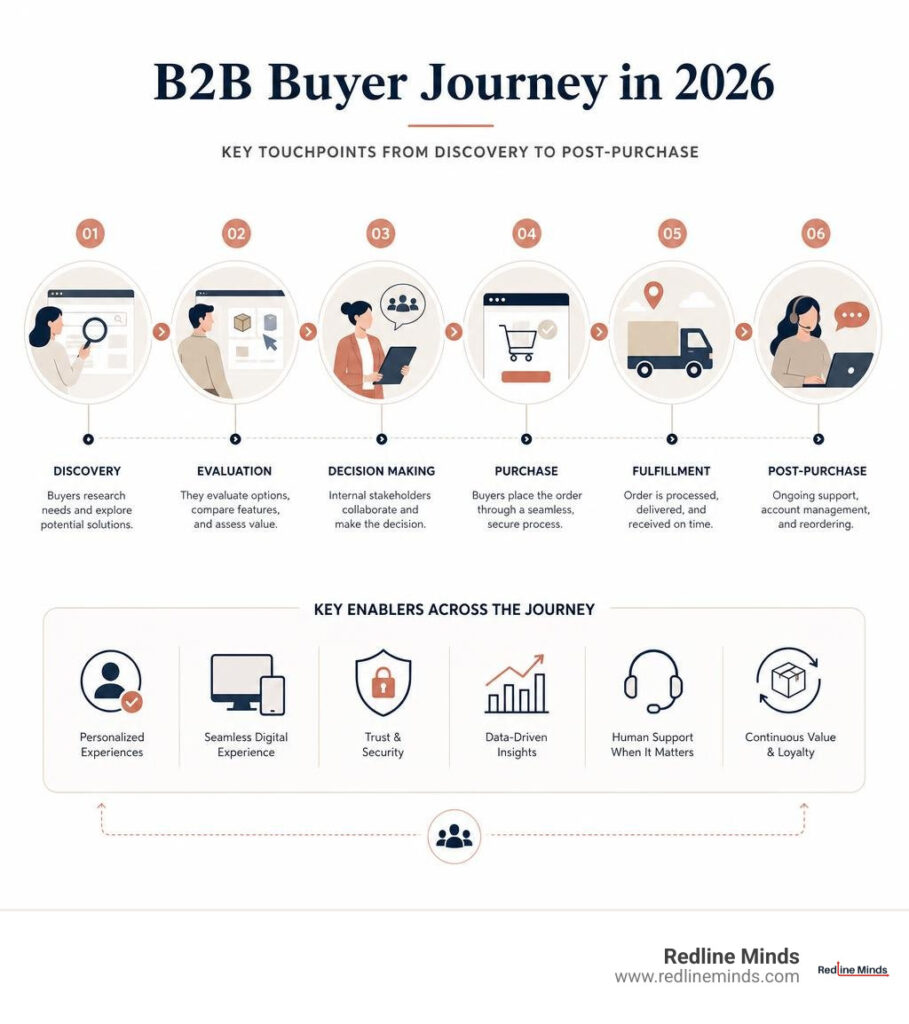
At its core, B2B customer experience (CX) is the sum of every single interaction a business customer has with your brand. It spans from the first time they discover your company on a search engine, through the complex procurement and checkout stages, to the long-term post-purchase support and reordering cycles.
In the consumer world, a bad experience might cost you a $50 shopping cart. In the B2B world, a bad experience can cost you a multi-million-dollar relationship.
Unlike B2C, where purchases are often impulsive and transactional, B2B relationships are built on long-term partnerships. When you improve your b2b ecommerce customer experience, you are directly securing your recurring revenue. In fact, improving customer retention rates by just 5% can boost your profits by 25% to 95%. This is because repeat customers cost less to serve, place larger orders, and require less sales overhead over time.
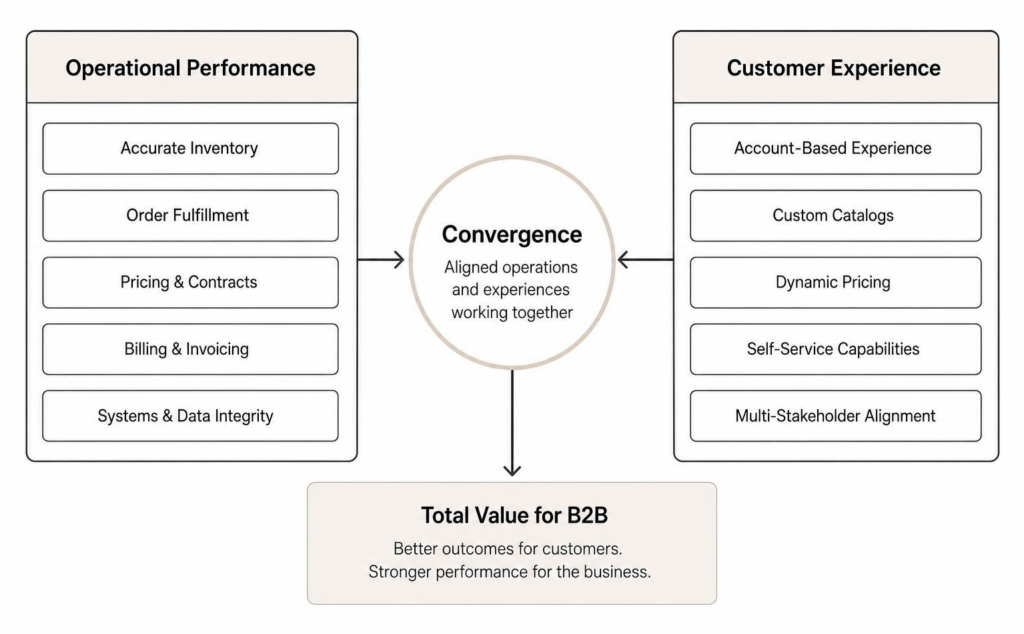
To truly understand this shift, we must look at how businesses generate value. As outlined in the KPMG report on Creating Total Value, modern B2B leaders are moving away from fragmented, transactional touchpoints. Instead, they are focusing on “Total Value” — an approach that unifies the customer experience, employee enablement, and operational performance. When your back-office operations run in perfect harmony with your digital storefront, you eliminate shipping delays, order errors, and billing discrepancies.
If you are new to this landscape or looking to rebuild your digital channel from the ground up, we recommend reading our comprehensive guide on Everything You Need to Know About B2B E-Commerce to ground your strategy in solid fundamentals.
Core Elements of a Successful B2B eCommerce Customer Experience Strategy
To design a digital experience that actually converts, you cannot treat your wholesale buyers like generic retail shoppers. A successful B2B eCommerce strategy must be built around the unique workflows of corporate procurement.
The core elements include:
- Account-Based Experiences (ABX): Your website must recognize who the user is the moment they log in. A procurement manager should see their specific contract terms, while a warehouse manager might only see shipping tracking and reorder buttons.
- Custom Catalogs: Large B2B buyers often negotiate exclusive product assortments. Your platform must dynamically display only the SKUs that a specific account is authorized to purchase.
- Dynamic Pricing and Contract Management: Static pricing does not work in wholesale. Your digital store must pull real-time, negotiated contract rates directly from your ERP. To explore how to structure these systems, check out The Guide to B2B Ecommerce Pricing Models.
- Robust Self-Service Capabilities: Buyers do not want to call a sales rep just to check inventory or download an invoice. Your customer portal must give them complete autonomy. Learn more about configuring these options in The Complete Guide to B2B Ecommerce Features.
Mapping the Multi-Stakeholder B2B Customer Journey
One of the biggest mistakes we see B2B merchants make is assuming they are selling to a single person. In reality, the average B2B purchase involves six to ten different decision-makers.
This “multi-headed” buyer makes journey mapping incredibly complex. A single B2B purchase journey actually consists of multiple parallel sub-journeys. For instance:
- The End-User cares about product specifications, usability, and technical documentation.
- The Procurement Officer cares about contract compliance, payment terms, and bulk discounts.
- The IT Director cares about security, API integrations, and software compatibility.
- The Finance Director cares about credit limits, invoicing, and tax exemptions.
To align these disparate stakeholders, we can look to academic insights. A study in the Journal of Business Research, titled Understanding the B2B customer experience and journey: A convergence-based lens, introduces the concept of psychological convergence. This is the process where individual stakeholders within a buying committee align their perceptions and build a shared mental model of your brand.
If your digital experience frustrates even one of these stakeholders — say, by making it difficult for the finance team to download net-terms invoices — you risk stalling the entire deal. Your job is to design distinct touchpoints that facilitate psychological convergence, making it easy for the buying committee to say “yes” together.
B2B vs. B2C: Navigating the Complexities of Modern B2B eCommerce Customer Experience
While B2C eCommerce focuses on speed, emotional engagement, and simple checkout flows, B2B eCommerce must handle complex organizational rules. However, B2B buyers are still human beings who buy products on Amazon and Shopify in their personal lives. This has led to the consumerization of B2B, where buyers expect consumer-grade design but require business-grade functionality.
| Feature / Expectation | B2C eCommerce | B2B eCommerce |
|---|---|---|
| Target Audience | Individual consumers | Multi-stakeholder buying committees (6–10 people) |
| Sales Cycle | Short (minutes to days) | Long (3 to 12 months) |
| Pricing | Fixed, identical for all users | Dynamic, contract-specific, and volume-tiered |
| Average Order Value | Lower ($50 – $500) | Higher ($10,000 to over $1,000,000) |
| Payment Options | Credit card, PayPal, digital wallets | Net terms, ACH, wire transfer, purchase orders |
| Shipping Logistics | Standard parcel delivery | LTL freight, multi-warehouse routing, split shipments |
This convergence means your user interface must be clean, fast, and intuitive. If your site is clunky, hard to search, or slow to load, your buyers will go elsewhere. For tactical tips on building a highly intuitive, high-converting digital storefront, explore The Ultimate Guide to Ecommerce UX That Actually Converts.
Overcoming Common B2B CX Challenges
Transitioning to a modern, digital-first experience is rarely smooth sailing. The most common roadblocks we see include:
- Siloed Data: Your customer service team uses one system, your sales reps use another, and your website uses a third. If a buyer updates their shipping address on the web store, but your ERP doesn’t reflect it, shipping errors will occur.
- Legacy Tech Stacks: Many distributors are held back by decades-old green-screen ERP systems that do not play nice with modern APIs. This makes real-time inventory and pricing updates nearly impossible.
- Martech Debt: It is incredibly easy to buy too many software tools, using only 10% of their capabilities as temporary stop-gaps. This compounds technical debt and slows down site performance.
To overcome these challenges, you must approach your digital channel as a holistic engineering project. If you are planning a replatforming or upgrade project, read our deep dive on B2B Ecommerce Development Everything You Need to Know to avoid the common pitfalls of legacy system integration.
The Ultimate Checklist for Improving B2B Customer Experience
Now that we understand the strategic landscape, let’s look at the practical steps you can take to upgrade your digital channel. Use this checklist as a roadmap for your next optimization cycle.
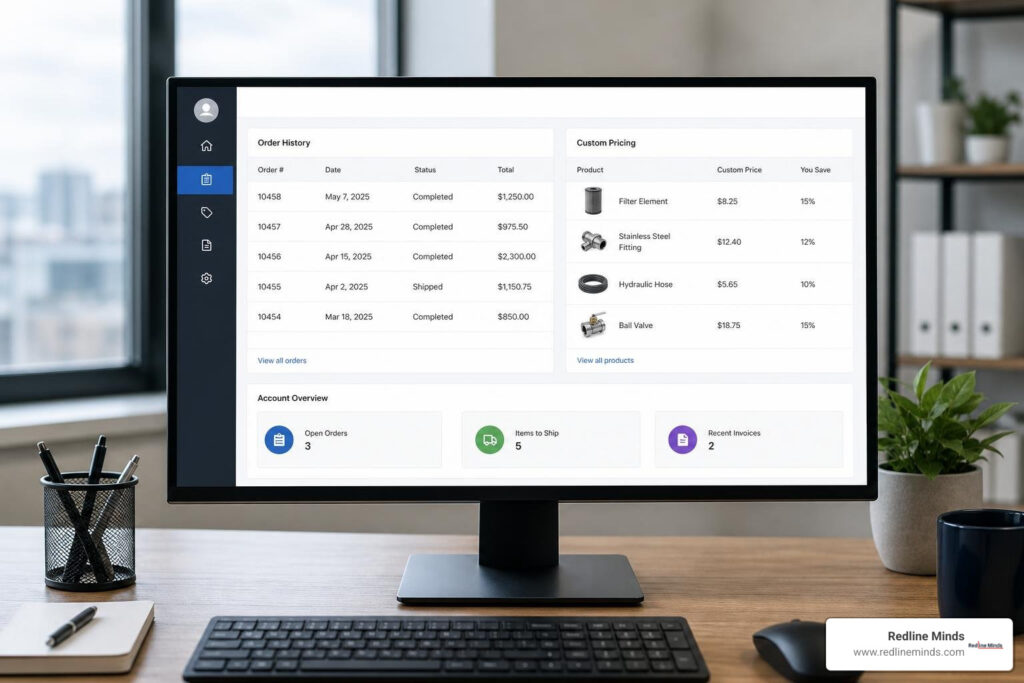
- [ ] Implement a Robust Customer Portal: Give your buyers a secure, self-service space where they can manage their entire account relationship. This is the single most important asset for scaling wholesale operations. Learn why in our guides on The Power of the B2B Customer Portal and Why B2B Self-Service Portals Are the Future of Wholesale.
- [ ] Enable Self-Service Reordering: Over 60% of B2B revenue comes from repeat purchases. Make reordering a one-click process by allowing buyers to view their order history and instantly duplicate past purchases.
- [ ] Provide Real-Time Inventory Visibility: One in three online B2B orders contains errors, and 68% of buyers say shipping or inventory mistakes would make them stop purchasing from a supplier. Show exact stock levels on your product pages.
- [ ] Streamline the Quote-to-Order Workflow: Instead of forcing buyers to call or email for a quote, let them submit a digital RFQ (Request for Quote) directly from their shopping cart. Sales reps should be able to approve, edit, and convert that quote into an order within the platform.
- [ ] Offer Flexible Business Payment Options: Ensure your checkout supports purchase orders (PO), net terms (Net 30/60), ACH, and wire transfers alongside traditional credit cards.
- [ ] Optimize for Mobile Devices: Mobile ordering in the B2B sector has surged by 250% since the pandemic. Your procurement managers are often walking warehouse floors or visiting job sites; they must be able to order easily from a smartphone.
Leveraging Data and AI to Personalize the B2B eCommerce Customer Experience
Personalization in B2B is no longer about adding a “[First Name]” tag to an email. In 2026, personalization is driven by data integration and artificial intelligence.
According to Adobe’s report on The State of B2B Customer Experience in an AI-Driven World, B2B buyers are rapidly shifting toward AI-driven discovery. Rather than searching Google for keywords, buyers are increasingly using Large Language Models (LLMs) to research vendors and compare specifications. To stay competitive, B2B brands must optimize their technical documentation, whitepapers, and product descriptions for AI search engines, focusing on clear, conversational language and authoritative depth.
Furthermore, we are seeing a massive shift toward Agentic AI. While classic AI handles simple tasks like chatbots, Agentic AI uses autonomous digital agents that can make decisions and execute multi-step workflows. For example, an AI agent on your eCommerce platform can automatically monitor a customer’s usage data, predict when they are running low on a critical component, generate a draft reorder, and send it directly to the buyer’s procurement system for approval.
By utilizing predictive analytics, you can identify at-risk accounts before they churn and proactively offer tailored pricing or solutions.
Integrating Core Technologies for a Seamless Omnichannel Experience
To deliver a flawless customer experience, your frontend website cannot exist on an island. It must be deeply integrated with your back-office systems.
- ERP Integration: Your Enterprise Resource Planning (ERP) system is the single source of truth for inventory, product data, and financial records. Real-time integration ensures that when a buyer places an order online, stock levels update instantly across all channels.
- Unified CRM: By connecting your Customer Relationship Management (CRM) platform, your sales reps can see exactly what their accounts are browsing, putting in their carts, or purchasing online.
- API-Based Workflows: Modern headless commerce architectures allow you to connect disparate tools seamlessly, eliminating manual data entry and reducing order processing times.
If you are still processing orders via PDF, phone, or manual data entry, it is time to upgrade. Discover how to modernize your operations in Stop Chasing Faxes with a Modern B2B Online Ordering System.
Balancing Digital Self-Service with High-Touch Human Interactions
As digital self-service becomes the baseline expectation, some businesses make the mistake of removing the human element entirely. This is a critical error. 61% of B2B buyers prefer a completely rep-free sales experience for routine purchases, but they still want human support for complex transactions.
The secret to scaling is a hybrid model. Use digital self-service to automate low-value, repetitive tasks (like tracking shipments or reordering standard parts). This frees up your account managers and sales teams to focus on high-value, consultative relationships, such as helping customers design custom solutions or negotiate large annual contracts.
To learn how to balance these two worlds, read our guide on How to Build a B2B Empire with Custom Solutions and Bulk Ordering. For platform-specific strategies on implementing these hybrid models, check out Shopify’s insights on How to Build a Modern B2B Ecommerce Experience That Drives Results (2025) – Shopify.
The Power of Micro-Moments and Thoughtful Gestures
When digital convenience is a commodity, true brand differentiation comes from small, non-scalable, human-centric details. In the hospitality industry, this is often called “unreasonable hospitality” — going above and beyond what is logical to create an unforgettable emotional connection.
How does this translate to the B2B wholesale world?
Consider a distributor who sells industrial parts. They know that the person making the buying decision (the procurement officer) is not the person opening the physical shipment boxes in the warehouse. To build grass-roots brand advocacy, the distributor starts including a small packet of candy and a personalized thank-you note addressed directly to the warehouse staff inside every shipping box.
Suddenly, the warehouse workers become your biggest fans. If a procurement manager suggests switching to a cheaper competitor, the warehouse team speaks up: “No, don’t switch! This supplier always packs their shipments perfectly, they are never damaged, and they care about us.”
These micro-moments of delight build deep, emotional trust that competitors cannot easily steal with a 2% discount. To explore more about how these relational details are shaping the future of commerce, check out The Complete Guide to B2B Ecommerce Trends.
Key Metrics for Measuring B2B CX Success
You cannot improve what you do not measure. To ensure your customer experience strategy is driving financial results, you should track a balanced scorecard of metrics:
- Net Promoter Score (NPS): Measures customer loyalty and likelihood to recommend your brand to colleagues.
- Customer Lifetime Value (CLV): The total revenue you expect to earn from a single account over the course of your relationship.
- Customer Health Scores: A weighted index that combines product usage data (40%), customer satisfaction surveys (30%), and support ticket frequency/quality (30%) to flag accounts that are at risk of churning.
- Order Accuracy Rate: The percentage of orders delivered without errors. Given that order errors are a primary driver of customer churn, this operational metric is a direct indicator of CX health.
For an in-depth look at how to align these metrics with your long-term growth goals, read How to Build a B2B Strategy That Actually Scales.
Frequently Asked Questions about B2B eCommerce Customer Experience
How does B2B customer experience differ from B2C?
B2B customer experience is characterized by higher stakeholder complexity (6–10 decision-makers per purchase), significantly longer sales cycles (3 to 12 months), and complex operational requirements like custom contract pricing, volume-tiered discounts, and flexible business payment terms (like Net 30 terms). B2C, on the other hand, focuses on rapid, emotional, and individual purchasing decisions.
What are the most critical metrics for measuring B2B CX success?
The most critical metrics are Customer Health Scores (which combine usage, support, and sentiment data), Customer Retention Rate, Net Promoter Score (NPS), and Customer Lifetime Value (CLV). Operational metrics like Order Accuracy and Time-to-Resolution are also vital leading indicators of customer satisfaction.
How can B2B companies balance self-service with human support?
B2B companies should adopt a hybrid model. Use technology (like self-service customer portals, knowledge bases, and AI-powered automation) to handle routine, low-complexity tasks such as processing reorders or tracking shipments. This allows your human sales and support teams to dedicate their time to high-complexity, consultative problem-solving and key account management.
Conclusion

In 2026, the battleground for B2B eCommerce is no longer just about who has the best product or the lowest price. It is about who provides the most seamless, thoughtful, and reliable experience. By integrating your back-office systems, mapping the multi-stakeholder journey, enabling robust self-service, and layering in small, human-centric gestures, you can build a defensive moat around your wholesale business.
At Redline Minds, we specialize in helping B2B and hybrid eCommerce brands design, build, and scale digital channels that buyers love to use. Based in Jefferson City, Tennessee, our team of experts provides end-to-end consulting, UX/UI design, and system integrations tailored to your unique operational workflows.
Ready to transform your buyer experience and unlock your next level of growth? Let’s talk about how integrating a modern Ecommerce CRM and optimizing your digital storefront can drive long-term loyalty for your brand. Contact us today to get started.
Share this article
Tap into years of experience and turn your site’s visitors into buyers.
Related Posts
-

A Practical Guide to What to Sell Online for Profit
A Practical Guide to What to Sell Online for Profit – Learn about i don t know what…
-

A Quick Start Guide to Ecommerce Basics
Learn what is ecommerce in this quick start guide covering models, benefits, and trends for modern online retail…
-
The Complete Guide to Inventory Control Best Practices
Learn inventory control best practices for warehouse execution, cost reduction, and multi-channel automation in this complete guide.